Monday, December 15, 2025
ADVT 
Tech

How do people stay slim despite eating 'fat' food?

Darpan News Desk Darpan, 21 Mar, 2014 01:55 AM
    Your closest pal or colleague may eat the same high-calorie food that you gulp down but know how he/she stays slim and trim while you keep on adding extra kilos around your waist?
     
    The answer lies in our muscles. The way the muscles of the inherently thin work may give them the edge, research reveals.
     
    “Daily physical activity is an inherited trait with a strong association to how fat or thin a person is,” said Chaitanya K. Gavini, a researcher with Kent State University's school of biomedical sciences.
     
    Aerobic capacity is a major predictor of daily physical activity level among humans and laboratory animals.
     
    In the study, researchers compared female rats with high aerobic capacity (genetic tendency toward leanness) or low aerobic capacity (genetic tendency toward obesity) to investigate how muscle physiology affects leanness.
     
    Though the rats in each group were similar in weight and lean body mass, the rats with a high aerobic capacity were consistently more active than the low capacity rats.
     
    While all the rats had similar energy expenditures when at rest, big differences in energy expenditure (calorie burn) occurred during mild exercise.
     
    “We found the muscles of rats with lean genes demonstrated 'poor fuel economy', meaning that they burned more calories when performing the same exercise as those with fat genes,” Gavini added.
     
    This may be owing to more lean rats having higher levels of proteins that support energy expenditure and lower levels of proteins that encourage energy conservation.
     
    The research has implications for how we consider metabolism when attempting to prevent or treat obesity, Gavini noted in the study published in the American Journal of Physiology-Endocrinology and Metabolism.


    MORE Tech ARTICLES

    Indian-origin engineers create device for faster wireless technology

    Indian-origin engineers create device for faster wireless technology
    Using an inexpensive Rs.3,600 inkjet printer, two Indian-origin electrical engineers at the University of Utah have for the first time produced microscopic structures that use light in metals to carry information

    Indian-origin engineers create device for faster wireless technology

    China Logs on to its First Internet-Themed Museum

    China Logs on to its First Internet-Themed Museum
    China will build its first internet museum to chronicle the development of the net in the increasingly wired country, China's internet network watchdog said Friday.

    China Logs on to its First Internet-Themed Museum

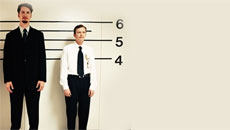
    What? Taller men are smarter too!

    What? Taller men are smarter too!
    The fact is that women fall for men who are taller. Now, they have an extra reason to go for them as researchers have discovered a significant correlation in the DNA between tall people and intelligence.

    What? Taller men are smarter too!

    Revealed: How Earth gets protection from space weather

    Revealed: How Earth gets protection from space weather
    The NASA scientists have discovered how dense particles near earth can send a plume up through space to help protect against incoming solar particles during certain space weather events.

    Revealed: How Earth gets protection from space weather

    Dream about a space trip? Click Here

    Dream about a space trip? Click Here
    Have an extra Rs.1.25 crore in your kitty? You can book a seat on a European plane that would take passengers to over 100 km in the sky -- enabling them to experience how being in space feels.

    Dream about a space trip? Click Here

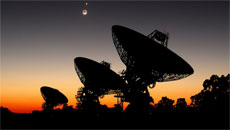
    A giant leap towards discovering life beyond earth

    A giant leap towards discovering life beyond earth
    In what could be called a game changer in search of life outside our galaxy, astronomers have used a digital camera imaging technology to take a picture of a planet far from our solar system with an earth-based telescope.

    A giant leap towards discovering life beyond earth