Sunday, March 29, 2026
ADVT 
Tech

Ignore online security warnings at your own risk

Darpan News Desk IANS, 21 Nov, 2014 12:27 PM
    People are their own worst enemies when it comes to online security, a study indicates.
     
    People care about keeping their computers secure, security warnings are conveniently ignored while accessing risky websites, found an experiment by American researchers.
     
    "We see these messages so much that we stop thinking about them. In a sense, we don't even see them anymore, and so we often ignore them and proceed anyway," said lead author Anthony Vance from Brigham Young University (BYU).
     
    Their test involved a group of college students who were asked how they felt about online security.
     
    The participants were told to use their own laptops to log on to a website to categorise pictures of Batman as animated or photographed.
     
    As the participants clicked through images, warning signs would randomly pop up indicating malware issues with the site they were accessing.
     
    Researchers found that participants repeatedly ignored web security warnings.
     
    While results showed that people say they care about web security but behave like they do not, they do behave in-line with what their brains say.
     
    In other words, people's brainwaves better predict how risky they are with online security.
     
    "We learned that brain data is a better predictor of security behaviour than a person's own response," Vance said, adding that "with neuroscience, we are trying to understand this weakest link and understand how we can fortify it".
     
    The study was published in the Journal of the Association for Information Systems.
    MORE Tech ARTICLES

    3D-printed replica for a safe liver transplant created

    3D-printed replica for a safe liver transplant created
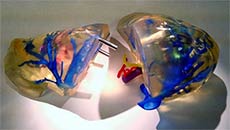
    The 3D-printed liver replicas, made of transparent material threaded with coloured arteries and veins, could help surgeons prevent complications while performing liver transplants or removing tumours, a path-breaking research shows.

    3D-printed replica for a safe liver transplant created

    First Look: World's first winemaker machine for your kitchen!

    First Look: World's first winemaker machine for your kitchen!
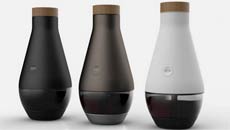
    Three cheers for wine lovers out there. Here comes a new machine that can turn water, grape concentrate, yeast and a finishing powder into wine in your kitchen in flat three days.

    First Look: World's first winemaker machine for your kitchen!

    Who is smarter, man or woman? It's just a brain, stupid!

    Who is smarter, man or woman? It's just a brain, stupid!
    The big debate about who is smarter, man or woman, has now been laid to rest. There is nothing like a boy's or a girl's brain, and no scientific evidence to prove that they are wired differently, according to an expert.

    Who is smarter, man or woman? It's just a brain, stupid!

    Samsung wearable device to turn hands into keyboard

    Samsung wearable device to turn hands into keyboard
    As the race for wearable computer devices heats up with the entry of Google Glass, a report suggests that Samsung is also working on a wearable device that can turn hands into a virtual keyboard.

    Samsung wearable device to turn hands into keyboard

    Indian-origin engineers create device for faster wireless technology

    Indian-origin engineers create device for faster wireless technology
    Using an inexpensive Rs.3,600 inkjet printer, two Indian-origin electrical engineers at the University of Utah have for the first time produced microscopic structures that use light in metals to carry information

    Indian-origin engineers create device for faster wireless technology

    China Logs on to its First Internet-Themed Museum

    China Logs on to its First Internet-Themed Museum
    China will build its first internet museum to chronicle the development of the net in the increasingly wired country, China's internet network watchdog said Friday.

    China Logs on to its First Internet-Themed Museum