Wednesday, December 24, 2025
ADVT 
Tech

Indian American scientist develops path to brighter LCD displays

Darpan News Desk IANS, 24 Nov, 2014 11:07 AM
    Researchers led by an Indian-American have developed a polarising filter that can result in mobile device displays that last much longer on a single battery charge and cameras that can shoot in dim light.
     
    Led by Utah Univesity electrical and computer engineering associate professor Rajesh Menon, electrical researchers created the filter by etching a silicon wafer with nanoscale pillars and holes using a focused gallium-ion beam, a university release said.
     
    Polarisers are indispensable in digital photography and LCD displays, but they block enormous amounts of light, wasting energy and making it more difficult to photograph in low light.
     
    "This new concept in light filtering can perform the same function as a standard polariser but allows up to nearly 30 percent more light to pass through," said Menon.
     
    Polarisers are widely used by photographers to reduce glare in the image. They also are used in LCD displays to regulate what light passes through to create images on the screen.
     
    "When you take a picture and put the polarised filter on, you are trying to get rid of glare," Menon said. "But most polarisers will eliminate anywhere from to 60 to 70 percent of the light. You can see it with your eyes."
     
    Yet with Menon's new polariser, much of the light that normally is reflected back is instead converted to the desired polarised state.
     
    The Utah researchers have been able to pass through about 74 percent of the light, though their goal is to eventually allow all of the light to pass through.
     
    LCD displays on devices such as smartphones and tablets have two polarisers that ultimately throw away most of the light when working with the liquid crystal display.
     
    "If one can increase that energy efficiency, that is a huge increase on the battery life of your display. Or you can make your display brighter," Menon said.
     
    Menon said the first marketable applications of this technology could be available in five to 10 years.
     
    The technology also could be a boon for photographers who want to bring out more detail in their pictures while shooting in low-light situations and for scientists using microscopes and telescopes to visualise obscure phenomenon, he said.

    MORE Tech ARTICLES

    Watch out! Cell phone addiction may kill parent-child bond

    Watch out! Cell phone addiction may kill parent-child bond
    Do you often play games, check emails or respond to office calls on your cell phone while with family on a dinner? This phone addiction can damage your emotional bonding with kids soon.

    Watch out! Cell phone addiction may kill parent-child bond

    What? Plant-powered FM radio is here

    What? Plant-powered FM radio is here
    Named Moss FM, the radio is designed by University of Cambridge biochemist Paolo Bombelli and London-based product designer Fabienne Felder.

    What? Plant-powered FM radio is here

    Incredible! Earth goes red for better health!

    Incredible! Earth goes red for better health!
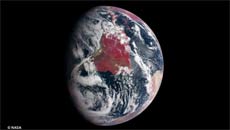
    Taken by NASA's MErcury Surface, Space ENvironment, GEochemistry, and Ranging (MESSENGER) spacecraft, it shows fertile areas from South America 

    Incredible! Earth goes red for better health!

    Here's an iPhone app that paints your photos into masterpieces

    Here's an iPhone app that paints your photos into masterpieces
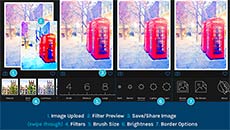
    The app now simulates the spreading and bleeding of the pigment onto the canvas - with dedicated properties for the virtual paper, the pigment, the brushes, the water and so on

    Here's an iPhone app that paints your photos into masterpieces

    3D-printed replica for a safe liver transplant created

    3D-printed replica for a safe liver transplant created
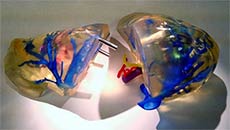
    The 3D-printed liver replicas, made of transparent material threaded with coloured arteries and veins, could help surgeons prevent complications while performing liver transplants or removing tumours, a path-breaking research shows.

    3D-printed replica for a safe liver transplant created

    First Look: World's first winemaker machine for your kitchen!

    First Look: World's first winemaker machine for your kitchen!
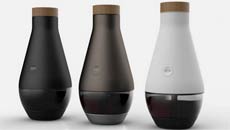
    Three cheers for wine lovers out there. Here comes a new machine that can turn water, grape concentrate, yeast and a finishing powder into wine in your kitchen in flat three days.

    First Look: World's first winemaker machine for your kitchen!