Tuesday, December 23, 2025
ADVT 
Tech

Indian-Origin Researchers Report Cybersecurity Risks In 3D Printing

Darpan News Desk IANS, 18 Jul, 2016 02:10 PM
    A team comprising of Indian-origin researchers has found cybersecurity risks in 3D printing by examining two aspects -- printing orientation and insertion of fine defects.
     
    They found that since Computer-Aided Drafting (CAD) files -- used in the creation, modification, analysis, or optimisation of a design -- do not give instructions for printer head orientation, malefactors could alter the process without detection.
     
    Also, sub-millimetre defects that can appear between printed layers with exposure to fatigue and the elements were found to be undetectable by common industrial monitoring techniques, the researchers said.
     
    The finding, along with initial recommendations for remedies, was reported in the journal of the Minerals, Metals and Materials Society.
     
    "These are possible foci for attacks that could have devastating impact on users from the end product, and economic impact in the form of recalls and lawsuits," said Nikhil Gupta, an Associate Professor of Mechanical Engineering.
     
    The researchers reported that the orientation of the product during printing could make as much as a 25 per cent difference in its strength.
     
    Gupta explained that economic concerns also influence how a supplier prints a product. "Minus a clear directive from the design team, the best orientation for the printer is one that minimises the use of material and maximises the number of parts you can print in one operation," he said.
     
    According to Said Karri, a cybersecurity researcher, "With the growth of cloud-based and decentralised production environments, it is critical that all entities within the additive manufacturing supply chain be aware of the unique challenges presented to avoid significant risk to the reliability of the product."
     
    He pointed out that an attacker could hack into a printer that is connected to Internet to introduce internal defects as the component is being printed.

    MORE Tech ARTICLES

    'Smart' glasses to help people with poor vision

    'Smart' glasses to help people with poor vision
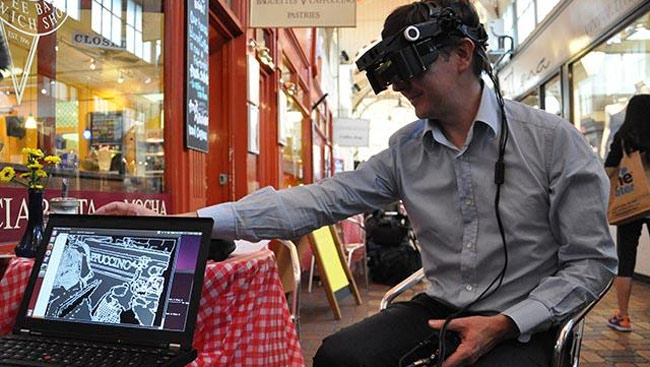
    Google glass may allow you to click pictures and do video recording on the go, but Oxford University researchers are now developing a "smart" glass that enables people with poor vision to spot obstacles and "see" movement and facial expressions.

    'Smart' glasses to help people with poor vision

    Twitter new market for e-cigarettes?

    Twitter new market for e-cigarettes?
    While advertising for conventional cigarettes has long been prohibited in the US, e-cigarettes are being routinely advertised in traditional and social media including twitter, claims a new study.

    Twitter new market for e-cigarettes?

    Facebook launches app to share short-lived photos, videos

    Facebook launches app to share short-lived photos, videos
    Social networking site Facebook has launched a new app called Slingshot that allows people to share short-lived photos and videos with one another.

    Facebook launches app to share short-lived photos, videos

    'Smart' eye-embedded device can manage glaucoma better

    'Smart' eye-embedded device can manage glaucoma better
    In a ray of hope for glaucoma patients, engineers have designed a first of its kind electronic sensor that can be placed permanently in a person's eye to track changes in eye pressure.

    'Smart' eye-embedded device can manage glaucoma better

    App to make your fussy kid eat

    App to make your fussy kid eat
    Do you find your kids' mealtime frustrating as he/she throws tantrums, refuses to try new cuisines or eats only a little portion?

    App to make your fussy kid eat

    Selfies daunting women on bad skin days: Study

    Selfies daunting women on bad skin days: Study
    Selfie trend has taken over social media, and it somehow propels everyone to look photo-ready all of the time. But a latest research shows that 68 percent of women feel negative about photos of themselves that haven’t been enhanced by a photographic filter.

    Selfies daunting women on bad skin days: Study