Saturday, December 13, 2025
ADVT 
Tech

Internet not behind newspapers' death: Study

Darpan News Desk IANS, 12 Jun, 2014 11:45 AM
    You must have heard - and might be believing by now - that internet sounded the death knell for newspapers. But that may not be true.
     
    According to new research by University of Chicago professor Matthew Gentzkow: "People have not stopped reading newspapers because of the internet".
     
    He points out assumptions about journalism that are based on three false premises.
     
    The first assumption is that online advertising revenues are naturally lower than print revenues, so traditional media must adopt a less profitable business model that cannot support paying real reporters.
     
    The second is that the web has made the advertising market more competitive which has driven down rates and, in turn, revenues.
     
    The third misconception is that the internet is responsible for the demise of the newspaper industry.
     
    "This perception that online ads are cheaper to buy is all about people quoting things in units that are not comparable to each other - doing apples-to-oranges comparisons," Gentzkow noted.
     
    Online ad rates are typically discussed in terms of "number of unique monthly visitors" the ads receive while circulation numbers determine newspaper rates.
     
    By comparing the amount of time people actually see an ad, Gentzkow found that the price of attention for similar consumers is actually higher online.
     
    In 2008, he calculated, newspapers earned $2.78 (Rs.164) per hour of attention in print and $3.79 (Rs.223) per hour of attention online.
     
    By 2012, the price for attention in print had fallen to $1.57 (Rs.93) while the price for attention online had increased to $4.24 (Rs.250).
     
    Gentzkow also pointed out that the popularity of newspapers had already significantly diminished between 1980 and 1995, well before the internet age, and has dropped at roughly the same rate ever since.
     
    The study was published in the American Economic Review.
    MORE Tech ARTICLES

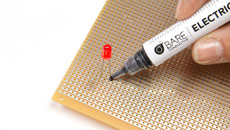
    Electric paint to fix remote control in a jiffy

    Electric paint to fix remote control in a jiffy
    You need not see red if you find your remote control broken just before the start of a match as you can now fix it just by painting it with a brush. All you need to do after that is wait for it to get dried up!

    Electric paint to fix remote control in a jiffy

    How to win more 'likes' on Facebook photos

    How to win more 'likes' on Facebook photos
    An Indian-American student at Massachusetts Institute of Technology, US, has devised a formula that tells how the contents of a photograph may predict its popularity online.

    How to win more 'likes' on Facebook photos

    Twitter selfies to reveal your mood

    Twitter selfies to reveal your mood
    What if selfies posted on Twitter can reveal our mood - whether people who live in “happier” cities tend to post more selfies and whether they smile more while taking self-portraits?

    Twitter selfies to reveal your mood

    Need a house? Print it in hours

    Need a house? Print it in hours
    In what could make the dream of owning a house a reality for a large section of people in developing countries, a Chinese company has devised a method of 3D printing a house.

    Need a house? Print it in hours

    This lift to zip you to 95th floor in 43 seconds!

    This lift to zip you to 95th floor in 43 seconds!
    Forget the world's tallest skyscraper Burj Khalifa in Dubai. This elevator in China will take you to the 95th floor in flat 43 seconds!

    This lift to zip you to 95th floor in 43 seconds!

    Great! Now an app to protect your credit card from hacking

    Great! Now an app to protect your credit card from hacking
    Bad news for credit card hackers. Here comes a 'remote control' app that can help you turn your credit cards on and off with the click of a button, and control when, where, and how they are used.

    Great! Now an app to protect your credit card from hacking