Wednesday, December 17, 2025
ADVT 
Tech

I-pad technology decodes how brain decides on food

Darpan News Desk IANS, 04 Aug, 2014 08:34 AM
    A 'flypad' touchscreen technology similar to what is seen in i-pads has provided crucial insights into how our brain decides what and how much to eat.
     
    The findings revealed surprising similarities between the way mammals and flies eat.
     
    "What and how we eat is a crucial determinant of health and wellbeing. In lab experiments, we found that each time the fly touched the food, we were able to detect it, allowing us to follow the details of feeding in high resolution and real time," said Carlos Ribeiro from the Champalimaud Neuroscience Programme in Portugal.
     
    They found that flies ate by rhythmically extending their proboscis (eating organ) in a highly stereotyped fashion.
     
    When they are hungry they do not change the rhythm of feeding but instead alter how long they wait to take the next bite.
     
    "This means that flies change different aspects of their behaviour depending on how hungry they are. Furthermore, the way flies adapt to starvation is similar to how mammals do it," Ribeiro added.
     
    To complement the 'flypad' technology, researchers also developed another method that allows them to detect when the food reaches the nervous system.
     
    They took a protein from the firefly, the one that makes the firefly shine at night, and expressed it in the brain of the fruit flies.
     
    "We then fed them with a substance that activates that protein. This way, we could make sure that the amount and the timing of flashes from the brain are related to food intake and nutrient absorption," said Pavel Itskov, from the behaviour and metabolism lab at Champalimaud Neuroscience Programme.
     
    The results were striking.
     
    "It showed us that the food reaches the nervous system extremely fast, in as little as 20 seconds," Itskov noted.
     
    The paper appeared in the scientific journal Nature Communications.
    MORE Tech ARTICLES

    Automated cockpits may drive pilots crazy!

    Automated cockpits may drive pilots crazy!
    Automation in the cockpits are designed to free pilots from paying attention to the mundane flight tasks and allow them to concentrate on the overall flight, but they can also drive the pilots crazy, indicated a study.

    Automated cockpits may drive pilots crazy!

    Soon, Boeing spacecraft to send astronauts in space

    Soon, Boeing spacecraft to send astronauts in space
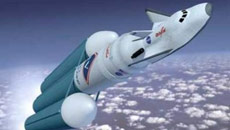
    Leveraging its expertise in the space-bound flight operations, Boeing has unveiled a concept of a manned spaceflight that is expected to send astronauts into space by 2017.

    Soon, Boeing spacecraft to send astronauts in space

    Britain's oldest town unearthed

    Britain's oldest town unearthed
    Until now, Thatcham in Buckinghamshire was known as the oldest settlement in Britain but now, archaeologists have unearthed the country's oldest town that dates back more than 10 millennia to 8,820 BC.

    Britain's oldest town unearthed

    Coming, money transfer via Google Glass!

    Coming, money transfer via Google Glass!
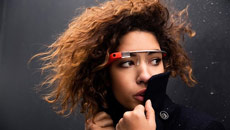
    With Google Glass eyewear, soon send money to your friends and relatives in a jiffy.

    Coming, money transfer via Google Glass!

    And now diamonds to power laser!

    And now diamonds to power laser!
    Diamonds are not just a woman's best friend, they also have some awesome heat-handling capability - making it an ideal material to improve the quality of high-powered laser beams.

    And now diamonds to power laser!

    Latest in Tech: Fold this smart phone like a map!

    Latest in Tech: Fold this smart phone like a map!
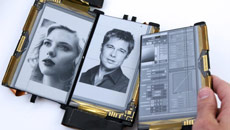
    Named “multi-display shape-changing smartphone”, the 'PaperFold' mobile device uses three flexible electrophoretic (e-ink) display sheets that users can fold into various configurations.  

    Latest in Tech: Fold this smart phone like a map!