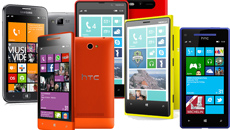
Data from mobile phones that provide crucial information about movements of people within a country could be key to designing an effective malaria elimination programme, a promising study showed.
An estimated 627,00 people died of malaria in 2012 as per the World Health Organisation (WHO).
“Understanding the movement of people is crucial in eliminating malaria,” said Andy Tatem, a geographer at University of Southampton in Britain.
“The study demonstrates that the rapid global proliferation of mobile phones now provides us with an opportunity to study the movement of people, using sample sizes running into millions,” Tatem added.
This data, combined with disease case based mapping, can help us plan where and how to intervene, he explained.
The study used anonymised mobile records to measure population movements within Namibia in Africa over the period of a year (2010-11).
By combining this data with information about diagnosed cases of malaria, topography and climate, the researchers were able to identify geographical ‘hotspots’ of the disease and design targeted plans for its elimination.
Twelve months of anonymised Call Data Records (CDRs) were provided by service provider Mobile Telecommunications Limited (MTC) to the researchers - representing nine billion communications from 1.19 million unique subscribers, around 52 percent of the population of Namibia.
Aggregated movements of mobile users between urban areas and urban and rural areas were analysed in conjunction with data based on rapid diagnostic testing (RDT) of malaria and information on the climate, environment and topography of the country.
The findings of the study helped the National Vector-borne Diseases Control Programme (NVDCP) in Namibia improve their targeting of malaria interventions to communities most at risk.
Specifically they helped with the targeting of insecticide-treated bed net distributions in the Omusati, Kavango and Zambezi regions in 2013.
The data would be useful for NVDCP to prepare for a large-scale net distribution in 2014 and deployment of community health workers, the researchers said.
“The use of mobile phone data is one example of how new technologies are overcoming past problems of quantifying and gaining a better understanding of human movement patterns in relation to disease control,” Tatem said in the study that appeared in Malaria Journal.