Tuesday, December 16, 2025
ADVT 
Tech

NASA closer to finding life beyond earth

Darpan News Desk IANS, 15 Jul, 2014 12:31 PM
    Do you often dream about extraterrestrial life beyond earth? NASA scientists are engaged in proving your dreams to be true.
     
    In a panel discussion held at NASA headquarters in Washington, DC, experts outlined NASA's road map to the search for life in the universe, an ongoing journey that involves a number of current and future telescopes.
     
    "Sometime in the near future, people will be able to point to a star and say: That star has a planet like earth," said Sara Seager, a professor of planetary science and physics at the Massachusetts Institute of Technology in Cambridge, Massachusetts.
     
    The NASA road map will continue with the launch of the Transiting Exoplanet Surveying Satellite (TESS) in 2017, the James Webb Space Telescope (Webb Telescope) in 2018, and perhaps the proposed Wide Field Infrared Survey Telescope - Astrophysics Focused Telescope Assets (WFIRST-AFTA) early in the next decade.
     
    These upcoming telescopes will find and characterise a host of new exoplanets - those planets that orbit other stars - expanding our knowledge of their atmospheres and diversity.
     
    "This technology we are using to explore exoplanets is real. The James Webb Space Telescope and the next advances are happening now. These are not dreams - this is what we do at NASA," explained John Grunsfeld, an astronaut and associate administrator for NASA's science mission directorate in Washington.
     
    Since its launch in 2009, Kepler has dramatically changed what we know about exoplanets, finding most of more than 5,000 potential exoplanets, of which more than 1,700 have been confirmed.
     
    Kepler also found the first Earth-size planet to orbit in the "habitable zone" of a star, the region where liquid water can pool on the surface.
     
    "Just imagine the moment, when we find potential signatures of life. Imagine the moment when the world wakes up and the human race realises that its long loneliness in time and space may be over - the possibility we're no longer alone in the universe," said Matt Mountain, director at the Space Telescope Science Institute in Baltimore.
     
    Astronomers think it is very likely that every single star in our Milky Way galaxy has at least one planet, Seager told the NASA panel.


    MORE Tech ARTICLES

    Now, a new app for designers

    Now, a new app for designers
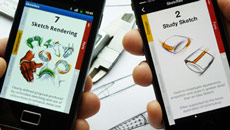
    Called iD Cards, the app helps design specialists communicate with each other by standardising the language used for 32 types of sketch, drawing, model and prototype.

    Now, a new app for designers

    Indian start-ups have huge advantage over other countries: Microsoft

    Indian start-ups have huge advantage over other countries: Microsoft
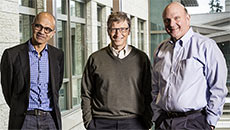
    India has some of the world's best developers and they have huge advantage over start-ups in other countries, believes Microsoft, engaged in developing, licensing and supporting a range of software products and services.

    Indian start-ups have huge advantage over other countries: Microsoft

    Here comes NASA suit for men on Mars

    Here comes NASA suit for men on Mars
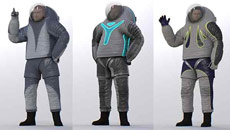
    With the focus being shifted to a manned mission for Mars in near future, NASA is developing technologies astronauts one day will use to live and work with on the red planet.

    Here comes NASA suit for men on Mars

    Move effortlessly in apps world with Facebook

    Move effortlessly in apps world with Facebook
    Billed as a game changer in the mobile industry, Facebook has unveiled a new free and open-source service that would make it easier for you to navigate from one app to another and back again.

    Move effortlessly in apps world with Facebook

    What you were waiting for, a self-driving car

    What you were waiting for, a self-driving car
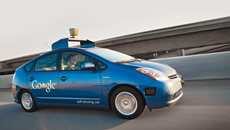
    “We have improved our software so it can detect hundreds of distinct objects simultaneously - pedestrians, buses, a stop sign held up by a crossing guard, or a cyclist making gestures that indicate a possible turn,” Chris Urmson, who leads Google’s self-driving car programme, wrote in a blog post.  

    What you were waiting for, a self-driving car

    Do you believe it! A computer mouse that can also scan

    Do you believe it! A computer mouse that can also scan
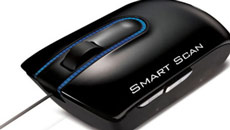
    MobScan has built-in technologies that helps to scan as well as edit the scanned material.

    Do you believe it! A computer mouse that can also scan