Tuesday, February 10, 2026
ADVT 
Tech

Physicists Verify Einstein's Time-dilation Theory

Darpan News Desk Darpan, 21 Sep, 2014 01:22 PM
    Do you believe that a person travelling in a high-speed rocket would age more slowly than people back on Earth?
     
    Giving a thrust to the "time-dilation" effect, physicists have verified a key prediction of Albert Einstein's special theory of relativity with unprecedented accuracy. Clocks made of lithium ions helped the researchers to do so.
     
    The experiments confirmed that time moves slower for a moving clock than for a stationary one.
     
    "It is nearly five times better than our old result and 50 to 100 times better than any other method used by other people to measure relativistic time dilation," claimed study co-author Gerald Gwinner, a physicist at the University of Manitoba in Winnipeg, Canada.
     
    To test the effect, physicists needed to compare two clocks - one that is stationary and one that moves.
     
    The researchers used the Experimental Storage Ring, where high-speed particles are stored and studied at the GSI Helmholtz Centre for heavy-ion research in Darmstadt, Germany.
     
    They made the moving clock by accelerating lithium ions to one-third the speed of light.
     
    Then they measured a set of transitions within the lithium as electrons hopped between various energy levels.
     
    The frequency of the transitions served as the ticking of the clock.
     
    Transitions within lithium ions that were not moving served as the stationary clock.
     
    It is the culmination of 15 years of work by an international group of collaborators including Nobel laureate Theodor Hansch, director of the Max Planck optics institute, the study noted.
     
    Understanding time dilation has practical implications.
     
    The Global Positioning System (GPS) satellites are essentially clocks in orbit, and GPS software has to account for tiny time shifts when analysing navigational data.
     
    The European Space Agency plans to test time dilation in at the International Space Station in 2016.
     
    The paper was published in the journal Physical Review Letters.
    MORE Tech ARTICLES

    What you were waiting for, a self-driving car

    What you were waiting for, a self-driving car
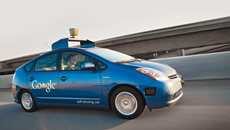
    “We have improved our software so it can detect hundreds of distinct objects simultaneously - pedestrians, buses, a stop sign held up by a crossing guard, or a cyclist making gestures that indicate a possible turn,” Chris Urmson, who leads Google’s self-driving car programme, wrote in a blog post.  

    What you were waiting for, a self-driving car

    Do you believe it! A computer mouse that can also scan

    Do you believe it! A computer mouse that can also scan
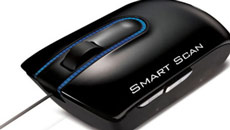
    MobScan has built-in technologies that helps to scan as well as edit the scanned material.

    Do you believe it! A computer mouse that can also scan

    Australian varsity signs MoU with two oldest IITs

    Australian varsity signs MoU with two oldest IITs
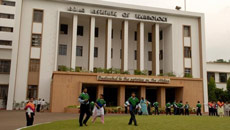
    In a bid to strengthen relationship with India in the areas of research and teaching, an Australian university has signed agreements with two Indian Institutes of Technology (IITs).

    Australian varsity signs MoU with two oldest IITs

    Magnets to power your fridge!

    Magnets to power your fridge!
    Within a decade, we could be using much more energy-efficient refrigerators than what we have today as researchers have now identified a new “universal” property of metamagnets, unleashing its potential applications for several items of everyday use.

    Magnets to power your fridge!

    Amazing! 'Gesture' keyboard lets you swipe words in air!

    Amazing! 'Gesture' keyboard lets you swipe words in air!
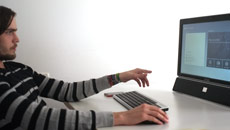
    Based partly on sensor technology built for the Microsoft Kinect games, the keyboards of the future could let users manipulate data without sitting down and typing in one letter at a time.

    Amazing! 'Gesture' keyboard lets you swipe words in air!

    Learn how to limit screen time for kids

    Learn how to limit screen time for kids
    It is no longer just the television or the computer that young children are glued to these days as smart phones and tablets have made it even more difficult for parents to limit the screen time for their kids.

    Learn how to limit screen time for kids