Thursday, December 25, 2025
ADVT 
Tech

Print A 3D Selfie Of Your Body

Darpan News Desk IANS, 17 Feb, 2015 12:34 PM
    Ever fancied a 3D selfie of yours? Well, that's perhaps going to be the next cool thing in the realm of selfies.
     
    Dusseldorf-based DOOB 3D can produce a detailed, four-inch figurine of your body, or in other words, a 3D selfie, reported Wired.com.
     
    Making one of these figurines requires a massive pile of hardware and software - 54 DSLRs, 54 lenses, a complex 3D modelling pipeline, and an $80,000 full-colour 3D printer, not to mention a room-size scanning booth.
     
    The company has four 3D scanning booths (called "Doob-licators") scattered in strategic locations throughout the world.
     
    There's one in Dusseldorf, one in Tokyo, one at Santa Monica Place in Los Angeles, and one in New York City's Chelsea Market. The DOOB shop in New York has been a pretty big hit.
     
    The Doob-licator saw about 500 customers over the winter holiday season, Michael Anderson, CEO of DOOB 3D USA, was reported as saying by Wired.
     
    About 10 percent of the booth's customers got their pets Doob-licated.
     
    "At first, (people got DOOBs made) mostly on a whim. Now, at least two thirds of our customers have planned ahead to get a DOOB," Anderson said.
     
    Each Doob-licator is outfitted with 54 Canon EOS Rebel T5i DSLRs, arranged in nine columns of six cameras each.
     
    A customer steps in, strikes a pose, and the Doob-licator operator fires all the cameras at once. That creates a full-body scan in a fraction of a second.
     
    The next step involves feeding all those 18-megapixel images through the company's proprietary software, which creates a 3D model of the subject.
     
    The printing process requires more patience. A high-resolution laser-sintering 3D printer uses a resin polymer material, and the full range of CMYK colour is added to each powder layer as it's printed.
     
    With a top printing speed of 1.1 inches per hour and a process that sometimes involves thousands of layers of powder, the process takes a few hours for the smallest-size DOOB and half a day or more for the larger ones.
     
    A life-size statue can cost up to $75,000.
    MORE Tech ARTICLES

    Amnesty International launches app for activists in danger

    Amnesty International launches app for activists in danger
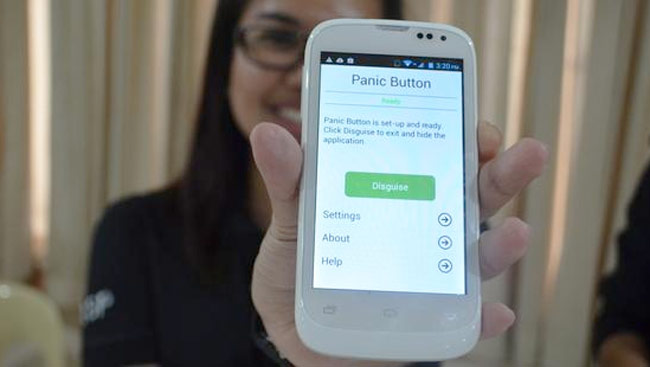
    Amnesty International has launched a new open source app called 'Panic Button’ to help activists facing imminent danger.

    Amnesty International launches app for activists in danger

    Now, a tool to predict financial pain from cancer

    Now, a tool to predict financial pain from cancer
    Along with distress that comes with cancer diagnosis and the discomfort of treatment, more patients now have to deal with "financial toxicity", the expense, anxiety and loss of confidence confronting those who face large, unpredictable costs.

    Now, a tool to predict financial pain from cancer

    LinkedIn unveils new app for job seekers

    LinkedIn unveils new app for job seekers
    If you are a job seeker and a LinkedIn user, this app may just be for you.

    LinkedIn unveils new app for job seekers

    App to measure breathing rate inside 10 seconds

    App to measure breathing rate inside 10 seconds
    A new mobile app can measure respiratory rate in children roughly six times faster than the standard stop watch method.

    App to measure breathing rate inside 10 seconds

    App can change your nail colour in seconds!

    App can change your nail colour in seconds!
    Do you want to change your nail paint everyday but don't have enough time or patience? Worry not, a new app can take care of that.

    App can change your nail colour in seconds!

    'Smart' glasses to help people with poor vision

    'Smart' glasses to help people with poor vision
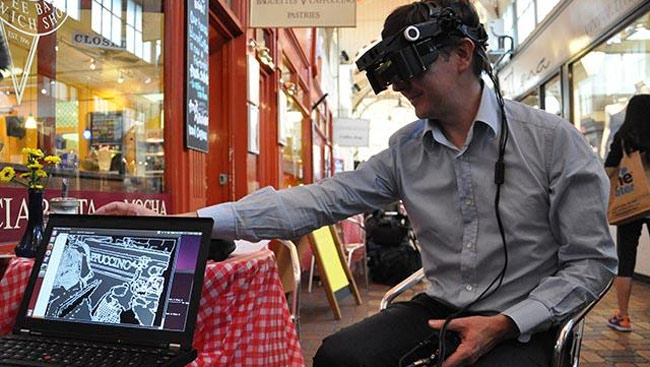
    Google glass may allow you to click pictures and do video recording on the go, but Oxford University researchers are now developing a "smart" glass that enables people with poor vision to spot obstacles and "see" movement and facial expressions.

    'Smart' glasses to help people with poor vision