Saturday, December 13, 2025
ADVT 
Tech

Self-cooling solar cells to last longer

Darpan News Desk IANS, 23 Jul, 2014 07:36 AM
    What if a solar cell could keep itself cool even in the blistering heat of the sun?
     
    By adding a specially patterned layer of silica glass to the surface of ordinary solar cells, a team of researchers has found a way to let solar cells cool themselves by shedding unwanted thermal radiation.
     
    This paves the way for developing high-efficiency, long-lasting solar cells.
     
    For every one-degree Celsius increase in temperature, the efficiency of a solar cell declines by about half a percent.
     
    "That decline is very significant. The solar cell industry invests significant amounts of capital to generate improvements in efficiency," informed Aaswath Raman, a postdoctoral scholar at Stanford University.
     
    Under normal operating conditions, solar cells can easily reach temperatures of 55 degrees Celsius or more.
     
    Actively cooling solar cells by ventilation or coolants would be prohibitively expensive and at odds with the need to optimize exposure to the sun.
     
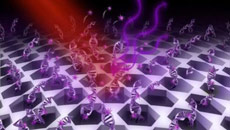
    The newly-proposed design embeds tiny pyramid- and cone-shaped structures on an incredibly thin layer of silica glass.
     
    With this, researchers found a way of redirecting unwanted heat - in the form of infrared radiation - from the surface of solar cells through the atmosphere and back into space.
     
    "Our new approach can lower the operating temperature of solar cells passively, improving energy conversion efficiency significantly and increasing the life expectancy of solar cells," explained Linxiao Zhu, a physicist at Stanford University.
     
    "These two benefits should enable the continued success and adoption of solar cell technology," added Shanhui Fan, an electrical engineering professor at Stanford.
     
    Silica is transparent to visible light, but it is also possible to fine-tune how it bends and refracts light of specific wavelengths.
     
    "A carefully designed layer of silica glass would not degrade the performance of the solar cell, but it would enhance radiation at the predetermined thermal wavelengths to send the solar cell's heat away more effectively," Fan concluded.
     
    The research was published in the journal Optica.

    MORE Tech ARTICLES

    Major setback to Microsoft: No Windows 8 in China

    Major setback to Microsoft:  No Windows 8 in China
    In a major setback to Microsoft, China has banned purchase of Windows 8, the latest version of the US software giant's venerable desktop operating system, for government computers.

    Major setback to Microsoft: No Windows 8 in China

    Technology to lower risk of midair collisions

    Technology to lower risk of midair collisions
    Here is a new technology that has successfully lowered the risk of midair collisions in small aircraft.

    Technology to lower risk of midair collisions

    Apple rejects app to facilitate female masturbation

    Apple rejects app to facilitate female masturbation
     An app that teaches women how to masturbate has been removed by Apple from its iTunes stores worldwide.

    Apple rejects app to facilitate female masturbation

    Bizarre! One in six Britons prefer sex with robots

    Bizarre! One in six Britons prefer sex with robots
    Roughly one in six respondents would “have sex with an android” and another one in three (29 percent) were 'OK' with others getting down with robots, the survey revealed.

    Bizarre! One in six Britons prefer sex with robots

    Want to know how to get a good raise? Read this!

    Want to know how to get a good raise? Read this!
    Have you received a less favourable appraisal from your boss this year? You are likely coming to office late. A study has found bosses to be favouring employees who, even though on flexible timings, arrived early.

    Want to know how to get a good raise? Read this!

    New technology may improve light-based cancer treatment

    New technology may improve light-based cancer treatment
    Researchers have developed a new technology that could bring photodynamic therapy (PDT), which uses lasers to activate special drugs to treat easily accessible tumours such as oral and skin cancer, into areas of the body which were previously inaccessible.

    New technology may improve light-based cancer treatment