Wednesday, December 17, 2025
ADVT 
Tech

Self-cooling solar cells to last longer

Darpan News Desk IANS, 23 Jul, 2014 07:36 AM
    What if a solar cell could keep itself cool even in the blistering heat of the sun?
     
    By adding a specially patterned layer of silica glass to the surface of ordinary solar cells, a team of researchers has found a way to let solar cells cool themselves by shedding unwanted thermal radiation.
     
    This paves the way for developing high-efficiency, long-lasting solar cells.
     
    For every one-degree Celsius increase in temperature, the efficiency of a solar cell declines by about half a percent.
     
    "That decline is very significant. The solar cell industry invests significant amounts of capital to generate improvements in efficiency," informed Aaswath Raman, a postdoctoral scholar at Stanford University.
     
    Under normal operating conditions, solar cells can easily reach temperatures of 55 degrees Celsius or more.
     
    Actively cooling solar cells by ventilation or coolants would be prohibitively expensive and at odds with the need to optimize exposure to the sun.
     
    The newly-proposed design embeds tiny pyramid- and cone-shaped structures on an incredibly thin layer of silica glass.
     
    With this, researchers found a way of redirecting unwanted heat - in the form of infrared radiation - from the surface of solar cells through the atmosphere and back into space.
     
    "Our new approach can lower the operating temperature of solar cells passively, improving energy conversion efficiency significantly and increasing the life expectancy of solar cells," explained Linxiao Zhu, a physicist at Stanford University.
     
    "These two benefits should enable the continued success and adoption of solar cell technology," added Shanhui Fan, an electrical engineering professor at Stanford.
     
    Silica is transparent to visible light, but it is also possible to fine-tune how it bends and refracts light of specific wavelengths.
     
    "A carefully designed layer of silica glass would not degrade the performance of the solar cell, but it would enhance radiation at the predetermined thermal wavelengths to send the solar cell's heat away more effectively," Fan concluded.
     
    The research was published in the journal Optica.

    MORE Tech ARTICLES

    Get that grocery home by app? Amazon!

    Get that grocery home by app? Amazon!
    Tired of juggling to park your car as you approach the supermarket to finish weekend shopping for kitchen? Better download this app that would work as a virtual servant for you.

    Get that grocery home by app? Amazon!

    Watch live telecast from moon in 2015

    Watch live telecast from moon in 2015
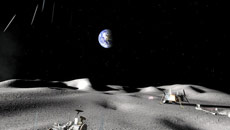
    You may soon be able to watch live telecast from the moon, and closely see how it looks like from the surface that has fascinated young and old alike since ages.

    Watch live telecast from moon in 2015

    Happy birthday! Gmail turns 10

    Happy birthday! Gmail turns 10
    Your favourite webmail service Gmail has turned 10. Launched April 1, 2004, Google’s simple, user-friendly inbox today is an undisputed leader in email and related services.

    Happy birthday! Gmail turns 10

    Are you happily disgusted or sadly angry? Find out

    Are you happily disgusted or sadly angry? Find out
    What if your computer can distinguish even expressions for complex or seemingly contradictory emotions such as 'happily disgusted' or 'sadly angry'?

    Are you happily disgusted or sadly angry? Find out

    Why scholars don't trust social media?

    Why scholars don't trust social media?
    At a time when people from all walks of life are using various social media platforms to send their message across, the trend is just the opposite in case of university scholars.

    Why scholars don't trust social media?

    Indian scientist contests Big Bang `evidences'

    Indian scientist contests Big Bang `evidences'
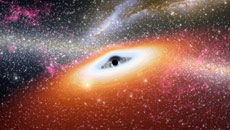
    Indian astrophysicist Abhas Mitra, at the Bhabha Atomic Research Centre (BARC) in Mumbai, who had once challenged the Black Hole theory of Britain's famed Stephen Hawking is in the limelight again.

    Indian scientist contests Big Bang `evidences'