Wednesday, December 17, 2025
ADVT 
Tech

Social media helps get science work noticed

Darpan News Desk IANS, 07 Nov, 2014 12:19 PM
    Sharing science work via social media like Twitter is good for researchers in getting their works noticed, shows a study.
     
    Even young scientists are more keen to share their achievements via the social media, showed the study.
     
    "I've been in science communication for a while now, and I am really seeing a change - especially among the younger scientists - in their willingness to share their work," said Dominique Brossard, professor life sciences communication at University of Wisconsin-Madison, US.
     
    There is a link between "h-index" -- a measure of the quality of a researcher's work and influence -- and whether the scientists interact with reporters and get mentioned on Twitter, showed the study.
     
    “Attention from reporters is good news for h-index, but couple that with attention on Twitter, and you see a more pronounced spike in reputation,” stressed Brossard.
     
    Around 30 percent of the members of the faculty at UW-Madison are using social media at least three times per week to find news and insights about science, showed the study.
     
    "What this shows us is that sharing your science with the public is not hurting the science by stealing time," stressed Brossard.
     
    "As in other areas, such as politics for example, social media was once met with scepticism but is increasingly part of the culture," pointed out Michael Xenos from University of Wisconsin-Madison.
     
    If the goal is to encourage people to be productive scientists, and if directors of labs are discouraging people from engaging in this activity, they are actually hurting the science itself. Because people who do this are cited more often in scientific journals, they are making science accessible to broader audiences at the same time, concluded Brossard.
     
    The study appeared in the journal Journalism and Mass Communications Quarterly.
    MORE Tech ARTICLES

    How does nature's strongest glue stick?

    How does nature's strongest glue stick?
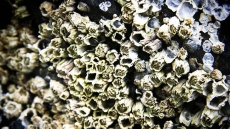
    Barnacles produce the strongest glue or cement found in nature. The material is better than anything we have developed synthetically and sticks to any surface, even underwater...

    How does nature's strongest glue stick?

    Oceans vital for alien life on other planets

    Oceans vital for alien life on other planets
    Oceans have an immense capacity to control climate and they are vital in sustaining life even in case there is any on other planets, says a study....

    Oceans vital for alien life on other planets

    Sniffer laser for hard-to-detect explosives

    Sniffer laser for hard-to-detect explosives
    There's bad news for bomb-sniffing dogs: researchers have found a way to increase the sensitivity of a light-based sensor to detect incredibly minute amounts of explosives....

    Sniffer laser for hard-to-detect explosives

    NASA celebrates 45 years of moon landing

    NASA celebrates 45 years of moon landing
    On July 20, 1969, Apollo 11 astronauts Neil Armstrong and Buzz Aldrin became the first humans to set foot on the moon....

    NASA celebrates 45 years of moon landing

    New technology to make nuclear waste clean-up cheaper

    New technology to make nuclear waste clean-up cheaper
    In what could solve the commercial problems associated with clean-up of nuclear waste, researchers have successfully tested a material that can extract...

    New technology to make nuclear waste clean-up cheaper

    Plant's biomass depends more on size, age than on climate

    Plant's biomass depends more on size, age than on climate
    Plant's productivity, that is the amount of biomass it produces, depends more on its size and age than temperature and precipitation as traditionally thought, says a study....

    Plant's biomass depends more on size, age than on climate