Wednesday, February 11, 2026
ADVT 
Tech

This computer understands science better than humans

Darpan News Desk IANS, 02 Dec, 2014 12:56 PM
    A computer developed by the University of Wisconsin-Madison (UWM) has proved that it is better than scientists at extracting data from scientific publications and placing it in a database amongst thousands of other results.
     
    “We demonstrated that the system was no worse than people on all the things we measured and it was better in some categories," said Christopher Re, lead researcher from Stanford University.
     
    The machine reading system named “PaleoDeepDive” competed with scientists to manually enter data into the Paleobiology Database.
     
    The database, compiled by hundreds of researchers, is the destination for data from all palaeontology studies.
     
    “PaleoDeepDive” mirrored the human activities needed to assemble the Paleobiology Database.
     
    “We extracted the same data from the same documents and put it into the exact same structure as the human researchers, allowing us to rigorously evaluate the quality of our system and the humans," said Shanan Peters from the UWM.
     
    Compiling the data, “PaleoDeepDive” could extend and improve results quickly as new information was added while humans had to go back to the library and re-examine original documents constantly.
     
    “The development marks a milestone in the quest to rapidly and precisely summarize, collate and index the vast output of scientists around the globe,” Peters added.
     
    "Ultimately, we hope to have the ability to create a computer system that can read a bunch of papers, arrange a bunch of facts and relate them to one another in order to address big questions,” he said.
     
    The results were published in the journal PloS One.
    MORE Tech ARTICLES

    What you were waiting for, a self-driving car

    What you were waiting for, a self-driving car
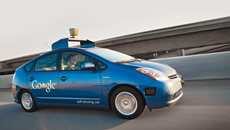
    “We have improved our software so it can detect hundreds of distinct objects simultaneously - pedestrians, buses, a stop sign held up by a crossing guard, or a cyclist making gestures that indicate a possible turn,” Chris Urmson, who leads Google’s self-driving car programme, wrote in a blog post.  

    What you were waiting for, a self-driving car

    Do you believe it! A computer mouse that can also scan

    Do you believe it! A computer mouse that can also scan
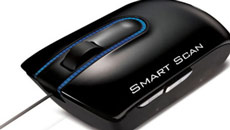
    MobScan has built-in technologies that helps to scan as well as edit the scanned material.

    Do you believe it! A computer mouse that can also scan

    Australian varsity signs MoU with two oldest IITs

    Australian varsity signs MoU with two oldest IITs
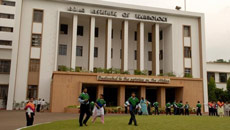
    In a bid to strengthen relationship with India in the areas of research and teaching, an Australian university has signed agreements with two Indian Institutes of Technology (IITs).

    Australian varsity signs MoU with two oldest IITs

    Magnets to power your fridge!

    Magnets to power your fridge!
    Within a decade, we could be using much more energy-efficient refrigerators than what we have today as researchers have now identified a new “universal” property of metamagnets, unleashing its potential applications for several items of everyday use.

    Magnets to power your fridge!

    Amazing! 'Gesture' keyboard lets you swipe words in air!

    Amazing! 'Gesture' keyboard lets you swipe words in air!
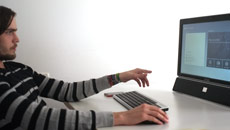
    Based partly on sensor technology built for the Microsoft Kinect games, the keyboards of the future could let users manipulate data without sitting down and typing in one letter at a time.

    Amazing! 'Gesture' keyboard lets you swipe words in air!

    Learn how to limit screen time for kids

    Learn how to limit screen time for kids
    It is no longer just the television or the computer that young children are glued to these days as smart phones and tablets have made it even more difficult for parents to limit the screen time for their kids.

    Learn how to limit screen time for kids