Friday, December 26, 2025
ADVT 
Tech

Two Indians MIT Researchers' Chip Powers Wearable Device To Guide Visually-Impaired

Darpan News Desk IANS, 05 Feb, 2016 12:31 PM
    Researchers, including two Indians, at the Massachusetts Institute of Technology (MIT) have developed a low-power chip that could help visually-impaired people navigate their environments.
     
    The chip processes 3-D camera data consuming only one-thousandth as much power as a conventional computer processor executing the same algorithms and powers a prototype of a complete navigation system about the size of a binoculars case that can be worn around the neck. 
     
    A mechanical Braille interface developed at MIT's Computer Science and Artificial Intelligence Laboratory (CSAIL) conveys to the user information about the distance to the nearest obstacle in the direction the user is moving.
     
    "There was some prior work on this type of system, but the problem was that the systems were too bulky," said first author Dongsuk Jeon, a researcher at MIT's Microsystems Research Laboratories (MTL) when the navigation system was developed. He has now joined the faculty of Seoul National University in South Korea. 
     
    Jeon's team included professor of electrical engineering and computer science Anantha Chandrakasan, graduate student Priyanka Raina, professor of electrical engineering and computer science Daniela Rus, former research scientist at MTL Nathan Ickes and CSAIL researcher Hsueh-Cheng Wang. 
     
    Although the prototype navigation system is less obtrusive than its predecessors, it should be possible to miniaturise it even further, according to the researchers. 
     
    The new chip and the prototype navigation system was reported in a paper presented at the International Solid-State Circuits Conference held from January 31 to February 4 in San Francisco.


    MORE Tech ARTICLES

    Indian-origin engineers create device for faster wireless technology

    Indian-origin engineers create device for faster wireless technology
    Using an inexpensive Rs.3,600 inkjet printer, two Indian-origin electrical engineers at the University of Utah have for the first time produced microscopic structures that use light in metals to carry information

    Indian-origin engineers create device for faster wireless technology

    China Logs on to its First Internet-Themed Museum

    China Logs on to its First Internet-Themed Museum
    China will build its first internet museum to chronicle the development of the net in the increasingly wired country, China's internet network watchdog said Friday.

    China Logs on to its First Internet-Themed Museum

    What? Taller men are smarter too!

    What? Taller men are smarter too!
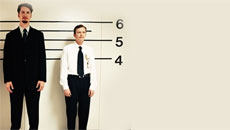
    The fact is that women fall for men who are taller. Now, they have an extra reason to go for them as researchers have discovered a significant correlation in the DNA between tall people and intelligence.

    What? Taller men are smarter too!

    Revealed: How Earth gets protection from space weather

    Revealed: How Earth gets protection from space weather
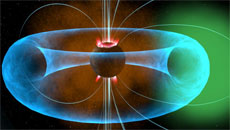
    The NASA scientists have discovered how dense particles near earth can send a plume up through space to help protect against incoming solar particles during certain space weather events.

    Revealed: How Earth gets protection from space weather

    Dream about a space trip? Click Here

    Dream about a space trip? Click Here
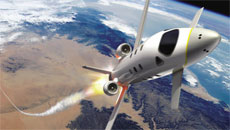
    Have an extra Rs.1.25 crore in your kitty? You can book a seat on a European plane that would take passengers to over 100 km in the sky -- enabling them to experience how being in space feels.

    Dream about a space trip? Click Here

    A giant leap towards discovering life beyond earth

    A giant leap towards discovering life beyond earth
    In what could be called a game changer in search of life outside our galaxy, astronomers have used a digital camera imaging technology to take a picture of a planet far from our solar system with an earth-based telescope.

    A giant leap towards discovering life beyond earth