Wednesday, December 24, 2025
ADVT 
Tech

Two Indians MIT Researchers' Chip Powers Wearable Device To Guide Visually-Impaired

Darpan News Desk IANS, 05 Feb, 2016 12:31 PM
    Researchers, including two Indians, at the Massachusetts Institute of Technology (MIT) have developed a low-power chip that could help visually-impaired people navigate their environments.
     
    The chip processes 3-D camera data consuming only one-thousandth as much power as a conventional computer processor executing the same algorithms and powers a prototype of a complete navigation system about the size of a binoculars case that can be worn around the neck. 
     
    A mechanical Braille interface developed at MIT's Computer Science and Artificial Intelligence Laboratory (CSAIL) conveys to the user information about the distance to the nearest obstacle in the direction the user is moving.
     
    "There was some prior work on this type of system, but the problem was that the systems were too bulky," said first author Dongsuk Jeon, a researcher at MIT's Microsystems Research Laboratories (MTL) when the navigation system was developed. He has now joined the faculty of Seoul National University in South Korea. 
     
    Jeon's team included professor of electrical engineering and computer science Anantha Chandrakasan, graduate student Priyanka Raina, professor of electrical engineering and computer science Daniela Rus, former research scientist at MTL Nathan Ickes and CSAIL researcher Hsueh-Cheng Wang. 
     
    Although the prototype navigation system is less obtrusive than its predecessors, it should be possible to miniaturise it even further, according to the researchers. 
     
    The new chip and the prototype navigation system was reported in a paper presented at the International Solid-State Circuits Conference held from January 31 to February 4 in San Francisco.

    MORE Tech ARTICLES

    Twitter new market for e-cigarettes?

    Twitter new market for e-cigarettes?
    While advertising for conventional cigarettes has long been prohibited in the US, e-cigarettes are being routinely advertised in traditional and social media including twitter, claims a new study.

    Twitter new market for e-cigarettes?

    Facebook launches app to share short-lived photos, videos

    Facebook launches app to share short-lived photos, videos
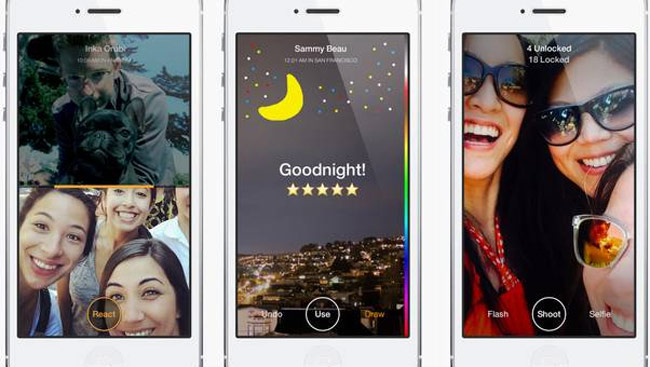
    Social networking site Facebook has launched a new app called Slingshot that allows people to share short-lived photos and videos with one another.

    Facebook launches app to share short-lived photos, videos

    'Smart' eye-embedded device can manage glaucoma better

    'Smart' eye-embedded device can manage glaucoma better
    In a ray of hope for glaucoma patients, engineers have designed a first of its kind electronic sensor that can be placed permanently in a person's eye to track changes in eye pressure.

    'Smart' eye-embedded device can manage glaucoma better

    App to make your fussy kid eat

    App to make your fussy kid eat
    Do you find your kids' mealtime frustrating as he/she throws tantrums, refuses to try new cuisines or eats only a little portion?

    App to make your fussy kid eat

    Selfies daunting women on bad skin days: Study

    Selfies daunting women on bad skin days: Study
    Selfie trend has taken over social media, and it somehow propels everyone to look photo-ready all of the time. But a latest research shows that 68 percent of women feel negative about photos of themselves that haven’t been enhanced by a photographic filter.

    Selfies daunting women on bad skin days: Study

    Like it! Emotions can spread among Facebook users

    Like it! Emotions can spread among Facebook users
    When things just do not go your way, do you often turn to Facebook to find emotional support from friends? Keep doing this as this so-called "emotional contagion" effect works both ways.

    Like it! Emotions can spread among Facebook users