Thursday, December 25, 2025
ADVT 
Tech

Two Indians MIT Researchers' Chip Powers Wearable Device To Guide Visually-Impaired

Darpan News Desk IANS, 05 Feb, 2016 12:31 PM
    Researchers, including two Indians, at the Massachusetts Institute of Technology (MIT) have developed a low-power chip that could help visually-impaired people navigate their environments.
     
    The chip processes 3-D camera data consuming only one-thousandth as much power as a conventional computer processor executing the same algorithms and powers a prototype of a complete navigation system about the size of a binoculars case that can be worn around the neck. 
     
    A mechanical Braille interface developed at MIT's Computer Science and Artificial Intelligence Laboratory (CSAIL) conveys to the user information about the distance to the nearest obstacle in the direction the user is moving.
     
    "There was some prior work on this type of system, but the problem was that the systems were too bulky," said first author Dongsuk Jeon, a researcher at MIT's Microsystems Research Laboratories (MTL) when the navigation system was developed. He has now joined the faculty of Seoul National University in South Korea. 
     
    Jeon's team included professor of electrical engineering and computer science Anantha Chandrakasan, graduate student Priyanka Raina, professor of electrical engineering and computer science Daniela Rus, former research scientist at MTL Nathan Ickes and CSAIL researcher Hsueh-Cheng Wang. 
     
    Although the prototype navigation system is less obtrusive than its predecessors, it should be possible to miniaturise it even further, according to the researchers. 
     
    The new chip and the prototype navigation system was reported in a paper presented at the International Solid-State Circuits Conference held from January 31 to February 4 in San Francisco.
    MORE Tech ARTICLES

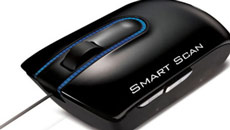
    Do you believe it! A computer mouse that can also scan

    Do you believe it! A computer mouse that can also scan
    MobScan has built-in technologies that helps to scan as well as edit the scanned material.

    Do you believe it! A computer mouse that can also scan

    Australian varsity signs MoU with two oldest IITs

    Australian varsity signs MoU with two oldest IITs
    In a bid to strengthen relationship with India in the areas of research and teaching, an Australian university has signed agreements with two Indian Institutes of Technology (IITs).

    Australian varsity signs MoU with two oldest IITs

    Magnets to power your fridge!

    Magnets to power your fridge!
    Within a decade, we could be using much more energy-efficient refrigerators than what we have today as researchers have now identified a new “universal” property of metamagnets, unleashing its potential applications for several items of everyday use.

    Magnets to power your fridge!

    Amazing! 'Gesture' keyboard lets you swipe words in air!

    Amazing! 'Gesture' keyboard lets you swipe words in air!
    Based partly on sensor technology built for the Microsoft Kinect games, the keyboards of the future could let users manipulate data without sitting down and typing in one letter at a time.

    Amazing! 'Gesture' keyboard lets you swipe words in air!

    Learn how to limit screen time for kids

    Learn how to limit screen time for kids
    It is no longer just the television or the computer that young children are glued to these days as smart phones and tablets have made it even more difficult for parents to limit the screen time for their kids.

    Learn how to limit screen time for kids

    Smart phone can help you shed weight better!

    Smart phone can help you shed weight better!
    Smart phone applications can help dieters integrate healthy behaviour changes into their daily lives, researchers from University of Missouri (MU) Columbia have revealed.

    Smart phone can help you shed weight better!