Tuesday, May 12, 2026
ADVT 
Tech

Upload 'Average' Photo For Better Smartphone Recognition

Darpan News Desk IANS, 01 Apr, 2015 11:45 AM
    Does your smartphone fail to recognise you at times when you try to use "face unlock" system? Upload an "average" photo of yourself for better recognition.
     
    According to new research by scientists at the University of York, face recognition security on smartphones can be significantly improved if users store an "average" photo of themselves.
     
    David Robertson found that combining different pictures of the user, rather than a single "target" image, leads to much better recognition across all kinds of daily settings.
     
    The researchers examined the performance of the 'face unlock' system on Samsung Galaxy smartphones.
     
    "We chose to study the Samsung Galaxy because it is a very popular phone which comes with working face recognition technology," Robertson added.
     
    They found that the system was generally very good at rejecting imposters but that it often failed to recognise the genuine owner too.
     
    However, performance could be greatly improved, often to perfect levels, if users stored an 'average' of their own photos -- formed by morphing together several different photos of the user.
     
    "We expect this technique to work across a wide range of phones and other automated recognition devices. It is very interesting that performance can be so much improved by copying a simple trick performed by the brain," he noted in a paper published in the journal PLOS ONE.
     
    The idea for this technique comes from studies of human face recognition. It is understood that the brain forms abstract representations of the faces it knows, and that people are very good at recognising their family and friends over a range of conditions.
     
    If it is possible to copy these representations, then automatic face recognition can improve.
     
    "Using 'average' images is a simple way to do this," the authors concluded.

    MORE Tech ARTICLES

    Revealed: How Twitter shapes public opinion

    Revealed: How Twitter shapes public opinion
    Since public opinion levels off and evolves into an ordered state within a short time, small advantages of one opinion in the early stages can turn into a bigger advantage during the evolution of public opinion

    Revealed: How Twitter shapes public opinion

    Watch out! Cell phone addiction may kill parent-child bond

    Watch out! Cell phone addiction may kill parent-child bond
    Do you often play games, check emails or respond to office calls on your cell phone while with family on a dinner? This phone addiction can damage your emotional bonding with kids soon.

    Watch out! Cell phone addiction may kill parent-child bond

    What? Plant-powered FM radio is here

    What? Plant-powered FM radio is here
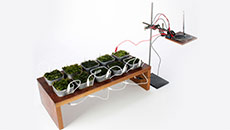
    Named Moss FM, the radio is designed by University of Cambridge biochemist Paolo Bombelli and London-based product designer Fabienne Felder.

    What? Plant-powered FM radio is here

    Incredible! Earth goes red for better health!

    Incredible! Earth goes red for better health!
    Taken by NASA's MErcury Surface, Space ENvironment, GEochemistry, and Ranging (MESSENGER) spacecraft, it shows fertile areas from South America 

    Incredible! Earth goes red for better health!

    Here's an iPhone app that paints your photos into masterpieces

    Here's an iPhone app that paints your photos into masterpieces
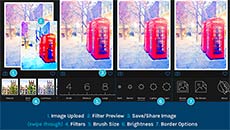
    The app now simulates the spreading and bleeding of the pigment onto the canvas - with dedicated properties for the virtual paper, the pigment, the brushes, the water and so on

    Here's an iPhone app that paints your photos into masterpieces

    3D-printed replica for a safe liver transplant created

    3D-printed replica for a safe liver transplant created
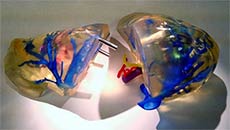
    The 3D-printed liver replicas, made of transparent material threaded with coloured arteries and veins, could help surgeons prevent complications while performing liver transplants or removing tumours, a path-breaking research shows.

    3D-printed replica for a safe liver transplant created