Friday, December 19, 2025
ADVT 
Tech

World's fastest camera is here

Darpan News Desk IANS, 04 Dec, 2014 11:17 AM
    A team of biomedical engineers has developed the world's fastest camera, a device that can capture events up to 100 billion frames per second.
     
    The current ultrafast imaging techniques are limited by on-chip storage and electronic readout speed to operations of about 10 million frames per second.
     
    "For the first time, humans can see light pulses on the fly," said Lihong Wang, professor of Biomedical Engineering at Washington University in St. Louis.
     
    "Because this technique advances the imaging frame rate by orders of magnitude, we now enter a new regime to open up new visions,” said Wang.
     
    The team used a technique called compressed ultrafast photography (CUP) to make movies of the images they took with single laser shots.
     
    This is a series of devices customised to work with high-powered microscopes and telescopes to capture dynamic natural and physical phenomena.
     
    Once the raw data are acquired, the actual images are formed on a personal computer.
     
    "These ultrafast cameras have the potential to greatly enhance our understanding of very fast biological interactions and chemical processes and allow us to build better models of complex, dynamical systems," said Richard Conroy from National Institute of Biomedical Imaging and Bioengineering, US.
     
    The camera may have wider application in areas like biomedicine, astronomy and forensics.
     
    "Combine CUP imaging with the Hubble Telescope, and we will have both the sharpest spatial resolution of the Hubble and the highest temporal solution with CUP," said Wang.
     
    “Each new technique, especially one of a quantum leap forward, is always followed a number of new discoveries. It's our hope that CUP will enable new discoveries in science -- ones that we can't even anticipate yet," said Wang.
     
    The research appeared in the journal Nature.
    MORE Tech ARTICLES

    Detector to keep you off Google Glass radar

    Detector to keep you off Google Glass radar
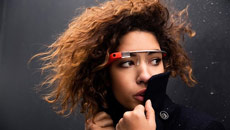
    Amid news that bars in San Francisco and Seattle in the US have already banned wearers of Google Glass, a wearable computer that allows users to take photos and record videos, a Berlin-based artist has come up with a detector that can help you create your own "glasshole-free zone".

    Detector to keep you off Google Glass radar

    Facebook opens door to under-13s, but with parents' nod

    Facebook opens door to under-13s, but with parents' nod
    Anyone under 13 years of age but wanting a Facebook account to connect with friends, would now be able to do so now but with parents' approval first.

    Facebook opens door to under-13s, but with parents' nod

    180 Google satellites to bring entire planet online

    180 Google satellites to bring entire planet online
    When you are busy chatting or surfing the internet, do you know that nearly 4.8 billion people - or two-third of the world's population - are not yet online? This is going to change soon.

    180 Google satellites to bring entire planet online

    Japan home to world's most sophisticated toilets

    Japan home to world's most sophisticated toilets
    Japan is home to the world's most sophisticated toilets, with consumers being able to choose from gold-plated and aquarium-equipped models, as well as one commode that gives the user the feeling of being a ski jumper.

    Japan home to world's most sophisticated toilets

    Forget speed, this device can detect alcohol in moving cars

    Forget speed, this device can detect alcohol in moving cars
    Breath alcohol testers or breathalysers that traffic police use to check your bubbly quotient when you drive can soon be things of the past. No, don't feel excited yet.

    Forget speed, this device can detect alcohol in moving cars

    Soon, electric wires to charge your cars, phones

    Soon, electric wires to charge your cars, phones
    So far, electric cables have been used only to transmit electricity. But soon, you will be able to power your mp3 player, smartphone and electric car from cables that can store energy.

    Soon, electric wires to charge your cars, phones