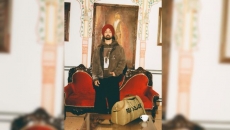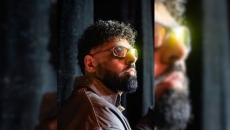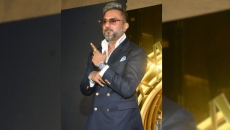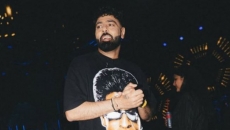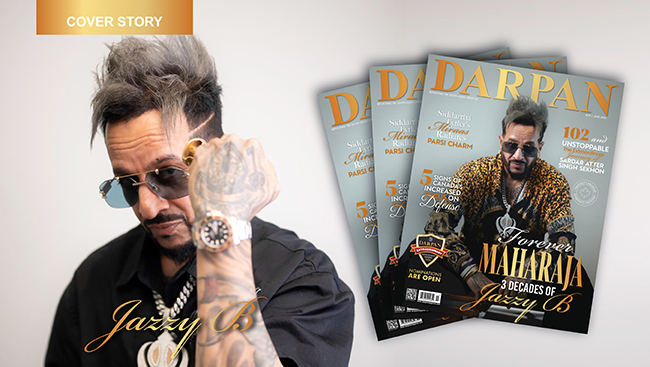
The New York Times once called him the “Michael Jackson of India.”
To fans across generations, he became the Crown Prince of Bhangra.
To Punjabi music lovers, he is the Original Folkstar.
To Canada’s South Asian community, he is proof that immigrants can arrive with little and still leave a cultural legacy that echoes across continents.
But before the fame, the gold chains, the sold-out arenas, and the unmistakable voice, there was simply a little boy named Jaswinder Singh Bains—or as his mother lovingly called him, Jaswindaarr.
A four-year-old child perched on his Chacha's shoulders in a village gathering in Punjab, staring in complete awe at Ustad Kuldeep Manak.
That moment changed everything.
“Just the way he looked, the way he sang, the power in his voice,” Jaswinder Bains recalls, almost as if he is reliving it in real time. “I remember thinking, this is what I want to do.” At four years old, he had already found his calling. Thirty years later, the world is still listening.
Jazzy B and the Boys in Surrey
Long before Punjabi music filled arenas worldwide, before social media turned Punjabi artists into global stars, before luxury cars blasted bhangra through downtown Vancouver streets, there was a very different reality for South Asians in Canada.
When Bains moved to Surrey as a child, he entered a country where South Asian families were still trying to carve out space for themselves. Racism was open, casual, and pretty common. “They would swear at us, throw things at us while we walked,” he says matter-of-factly. “It was tough back then.”
Yet, despite it all, he remembers childhood with warmth. Playing street hockey and riding bikes with friends from different nationalities was nothing but normal. “That’s the beauty of being a kid,” he says. “You see everyone equally.”
Music, meanwhile, quietly followed him everywhere.
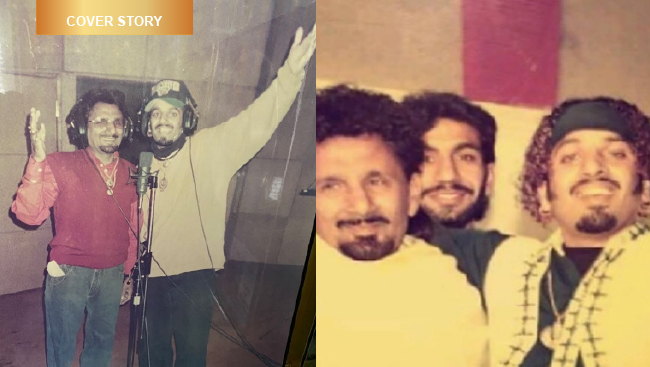
There was no musical lineage in the family. No industry connections, no blueprint. Just his instinct. He and his friends would turn living rooms into stages. Tables became platforms for performances whenever guests visited, and eventually, those same school friends formed a band together called Jazzy B and the Boys.
They rehearsed every Friday in a basement in Surrey. “We would beg people to let us perform at weddings, birthday parties, hockey tournaments—anywhere,” he remembers. There’s something beautifully poetic about that now. One of the biggest Punjabi artists in history once simply wanted someone to hand him a microphone.
The Birth of Jazzy B
Back then, he was still Jaswinder Singh Bains.
Friends shortened it to “Jazz.” Some called him “Jazzy.” On his earliest albums, the name appeared as Jazzy Bains. Then, organically, fans began saying “Jazzy B.” And it stuck. What also stuck with listeners was his persona—spiked hair, a sharp beard, the flashy jackets, and the gold. Oh, the gold!
Today it feels iconic, but in the early ’90s, it was disruptive. Punjabi singers didn’t look like that. “I always dressed like that,” he laughs. “That was just my personality.” Without even realizing it, he was reshaping Punjabi pop culture in real time.
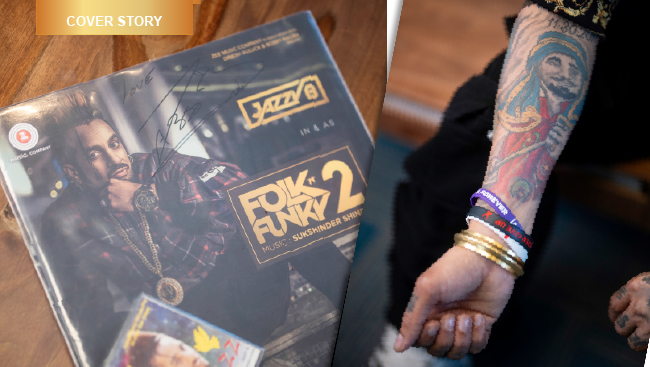
Before social media, before “branding” became an industry obsession, Bains understood something instinctively: artists are not just heard, they are remembered visually too. People copied his hairstyles, his fashion sense, and even his attitude. Years later, when fans began dressing exactly like him at concerts, even he was shocked. “I felt like Elvis,” he says with a grin.
A Leap of Faith
His debut album Ghugiyan Da Jorra released in 1993.
The process itself felt magical. Recording in studios for the first time, hearing his voice through speakers, and seeing his face on cassette covers was all too surreal. But one crucial conversation changed the trajectory of his career forever.
Sukhshinder Shinda advised him to move to the United Kingdom if he truly wanted to make it in Punjabi music. At the time, the UK was the heartbeat of Bhangra. So, Bains made a decision that would define his life. He left behind his family in Canada and moved to the UK with little more than ambition and belief. “If I didn’t move there,” he says honestly, “I don’t think I would’ve become Jazzy B.”
The move was not the easiest. He missed his mom’s food, his father, his siblings, and the familiarity of home. Suddenly, he was cooking for himself, cleaning for himself, figuring life out alongside other young dreamers trying to survive together. “But that’s when you become independent,” he says. “That’s when you appreciate your parents.”
His parents, initially uncertain about music as a career, slowly began understanding when the songs started gaining traction, and people recognized him. The dream was becoming real.
The Year Silence Took Over
And then, almost as quickly as it began, everything nearly disappeared.
In the mid-1990s, just as his career was exploding, Bains developed laryngitis. For nearly a year, he could barely sing. Doctors warned him that continuing could permanently destroy his voice.
Imagine finally reaching the life you dreamed of since childhood—only to suddenly face the possibility of losing it forever. “I used to cry myself to sleep,” he admits quietly. At the height of his popularity in England, he had to cancel shows personally, even wedding performances already booked months ahead. “I remember thinking… that’s it. Career over.”
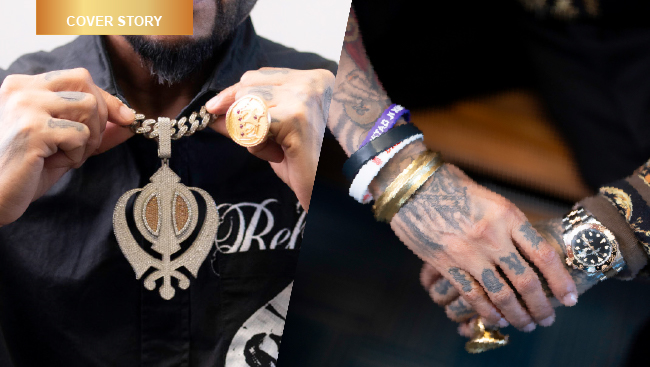
But the experience transformed him spiritually. Already deeply rooted in faith through his parents, Bains leaned even closer toward spirituality during that dark period. Friends and family prayed for him. Countless Ardaas were done for him at the Gurdwara. And slowly, his voice returned. That experience changed him forever. “It humbled me,” he says. “You realize none of this is actually yours. It can all disappear in a second.”
Perhaps that is why, even after decades of fame, there remains something deeply grounded about him. The ego never fully overtook the human being underneath.
More Than Music
To understand Bains’ impact, you have to understand timing.
Punjabi music in the ’90s was still finding its global identity. South Asians abroad often hid parts of themselves to fit in. Many immigrants hesitated to even play Punjabi songs loudly in public. “People used to turn the music down at traffic lights,” Bains remembers. “Now they blast it proudly.” Artists like him changed that confidence.
He brought Punjabi music into mainstream spaces that had previously ignored it. He performed at multicultural festivals where Punjabi music was rarely seen. MTV picked up his performances and international media noticed him. And eventually, the world did too. From collaborations with Snoop Dogg to songs appearing in Hollywood films like Deadpool, Bains became far more than just a Punjabi singer.
He became a representation for immigrants, for Punjabi culture, for an entire generation trying to belong in two worlds at once.
The Personal Loss That Changed Him
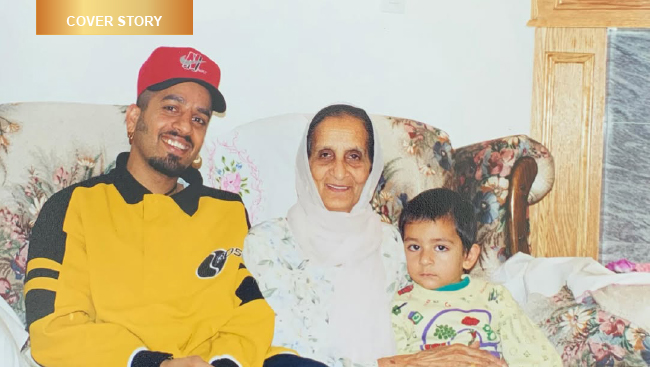
For all the highs, however, some losses never leave.
When Bains speaks about his late mother, his voice softens immediately. In 2010, while performing in Norway, he learned that she was critically ill. Still, he went on stage. “That’s the kind of job we have,” he tells me. At the end of the show, he addressed the audience directly and asked them to pray for her. He sang Maa Hundi Ae Maa.
The prayers, he believes, mattered. Doctors had said she only had a few days left to live. She survived another two years. “That gave me more time with her,” he says. “And I’ll always thank God for that.”
Even now, years later, he says there is not a single day he does not miss his parents.
Still Surrey’s Son
For someone whose influence stretches globally, Bains remains fiercely loyal to Surrey.
“Surrey gave me everything,” he says simply. That connection matters deeply to him because he remembers the journey, from Nawanshahr in Punjab to the streets of Surrey, where he first began dreaming out loud. Even today, he lights up talking about playing street hockey with local kids or running into old school friends.
Despite decades of fame, there is still something unmistakably local about him. He still feels like apna banda.
Maybe that is why generations connect with him so deeply. Grandparents love the folk roots in his music. Young fans connect with the style and energy. Kids who were not even born during Dil Luteya still sing every lyric word for word.
Very few artists survive trends. Even fewer become timeless.
The Legacy of Jazzy B
Now, more than thirty years into his career, Bains looks at the newer generation of Punjabi artists with pride.
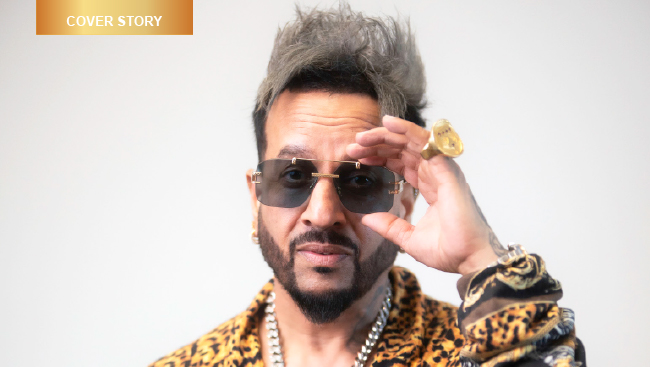
Artists like Diljit Dosanjh and Karan Aujla are filling stadiums globally, but he sees it as one long chain of artists building for the next generation. “Every artist lays a brick for the next person,” he says. That is exactly what he did. He helped make Punjabi music cool internationally before the industry truly understood its own power. He made young South Asians feel proud of their identity at a time when many were still shrinking themselves to fit in. And perhaps most importantly, he showed that success does not have to cost you your roots.
When asked what legacy he wants to leave behind, his answer is unexpectedly simple. “I just want people to say he was a good human being.” Not the biggest artist, not the most famous, not the richest. Just good.
Maybe that is why Jaswinder Singh Bains has lasted three decades while so many others faded with trends. Because underneath the gold chains, the legendary image, and the larger-than-life persona is still that same four-year-old boy sitting on his uncle’s shoulders, completely mesmerized by music.
Still dreaming.
Still singing.
Still carrying Punjab, and Surrey, with him everywhere he goes.
10 Crown Jewels of Jazzy B
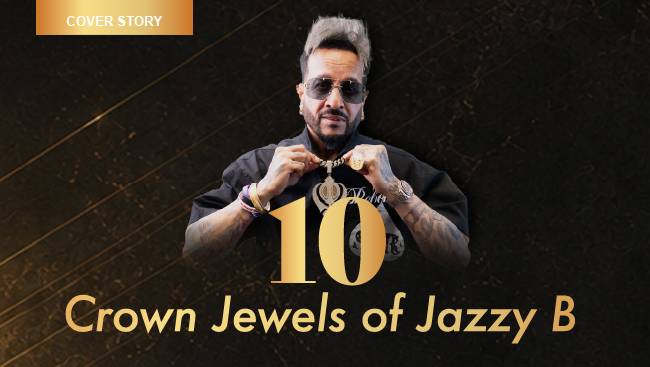
1. The title “Crown Prince of Bhangra” was given to him by Asian British music pioneer Jatinder Singh Heer. He later turned that title into a song—Crown Prince—with Bohemia.
2. He is the first South Asian entertainer inducted into the BC Entertainment Hall of Fame StarWalk. His StarWalk honor sits alongside names like Michael J. Fox.
3. He made his acting debut in the Punjabi film Best of Luck. His first film appearance, however, was much earlier in Shaheed Udham Singh.
4. During stunt work for Romeo Ranjha, he suffered serious injuries and described it as a near-death experience.
5. He has sung for Bollywood stars including Akshay Kumar, Saif Ali Khan, and Farhan Akhtar.
6. Model-turned-actor John Abraham began his modelling journey through Jazzy B’s music video Surma.
7. His song Coolin earned a 2025 Juno Awards nomination for South Asian Music Recording of the Year.
8. He once performed in front of 80,000 people at Wonderland Toronto. That same concert reportedly broke a Michael Jackson attendance record.
9. If he weren’t a singer, he says he would’ve become a hairdresser. He once scored 100/100 on a school project about Gretzky.
10. His song Sat Rangey was featured in the Hollywood film Deadpool.