
Friday, December 5, 2025
ADVT 
Health & Fitness

A Berlin garden of flavorsome herbs revives a monastic health tradition from the Middle Ages

Darpan News Desk The Canadian Press, 22 Aug, 2025 11:58 AM
  • A Berlin garden of flavorsome herbs revives a monastic health tradition from the Middle Ages

In a secluded lot next to a former gasworks in suburban Berlin, Martin Rötzel is breathing new life into a tradition of centuries past: the monastery garden.

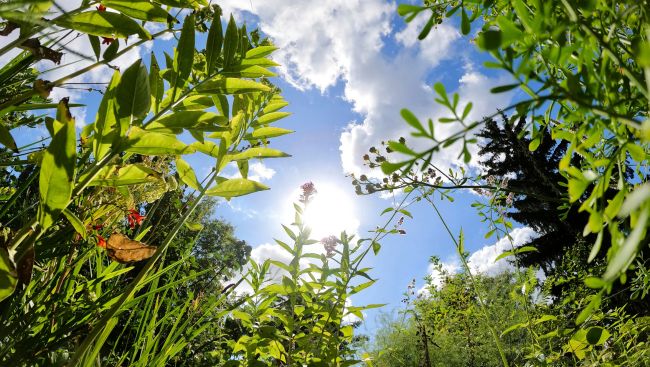
Rötzel's Monk Garden is home to between 150 and 200 types of herbs, leaves and trees including many that are unlikely to be found at any German supermarket.

There are numerous varieties of mint, oregano and cilantro, hyssop and New Zealand spinach, four-leaf sorrel, yarrow and a local variety of tarragon.

Rötzel has built Monk Garden as a business since 2022, delivering to high-end restaurants that want flavorsome local plants for their dishes. It also organizes “wild herb walks” and workshops showing people how to make skin cream, wine and other items from the plants.

Packed into about 2,000 square meters (21,530 square feet) in Marienfelde, on Berlin’s southern edge, each of the plants has its own flavors and tangs and, in many cases, medicinal properties.

Rötzel, a trained hotelier who also has worked as a dancer, said his knowledge of plants came from his father, while his passion for them goes back to the age of 4 or 5 when he started collecting wild herbs.

During an illness 13 years ago, he deepened his knowledge of herbs and made teas that he said helped him regain his health. He also set up a medicinal monastic garden next to a church in the German capital, mirroring those grown in the Middle Ages to provide plants for food and healing.

“At some point, the knowledge was lost,” which was exacerbated by “the industrialization of food," Rötzel said. These days, “something like 99% of people don't know a single name of a plant."

Rötzel has used his garden to counter that loss since he opened Monk Garden. In addition to supplying restaurants, there are occasional dinners in the garden bringing people together at a table in the middle of the herbs. Five courses are each accompanied by a different herbal tea.

After a first course of crayfish and peas with basil, diner Britta Rosenthal said she wanted to find out “what herbs can do” and “perhaps to become a bit more courageous preparing food, not just with pepper, salt and paprika but also with green fresh stuff.”

Rötzel said he enjoys reviving people's memories of flavors past.

“Many people, above all older generations, grew up in a way that they still know some things that no longer exist today," he said. “It's a pleasure for me when people remember something really special.”

Picture Courtesy: AP Photo/Fanny Brodersen

MORE Health & Fitness ARTICLES

Up to 4 in 10 people could develop dementia after 55. What you can do to lower your risk

Up to 4 in 10 people could develop dementia after 55. What you can do to lower your risk
About a million Americans a year are expected to develop dementia by 2060, roughly double today’s toll, researchers reported Monday. That estimate is based on a new study that found a higher lifetime risk than previously thought: After age 55, people have up to a 4 in 10 chance of eventually developing dementia -- if they live long enough.

Up to 4 in 10 people could develop dementia after 55. What you can do to lower your risk

How drinking alcohol can affect your health

How drinking alcohol can affect your health
With the new year comes Dry January and a new surgeon general's advisory on alcohol and cancer risk. Moderate drinking was once thought to have benefits for the heart, but better research methods have thrown cold water on that.

How drinking alcohol can affect your health

Ultra-processed foods may make you age faster

Ultra-processed foods may make you age faster
Love to binge on ultra-processed food (UPFs) like chips, biscuits, sausages, burgers, soft drinks, and instant noodles? Beware, these can make you age faster biologically, warned a study. A person's biological age is a relatively new way of measuring a person's health. It refers to how old a person seems based on various molecular biomarkers.

Ultra-processed foods may make you age faster

Mentally stimulating down time activities linked to better brain health: study

Mentally stimulating down time activities linked to better brain health: study
The researchers assessed the 24-hour activity patterns of 397 adults aged 60 and above, and found that socially or mentally stimulating activities such as reading, playing musical instruments, crafting or talking to others are beneficial for memory and thinking abilities.

Mentally stimulating down time activities linked to better brain health: study

Balancing Festivities: A Guide to Self-Care During the Holidays

Balancing Festivities: A Guide to Self-Care During the Holidays
Surely, the holiday season often comes with the stress of managing family dynamics, financial strain, and loneliness. During the holidays, we often put a lot of pressure on ourselves to show up for those around us, but this year, the challenge is for you to also show up for yourself! Here are some simple ways to practice self-care and manage holiday stress:

Balancing Festivities: A Guide to Self-Care During the Holidays

Holidays In Shape: Maintain Your Progress Through Winter Festivities

Holidays In Shape: Maintain Your Progress Through Winter Festivities
By making a few strategic adjustments to your workouts and mindset, you can stay on track while still relishing everything the season has to offer. Here’s your guide to enjoying the festivities while keeping your fitness goals in check—because staying fit doesn’t mean missing out on the fun!

Holidays In Shape: Maintain Your Progress Through Winter Festivities