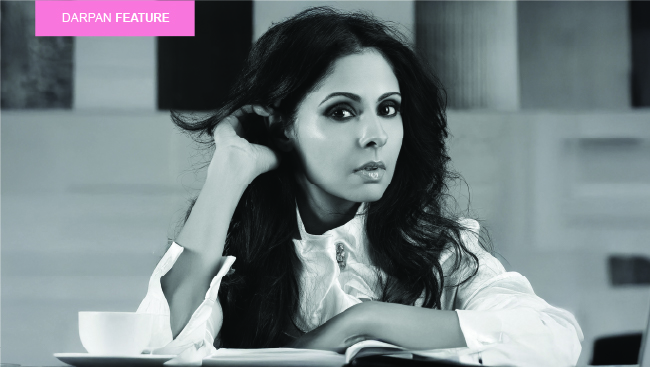
Chhavi Mittal is no stranger to reinvention. From television actress to producer, content creator, serial entrepreneur, TEDx speaker, and mother of two, she has built a space defined by creativity, courage, and authenticity.
Known for her rare candor in a world of curated perfection, Chhavi’s voice became even more powerful in 2022, when she was diagnosed with breast cancer. Instead of retreating, she turned her experience into purpose, breaking taboos and championing awareness and self-care. As we mark Breast Cancer Awareness Month in October, she shares with us her journey of resilience, transformation, self-reliance, and hope.
You’ve built a multi-faceted life as an actor, producer, entrepreneur, and mother. How did these roles shape the way you approached your breast cancer journey?
I am not sure if, when face-to-face with a situation like that, you can put your finger on what has shaped your response towards it. All I can tell you is that I was calm, composed, and steady in the face of difficulty. Patience is not particularly my charm, but I was surprisingly patient when it hit us. All I could see was the road ahead and visualize my destination, which was a completely cured and stronger existence. The cancer shaped my journey ahead, rather than the journey behind shaping my response to cancer.
Can you take us back to the moment you first received your diagnosis? What went through your mind, and how did you process it emotionally?
I was worried about how my life would change. I was worried that my quality of life would get disrupted, and I would not be whole again. So, the emotion I felt was strength. From what my doctors told me, I gathered that there was a lot in my own hands, and that was something I was determined to take control of. For example, I decided on my pain threshold. I decided how much to push myself through recovery. I decided my own limits. And I kept pushing them inch by inch.
Post-treatment life comes with challenges that aren’t often discussed. Can you share some emotional, mental, or social realities that people don’t usually talk about?
People don’t talk about mental struggles because many times they don’t even realize that this is real. Even the family just says - this happens, it is natural, this will pass. But the truth is that every challenge takes maneuvering. Friends around you get bored of checking up on you, because when they do, your response is, I am fine. Nobody senses that the struggle is going to take years. Nobody has the patience to fight it with you for years. Nobody has the time, and I realized that it is wrong to even expect. Everyone has their own lives and their own battles to fight. I started working within 7 days of returning in the hope of taking my mind off things, but slowly but surely, I kept getting stuck into it. The more normal I behaved, the more normal people thought I was, till the time the lines got blurred for me too.
Many survivors face insensitive questions or unsolicited advice. What do you wish people understood about how to support and respect someone going through this journey?
I have understood that if you haven’t gone through it, you cannot fathom it at all. Expecting sensitivity regarding questions from people is like expecting your teen to understand your emotions as a mother. They simply cannot till they become parents themselves, right? I have learnt to take questions with a pinch of salt. I choose to answer what I want and just politely ignore the rest.
How did sharing your story publicly, through social media or interviews, empower you, and what impact do you feel it had on others?
The impact was unimaginable! Just like a person who has never had cancer, I, too, had no idea what I was in for when I started sharing my journey! How was I to know the ups and downs of this struggle! I just kept sharing at every step. The messages that poured in told me what people go through with this and that it is courageous. I was just taking one step at a time, that’s all. But I know that it was great that I did that, because I did end up empowering many people, and that is my biggest victory in life so far.
Breast cancer can shift your sense of identity and confidence. How did you navigate these changes and reclaim your sense of self?
I think breast cancer may have been the best thing that happened to me. It showed me the truth about so many things! It changed my perspective towards life and people. I think I am living a new life and doing so much more with it. I have new business ideas, new ventures I am working on, and I can make a difference in others’ lives, and that is wholesome.
Looking back, what message would you give to women facing breast cancer or supporting loved ones, combining both awareness and empowerment?
I would like to say to caregivers to be as sensitive as they can be. Stop judging a fighting patient because she is fighting a lot alone. Just know that if she says something hurtful, it is only because she is frustrated—it is not personal. And to everyone, this will pass! There is light at the end of the tunnel.
Chhavi Mittal’s story is a powerful reminder that empowerment begins from within, and that facing challenges with heart and honesty can ignite strength and hope beyond oneself.