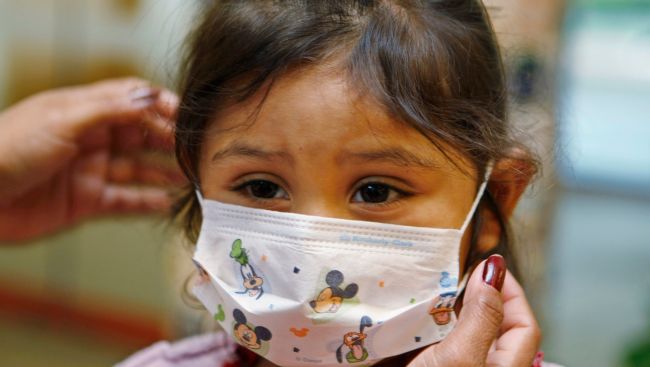
Forget colorful leaves. Any caregiver knows that the real signs of fall are kids with coughs, sneezes and sniffles.
Autumn marks the start of respiratory virus season, when colds, flu and other bugs start circulating — especially among the very young.
A recent study confirmed what many families intuitively know: The littlest students harbor the most germs.
Children in pre-kindergarten and elementary school showed highest rates of virus detection compared with older students and staff, according to research published in the journal Pediatrics.
“Young children can have up to 10 respiratory viruses a year as their immune systems are introduced to different infections for the first time,” said Dr. Jennifer Goldman, a pediatrician at Children’s Mercy hospital in Kansas City, Missouri, who co-led the study.
Younger kids were more likely to have virus detected
Goldman and her colleagues analyzed nasal swabs and symptom reports from more than 800 students and staff in a large school district in Kansas City from November 2022 to May 2023.
They found that overall, more than 85% of all participants had at least one respiratory virus detected during that time and more than 80% had an episode of acute respiratory illness — though not necessarily at the same time.
More telling, 92% of pre-K and elementary school kids had a virus detected, compared with about 86% of middle school students, about 77% of high school students and 76% of staff.
The pre-K kids, ages 3 to 5, had the highest rates of actual illness, too, the study found.
Most of the viruses were the kinds that cause the common cold, including rhinovirus, which was found in 65% of participants, and types of seasonal coronavirus detected in about 30%. The virus that causes COVID-19 was found in about 15% of those studied.
Study confirms the experiences of pediatricians who are parents
The new study provides a baseline look at the burden of viruses in school settings, Goldman said.
It also confirms the real-world experience of pediatricians who are parents, like Dr. Nicole Torres of the University of Miami Health System.
“I can say this for my own children, who are now in their teens: They were sicker when they were younger,” she said.
The study also squares with older research that found that young kids play a key role in spreading respiratory viruses at home. Dr. Carrie Byington was co-author of a University of Utah study, published in 2015, that recruited 26 households to take nasal samples from everyone living in a home, every week, for a year.
That study found that children younger than 5 had virus detected for half of the weeks of the year, recalled Byington, who is now with the University of California, San Diego.
“And if you live in a household with multiple children, that proportion just goes higher, so it can appear as if someone is always sick,” she said.
How to prevent illness — or at least try to
Preventing illness in children at school or at home can be tough, experts acknowledge.
Being up to date on vaccinations for COVID-19 and influenza is important, they said. So is frequent handwashing, learning to cover coughs and keeping hands away from the eyes, nose and mouth.
Cleaning and sanitizing frequently touched surfaces and objects and optimizing fresh air are also key.
When little ones do get sick, the best treatment is often supportive care like extra fluids and rest. In serious cases, medical providers may recommend medications to reduce fever or antiviral drugs.
It can take a couple weeks, however, for lingering symptoms like coughs to completely resolve. By then, the child may well have another cold.
“I do tell parents of younger children to expect them to be ill once every month, every month and a half,” Torres said. “It’ll seem that way.”
Picture Courtesy: AP Photo/Paul Sakuma, File