

The world’s fondness for matcha is about to be tested by steep price increases.
Global demand for the powdered tea has skyrocketed around the world, fueled by consumer interest in its health benefits and by the bright green matcha lattes bubbling up on social media. In the U.S., retail sales of matcha are up 86% from three years ago, according to NIQ, a market research firm.
But the matcha market is troubled. In Japan, one of the biggest matcha producers, poor weather reduced this year’s harvest. Matcha is still plentiful in China, another major producer, but labor shortages and high demand have also raised prices there.
For Americans, there’s the added impact of tariffs. Imports from China are currently subject to a 37.5% tariff, while the U.S. has a 15% tariff on imports from Japan. It’s not clear if tea will be exempted from tariffs because it’s a natural product that’s not grown in significant quantities in the U.S. — an accommodation that the Trump administration has made for cork from the European Union.
The Commerce Department and the U.S. Trade Representative didn’t respond to messages left by The Associated Press.
Aaron Vick, a senior tea buyer with California-based tea importer G.S. Haly, says he paid 75% more for the highest-grade 2025 crop of Japanese matcha, which will arrive in the U.S. later this fall.
He expects lower grades of matcha to cost 30% to 50% more. Chinese matcha — while generally cheaper than Japanese matcha — is also getting more expensive because of high demand, he said.
“People should expect an enormous increase in the price of matcha this year,” Vick said. “It’s going to be a bit of a tough ride for matcha devotees. They will have to show the depth of their commitment at the cash register.”
Even before this year’s harvest, growing demand was straining matcha supplies. Making matcha is precise and labor intensive. Farmers grow tencha — a green tea leaf — in the shade. In the spring, the leaves are harvested, steamed, de-stemmed and de-veined and then stone ground into a fine powder. Tencha can be harvested again in the summer and fall, but the later harvests are generally of lower quality.
There are ways to cut corners, like using a jet mill, which grinds the leaves with high pressure air. But Japan has other issues, including a rapidly aging workforce and limited tencha production. And despite Japanese agricultural ministry trying to coax tea growers to switch to tencha from regular green tea, many are reluctant to do so, concerned that the matcha boom will fade.
That’s giving an opening to China, where matcha originated but fell out of favor in the 14th century.
Chinese matcha production has been growing in recent years to meet both domestic and international demand.
Chinese matcha has historically been considered inferior to Japanese matcha and used as a flavoring for things like matcha-flavored KitKat bars instead of as a drinking tea. But the quality is improving, according to Jason Walker, the marketing director at Firsd Tea, the New Jersey-based U.S. subsidiary of Zhejiang Tea Group, China’s largest tea exporter.
“We are seeing more and more interest in Chinese matcha because of capacity issues and changing perception,” Walker said. “It used to be the idea that it has to be Japanese matcha or nothing. But we have a good product too.”
Starbucks is among the companies using matcha from China for its lattes. The company said it also sources matcha from Japan and South Korea. Dunkin' and Dutch Bros. didn't respond when asked where they source the matcha.
Josh Mordecai, the supply chain director for London-based tea supplier Good & Proper Tea, said he is approached almost daily by Chinese matcha suppliers. For now, he only buys matcha from Japan, but the cost to acquire it has risen 40% so he’ll have to raise prices, he said.
Mordecai said he saw more demand for matcha in the last year than in the previous nine years combined. If matcha prices continue to rise, he wonders if consumers will switch to other tea varieties like hojicha, a roasted Japanese green tea.
“We’ll see if this is a bubble or not. Nothing stays on social media that long,” Mordecai said.
Julia Mills, a food and drink analyst for the market research company Mintel, expects the social media interest in matcha to die down. But she thinks matcha will remain on menus for a while.
Mills said matcha appeals to customers interested in wellness, since it contains antioxidants and l-theanine, an amino acid known for its calming effects, and it’s less caffeinated than coffee. Millennials and Generation Z customers are more likely to have tried matcha than others, Mills said.
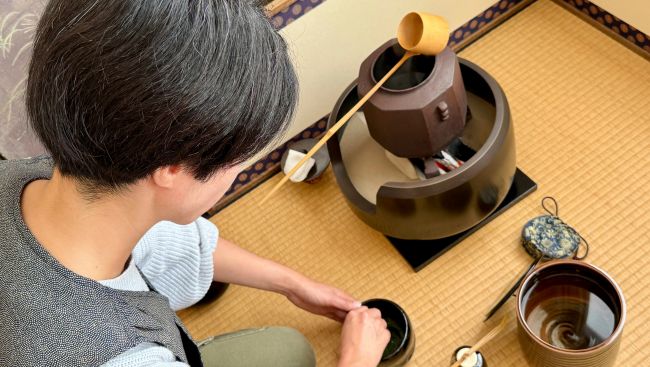
The traditional way of preparing it, whisking the powder together with hot water in a small bowl, also appeals to drinkers who want to slow down and be more intentional, Mills said.
That’s true for Melissa Lindsay of San Francisco, who whisks up some matcha for herself every morning. Lindsay has noticed prices rising for her high-end matcha, but it’s a habit she’d find hard to quit.
“It’s not just a tea bag in water,” Lindsay said. “It’s a whole experience of making it to your liking.”
David Lau, the owner of Asha Tea House in San Francisco, hopes to keep customers drinking matcha by limiting price increases. Lau raised the price of his matcha latte by 50 cents after the cost the matcha he buys from Japan more than doubled. He’s also looking into alternate suppliers from China and elsewhere.
“We’re in the affordable luxury business, you know, just like any other specialty cafe. We want people to be able to come every day, and once you reach a certain price level, you start to price people out,” he said. “We want to be really cognizant and aware of not doing that.
Picture Courtesy: AP Photo/Haven Daley