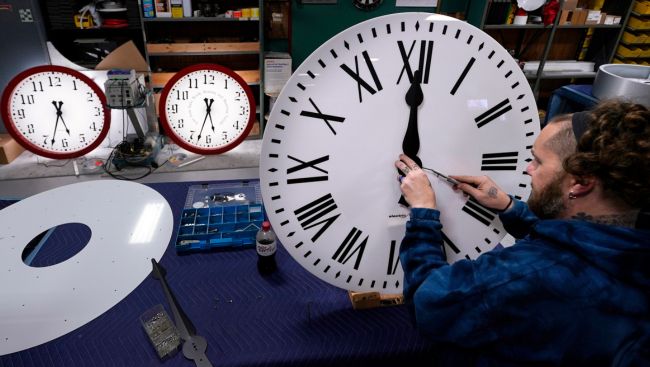
Most of America “springs forward” Sunday for daylight saving time. Losing that hour of sleep can do more than leave you tired and cranky the next day; it also could harm your health.
Darker mornings and more evening light knock your body clock out of whack — which means daylight saving time can usher in sleep trouble for weeks or longer. Studies have even found an uptick in heart attacks and strokes right after the March time change.
There are ways to ease the adjustment, including getting more sunshine to help reset your circadian rhythm for healthful sleep.
When does daylight saving time start?
Daylight saving time begins Sunday at 2 a.m., an hour of sleep vanishing in most of the U.S. The ritual will reverse on Nov. 1 when clocks “fall back” as daylight saving time ends.
Hawaii and most of Arizona don’t make the spring switch, sticking to standard time year-round — along with Puerto Rico, American Samoa, Guam and the U.S. Virgin Islands. Worldwide, dozens of countries also observe daylight saving time, starting and ending at different dates.
Some people try to prepare for daylight saving time by going to bed a little earlier two or three nights ahead. While getting back on schedule after an hour's change may not be that difficult for some people, it's an added challenge for the third of U.S. adults who already don't get the recommended seven hours of nightly shuteye.
What happens to your brain when it's lighter later?
The brain has a master clock that is set by exposure to sunlight and darkness. This circadian rhythm is a roughly 24-hour cycle that determines when we become sleepy and when we’re more alert. The patterns change with age, one reason that early-to-rise youngsters evolve into hard-to-wake teens.
Morning light resets the rhythm. By evening, levels of a hormone called melatonin begin to surge, triggering drowsiness. Too much light in the evening — that extra hour from daylight saving time — delays that surge and the cycle gets out of sync.
Sleep deprivation is linked to heart disease, cognitive decline, obesity and numerous other problems. And that circadian clock affects more than sleep, also influencing things like heart rate, blood pressure, stress hormones and metabolism.
How does the time change affect your health?
Fatal car crashes temporarily jump the first few days after the spring time change, according to a study of U.S. traffic fatalities. The risk was highest in the morning, and researchers attributed it to sleep deprivation.
Then there’s the cardiac connection. The American Heart Association points to studies that suggest an uptick in heart attacks on the Monday after daylight saving time begins, and in strokes for two days afterward.
Doctors already know that heart attacks, especially severe ones, are a bit more common on Mondays generally — and in the morning, when blood is more clot-prone.
Researchers don't know why the time change would add to that Monday connection but it's possible the abrupt circadian disruption exacerbates factors such as high blood pressure in people already at risk.
How to adjust to daylight saving time
Go outside for early morning sunshine that first week of daylight saving time, which can help reset your body's internal clock. Moving up daily routines, like dinner time or when you exercise, also may help cue your body to start adapting, sleep experts advise.
Afternoon naps and caffeine as well as evening light from phones and other electronic devices can make adjusting to an earlier bedtime even harder.
Will the U.S. ever eliminate the time change?
Every year there's talk about ending the time change. Before starting his second term, President Donald Trump promised to eliminate daylight saving time. A bipartisan bill named the Sunshine Protection Act to make daylight saving time permanent has repeatedly stalled in Congress.
But that's the opposite of what some health groups recommend. The American Medical Association and American Academy of Sleep Medicine agree it's time to do away with time switches but say sticking with standard time year-round aligns better with the sun — and human biology — for more consistent sleep.
Picture Courtesy: AP Photo/Charles Krupa, file