In this age of heightened anxiety, many of us turn to our pets for emotional support. But is our behavior increasing our furry friends’ fears?
The answer isn’t simple, says Frankie Jackson, a veterinary nurse and animal behavior consultant, and the owner of Canine Counseling in Smyrna, Georgia. She said she's seen an increase in anxiety among her animal and human clients, but that it’s hard to unwind the cause and effect.
“Dogs are incredibly responsive to our expressions, our body language and our scent,” she says. “There is a feedback loop — the owners are nervous; the dog gets nervous. Our cortisol levels rise and fall in tandem.”
Dr. Becky Peters, a veterinarian and owner of Bath Veterinary Hospital in Bath, New York, has also noticed a link between the anxiety of pets and their owners, particularly in the exam room.
“If owners try to over comfort them — lots of ‘you’re OK!’" in anxious voices, the animals do get more anxious. If we stay calm and quiet, they do too,” Peters says.
Peters attributes much of the rise in pet anxiety to the social upheaval of the COVID years. Many animals who were acquired during the pandemic had limited opportunities to socialize with other people and pets during their peak developmental stages. After COVID, pets who were used to having their family at home experienced separation anxiety as their owners returned to work and school.
“A lot of pet anxiety comes from changes to their households,” Peters says. “It can also occur from a lack of routine and structure and not enough physical activity.”
Other components that could contribute to our pets’ anxiety include unmet needs, past trauma and insufficient open spaces.
"We are asking our dogs to live in a world that isn’t made for them,” she says.
Try to get at the cause of your pet’s anxiety
Low-level stress responses in dogs, such as eating less and excessive self-grooming, are forms of communication that precede lunging and barking, Jackson says. Trying to solve reactive behaviors through obedience training without addressing the root cause can make dogs’ anxiety worse.
“It’s important to understand what the dogs are saying and why they’re behaving the way they are. Manners and life skills are important, but it won’t create happy dogs,” Jackson says.
Anxiety in cats can be harder to spot, according to Jackson, because they’re hard-wired to hide it. While dogs seek out their support people, cats don’t feel safe expressing their vulnerability. Urinating in the house, scratching, hiding under the bed and overgrooming can be signs that your kitty is anxious.
First, see a vet
If your animal companion is suddenly acting out or on a licking binge, Jackson advises seeing a veterinarian to rule out a medical cause, such as pain or allergies.
Veterinarians can also prescribe anti-anxiety medication and complementary treatments to promote sleep and relaxation. Peters recommends supplements for her canine clients including probiotics and the amino acids l-theanine and tryptophan (yes, the turkey coma one).
For cats, she suggests using a product like Feliway that diffuses calming pheromones into the air.
Learn about the breed
A dog's breed might also play a part in developing anxiety. Peters says that while every dog is different, the more active herding and working breeds like shepherds and border collies can become anxious and destructive without an outlet for their energy.
“Herding breeds need space to run and jobs to do,” she says.
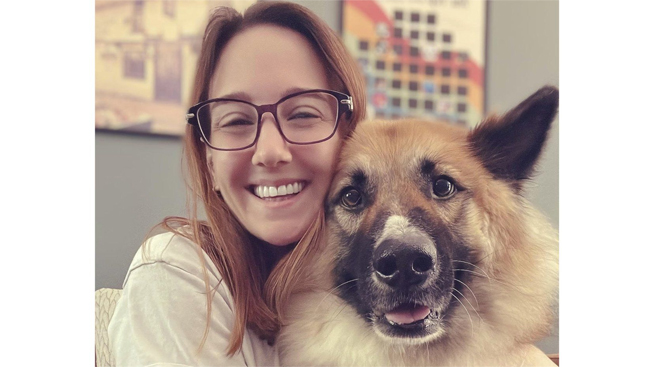
When Tacoma, Washington, resident Shelani Vanniasinkam got her Australian shepherd puppy, Roo, she didn’t know about the breed’s reputation for anxiety. Her previous dog had been an easygoing husky who enjoyed pats from strangers and visits to the dog park. She quickly realized Roo was not that type of dog.
“He had a lot more needs than we anticipated,” Vanniasinkam says. “We couldn’t leave him alone for more than 30 minutes.”
Vanniasinkam and her husband, Jesus Celaya, reached out to a local pet behavioralist, but it became clear that Roo’s anxiety was so acute he needed medication before he could start behavior training.
Should you consider meds for an anxious pet?
Medication can be important in behavioral treatment, but it shouldn’t be the only approach, says Peters. She usually suggests that her clients try training and routine modification first, unless their pet is causing harm to themselves or others.
“If I’m going to use meds, it’s part of a greater process,” Peters says.
Roo’s veterinarian put him on Fluoxetine, or “doggie Prozac,” an antidepressant commonly given to anxious pets. He also prescribed Trazodone, another antidepressant, for particularly stressful events, such as trips to the vet or a night of fireworks.
After starting his medication, Roo received eight months of behavior training, during which Vanniasinkam and her husband not only changed their own approach to dog parenting but also set boundaries with friends and family. They limited Roo’s interaction with other dogs, asked people to stop using their doorbell and requested that others ignore Roo when he barks.
Now, when they want to take Roo for off-leash play, they book time at a local Sniffspot, which Vanniasinkam describes as “an Airbnb for anxious and reactive dogs.” The company, which launched in 2016, allows homeowners to rent out their yards or property by the hour for solo, off-leash play or doggie playdates.
“It’s sad when you can’t take your dog to a dog park,” Vanniasinkam says. “So, this option is really nice.”
She says that while it was initially difficult to navigate Roo’s anxiety, he is loving, family-oriented and worth the effort.
“It’s hard having an anxious dog, but you can figure it out,” she says. “It’s just important to understand your dog, so you’re set up for success.”
Picture Courtesy: AP Photo/Shelani Vanniasinkam