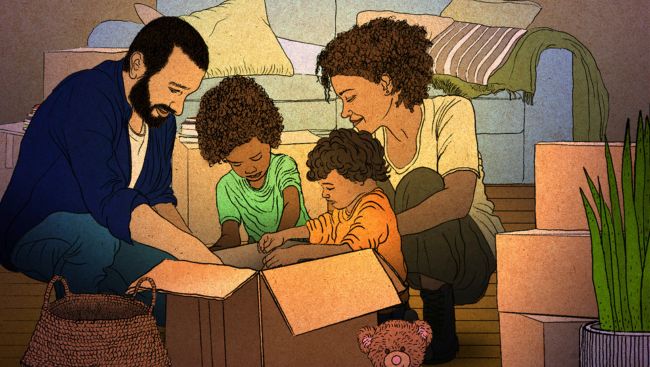
Summer can be a time of big transitions for kids. It's often the season for moving to a new home or preparing for a different school. And that brings worry and stress.
Parents and families can help make things feel more manageable. If kids feel supported, they might even look forward to some of the changes and gain confidence, experts say.
“When routines, familiar places and even knowing where things are in the house are suddenly gone, it forces youth to relearn their daily lives from scratch,” which can be stressful, says Victoria Kress, a professional counselor and president of the American Counseling Association.
At the same time, “this can invite exciting opportunities for growth," she says.
Author Nadine Haruni’s book “Freeda the Frog is on the Move” aims to help school-age kids deal with moving. Haruni, who guided her own family through moves and changes, tells the story of a mother frog who helps her little tadpoles adjust as they leave their hometown and settle in a new one.
“It’s really important to recognize that transitions take time and that is totally normal. It’s OK to feel nervous and sad and anxious and maybe all of those things all at once, and even adults feel that way sometimes,” says Haruni.
“If you listen, you might be surprised. What matters to a child is not always what you might think it is,” she says.
Moves can be especially difficult if accompanied by other significant changes, such as a death, divorce or loss of family income.
Haruni’s book was inspired by her family’s big, multifaceted transition. She was moving from Manhattan to New Jersey with her then-5-year-old daughter and 8-year-old son, and getting married all in the same week, a big transition for her kids and three teenage stepdaughters. In addition, the kids were starting at a new school the following week.
“The kids were very sad and worried at first. Life is about change, and it’s really hard to address that sometimes. Luckily, the kids discovered that they loved having more space and, like the tadpoles in the book, they happily adapted,” she says.
Here are some tips to reduce the stress of a move or other big transition for kids:
Talk it out
“Communicating and listening can alleviate a lot of anxiety,” Haruni says. “Let kids share their feelings and know that they are being heard, so they know that they matter. That really helps them feel like they have some control.”
Explain why a move is necessary, and preview what’s ahead. Discuss the destination ahead of time, especially its good points. Familiarity can help kids feel more confident, the experts say.
Even sharing some photos or a map is helpful in easing jitters.
“Can they meet a few kids in the new neighborhood ahead of time?" Haruni asks.
Involve kids in the move itself
“Involving children in age-appropriate moving tasks — such as packing their own belongings or helping to choose new room decorations — can give them a sense of control and security during an uncertain time," says Kress.
Kids can help plan meals, organize their space or continue family traditions.
“Frame it as an adventure," says Haruni. "Let them help choose things for their new room if they are moving, but also bring a few items that feel familiar and comforting."
Keep up daily routines
Sticking to some daily routines creates structure when things feel new and scary.
“The thing with moves is they disrupt everyone’s life. Too much change at once discombobulates everybody, so keeping meals at the same time and bedtime rituals the same can really help a lot,” says George M. Kapalka, a clinical psychologist and professor at the California School of Professional Psychology.
Arrange common areas similarly to how they were before the move, says Kress. Place favorite toys, blankets or pictures where your child expects to find them.
Consider getting help from a professional
Adapting to change takes time, and patience. Let kids know that's normal, that they will get through it, and that they are being heard and have some control over things, says Haruni.
And know when to seek help.
“Some sadness, worry, or adjustment difficulties are normal after a move. But if symptoms persist for more than a few weeks, worsen over time, or disrupt daily life, then counseling is advisable,” says Kress.
Picture Courtesy: AP Illustration / Peter Hamlin