Common myths about excessive sweating
As people go about their daily lives, there’s a common but hidden scourge: excessive sweating. In fact, a national survey conducted by the International Hyperhidrosis Society (IHhS) – the scholars of sweat – shows multiple millions suffer from extreme, uncomfortable, embarrassing, debilitating and emotionally-devastating sweating. This type of sweating is a serious medical condition known as hyperhidrosis and nearly 367 million people of all ages struggle with it on their hands, feet, face, underarms or body. Hyperhidrosis can be particularly devastating. While many attempt to hide their sweating problems and suffer in silence, the impacts are often hard to cover up. Dramatic sweating in the presence of peers at work, or in extracurricular or social environments, can cause severe embarrassment, stress, anxiety and other emotional issues. Even when people are alone, away from potential judgements, hyperhidrosis often takes a heavy toll – adversely impacting one’s productivity in a myriad of ways.
Those with hyperhidrosis struggle with disproportionate and random sweating that may drench clothing, ruin papers, damage technology tools, make playing sports and musical instruments impossible, promote hiding and isolation behaviours, degrade self-esteem, and prompt bullying at any age – among kids and adults. In fact, research published in Archives of Dermatological Research indicates that the majority of those with excessive sweating confirm the condition has negative impacts on their social life, well-being, and emotional as well as mental health.
With that in mind, the first step toward providing solutions for those who sweat excessively is to bust some common myths and misconceptions with facts from the experts at the IHhS, including these:
Myth: Sweaty people are out-of-shape, nervous or have hygiene issues.
Truth: The average person has 2 to 4 million sweat glands. Sweat is essential to human survival and serves as the body’s coolant, protecting it from overheating. Many athletes actually sweat more than other people because their bodies have become very efficient at keeping cool. Meanwhile, people with hyperhidrosis (which causes overactive sweat glands) sweat excessively regardless of mood, weather, or activity level – often producing four or five times more sweat than is considered “normal”.
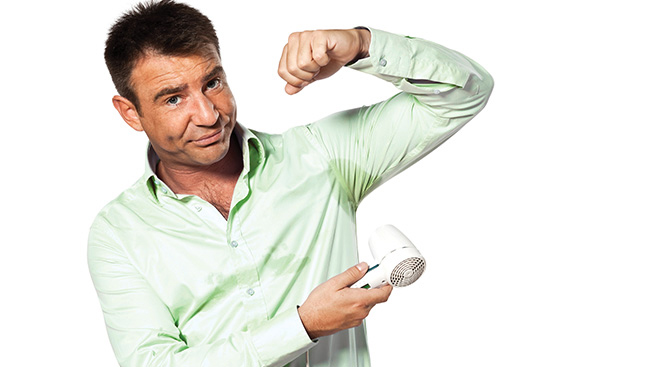
Myth: To have hyperhidrosis, one must be dripping and saturated with sweat.
Truth: Excess sweating can range from severe dripping to moderate moisture. Symptoms of hyperhidrosis can manifest differently and personally. But, what is consistent is the impact on life depending on areas affected. This can include damaged clothing, paperwork and shoes; obvious, embarrassing sweat marks on clothing; unappealing cold wet hands; discomfort due to dripping sweat or constant dampness; and skin slipperiness that gets in the way of sports, music, and day-to-day tasks. Emotional and psychological distress is also common.
Myth: People will grow out of hyperhidrosis.
Truth: Contrary to popular belief, research shows that hyperhidrosis does not go away or decrease with age. In fact, in one recent IHhS study, 88 per cent of respondents said their excessive sweating had gotten worse or stayed the same over time. This was consistent across all the different age groups, from youngsters to older adults.
Myth: Hyperhidrosis is “just” a summer thing, or it’s at least worse during the hot summer months.
Truth: Research from the IHhS also shows that profuse sweating is not simply dictated by the time of year. The majority of patients in one survey indicated that their sweating bothers them equally, no matter the season.

Myth: Kids and young adults are “resilient” and can deal with sweating a lot.
Truth: Medical journal citations substantiate that young people are known to be significantly impacted by emotional sequelae accompanying dermatologic disease and that psychiatric issues inherently accompany dermatologic disease in children and adolescents. Studies further show that most patients with hyperhidrosis—characterized by excessive, spontaneous sweating beyond physiologic, thermal, or stress-reaction body requirements—describe their lives as “bad” or “very bad” due to the disorder.
Myth: Antiperspirants are for underarms only.
Truth: Think outside the pits! You can glide, stick, spray, and roll-on nearly anywhere that sweating is a problem (think hands, feet, face, back, chest, and even groin.) Be smart and talk to your dermatologist first before applying an antiperspirant to sensitive areas and test new products on small areas of skin first.
Myth: Antiperspirants are best used in the morning.
Truth: Pick a p.m. perk! Use your antiperspirant in the evening as well as in the morning. Sweat production is at its lowest at night, giving the active ingredients in antiperspirants a better chance to get into your pores and block perspiration when the sun comes up and you really get moving.

Myth: Excessive sweating is less debilitating than other skin conditions people have to deal with.
Truth: According to IHhS co-founder Dr. David Pariser, hyperhidrosis has the greatest impact of any dermatological disease. In fact, various investigations show the impact of hyperhidrosis on quality-of-life is equal or greater than that of in-patient psoriasis, severe acne, Darier disease, Hailey-Hailey disease, vitiligo, and chronic pruritus. The extreme level of sweat production experienced with hyperhidrosis can disrupt all aspects of a person’s life, from academic performance, recreational activities and relationships, to self-image and overall emotional well-being. But it doesn’t have to be this way. There are helpful resources available to help people with hyperhidrosis to not just “know sweat,” but to also achieve a more comfortable and happier life.
About the Author
Merilee Kern, MBA, a banding and consumer product trends pundit, is a wellness industry veteran, health advocate and influential media voice. Her ground-breaking, award-winning Kids Making Healthy Choices Smartphone APP for children, parents/caregivers and educators (iTunes) is based on her award-winning, illustrated fictional children’s book, Making Healthy Choices – A Story to Inspire Fit, Weight-Wise Kids. She may be reached online at www.theluxelist.com