Maintaining good posture is as important as having a well-balanced diet, regular exercise routine, and healthy sleeping pattern
Sit up straight….. Don’t slouch…. Stand tall, sound familiar? Surely you would have heard or thought of this. We all know that ‘good’ posture is an important factor in our health and wellbeing. But did you know that it can have far more implications than just avoiding aches and pains.
Your posture says a lot about you as a person and your physical health. Maintaining good posture is as important as having a well-balanced diet, regular exercise routine, and healthy sleeping pattern. Standing your ground isn’t as simple as it seems when your mind and body are doing different things. With the muscle forces of your daily activities pulling you in one direction and your mind running a mile a minute, the body gets caught up somewhere in between. But rest assured a few simple techniques may just have you on your way.
What is posture?
Posture is the position or attitude of the limbs or body – which means it is how your body responds to different positions like sitting, standing and lying down. The first thing most people will do when they think about posture is sit up straight, but soon enough with a busy day or crazy deadlines, they will find themselves hunched forward again.
Why do I ‘hunch’ forward?
Being in a forward flexed position will usually feel the most comfortable or be your ‘go to’ position as your muscles fatigue. There are many factors that play a role here. Firstly, the body has an innate tendency to be in fetal position (this is being curled up in a ball, like a baby). Therefore, our flexor group of muscles generally tend to be tighter than our extensors, taking double the effort to keep yourself upright. Secondarily, most activities involve some amount of forward flexion, desk work more significantly. So imagine spending most of your day in one posture, naturally there are more forces pulling forward than backwards.
Why won’t my body stay in this posture?
Postural imbalances are impacted by Tight vs Weak muscle, alignment issues, and habits. Often a simple, but diligent routine can be enough to support good posture at home and in the workplace. The goal is to break up daily patterns that force the body out of its ‘ideal’ position. Stretching tight muscles and building endurance in the weak muscle groups will improve your posture.
What is the impact of poor posture?
Poor posture may not have an obvious impact in your daily routine ‘right now.’ However, the affect is often cumulative. Many will relate to “I just bent down to pick up a pencil and threw my back out.” The ‘pencil’ is just the tip of the iceberg. Poor alignment and imbalances make the body more susceptible to injury.
Posture can relate back to a healthy lifestyle and overall well-being. Good posture will support better breathing patterns, good circulation, and boost your confidence.
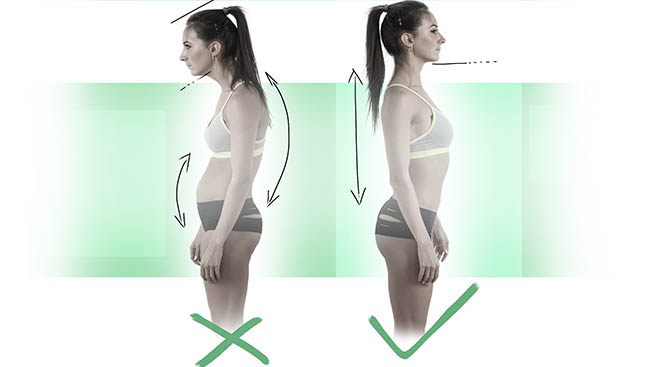
The mid back and rib cage are sandwiched between the upper and lower body. Therefore, altered force patterns travelling up or down the body can significantly impact the respiratory function. “Can’t take a deep breath?” well, this might be why.
Slouching can cause constriction and compression on the heart, lungs and intestine, forcing them to work harder and slowing down their optimal functioning. Further, this has an affect on mood and energy.
What you say is more than the words itself; posture and how you move are an important element of non-verbal communication. Therefore, being aware of your posture will help in more areas of your life than you can imagine.
What can I do?
Finding a solution requires you to first understand the problem. Body types vary based on many factors: age, sex, height, weight, occupation, sports training, etc. One key factor to understand is that there is no perfect posture, although there is an ideal posture meant for you.
You can have your posture evaluated by a professional and do specific exercises along with adapting to certain modifications. Even printing out a few simple exercises you are comfortable doing and making a point to do them daily will help.
Make some simple ergonomic changes that will support your posture:
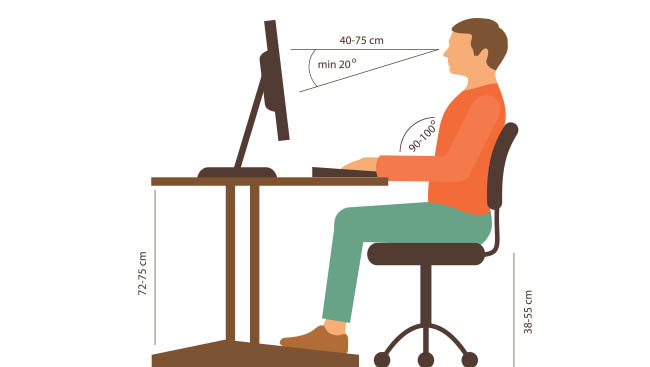
- Adjust workstation (chair/ computer height)
- Use an anti-fatigue mat if you stand for prolonged hours
- Alternate between sitting and standing
- Take stretch breaks every hour (set an alarm as you WILL forget)
- Place things in such a way that it forces you to shift from left to right (to avoid single sided dominance)
- Determine your sleeping posture and ensure that your spine is aligned (example, use a pillow between your knees if you are a side sleeper, and make sure your neck lies neutral)
- Focus on core strengthening, as this will support the spine in a better posture
- Practice relaxation techniques for your mind, muscles and eyes as stress = muscular tensions = poor posture
- Consistency is key – make a routine and follow it.