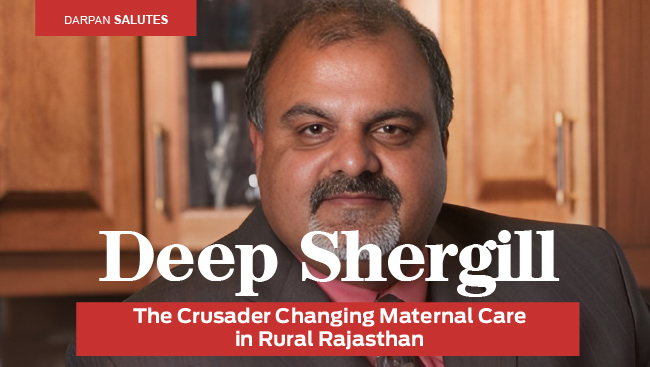
A child grows up in a large family in Rajasthan’s Sri Ganganagar in the early 1960s. He is the youngest among 10 siblings and is raised by his grandmother, then in her 80s. His mother dies due to poor, unhygienic conditions, a death that could have been prevented with better healthcare. Water is contaminated, medical facilities are scarce, and childhood is difficult.
That child was Deep Shergill.
More than six decades later, Shergill lives thousands of kilometers away in Canada, where he built a successful real estate business in Alberta after migrating in the early 1970s. But despite financial success, the memories of his childhood and the circumstances that claimed his mother’s life never left him. About two decades ago, he decided to do something about it.
In 2009, Shergill launched the Mata Jai Kaur Centre in Sri Ganganagar with a singular goal: improving access to healthcare for women and children in the region.
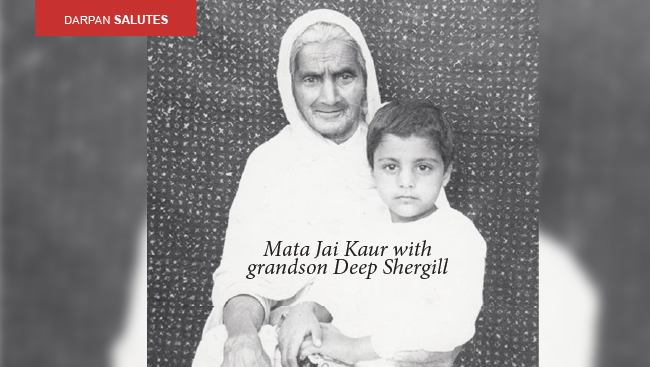
"My grandmother once told me, 'I planted and nurtured a mango tree whose fruit I knew I would never live to taste. But I planted it anyway, because I knew others would one day enjoy its shade and its fruit,'" Shergill tells DARPAN, recalling the advice that continues to drive his work.
The NGO is named after his grandmother, Mata Jai Kaur, whose words, he says, shaped his sense of responsibility towards the community he came from. Though Shergill spends most of his time in Canada and visits India only once or twice a year, he remains closely involved with the organization’s activities. A dedicated team on the ground, many of them relatives and long-time associates, oversees day-to-day operations. The focus is simple but ambitious: providing free healthcare to women in villages that often lack access to quality medical services.
Every Sunday, doctors travel from the city to 35BB village in Sri Ganganagar to examine women and children. The consultations cover a wide range of issues, including maternal healthcare, reproductive health, and mental health concerns that often go untreated in rural areas. The center also runs a comprehensive maternal care program for expecting mothers. "We take care of expecting mothers throughout their nine-month pregnancy," Shergill said.
Women from economically weaker backgrounds receive free treatment and delivery care. Those who are relatively better off also receive free consultations and medical guidance. However, they are free to choose where they wish to deliver their child. The program has become a lifeline for many families in the region. Women travel from villages located within a radius of nearly 25 kilometers to attend the weekly clinics.
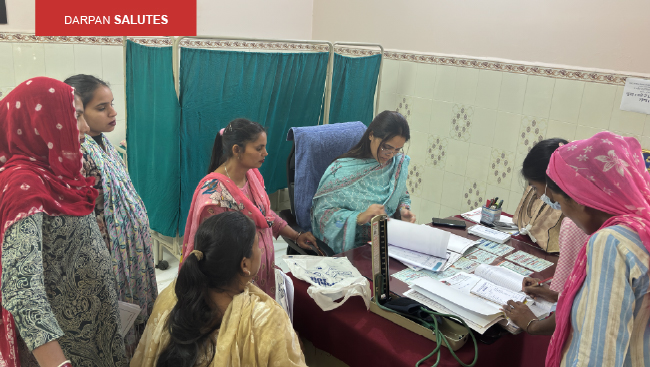
In addition to its Sunday consultations, the center organizes healthcare camps every six to 12 months, allowing residents to consult experts and undergo medical check-ups that are otherwise difficult to access in rural settings. Over the years, the organization has also expanded its focus to mental healthcare for women, an area Shergill believes remains deeply neglected in much of India. Untreated anxiety, depression, and other mental health conditions during or after pregnancy can increase the risk of complications for both mother and child. Yet in India, where mental health continues to be heavily stigmatized, countless women struggle in silence.
For Shergill, addressing maternal wellbeing means looking beyond childbirth itself and recognizing that a healthy pregnancy also depends on emotional support, counselling, and access to mental healthcare. Under the Khushee Mamta program, spearheaded by his nephew, Dr. Aneel Brar, and his daughter, Sherri Shergill, the center has incorporated mental health support into its outreach efforts. “Our mental health staff from the Khushee Mamta program travel to nearby villages in our catchment area to provide counselling,” says Shergill.
The numbers offer a glimpse into the scale of the work done so far. The center has helped deliver more than 1,000 babies and has provided medical support to at least 50,000 people since 2009. Yet Shergill believes the work is only beginning. The biggest challenge, he says, is funding. "We have limited resources," he said, adding that the organization has applied for an FCRA license in the hope of accessing foreign funding and expanding its programs. Additional resources would allow the center to increase the frequency of medical camps, bring in more specialists, and reach villages that currently remain outside its network.
For Shergill, however, the effort has always been about more than numbers. It is about ensuring that other families do not experience the same hardships that defined his own childhood. The memory of losing his mother due to inadequate healthcare continues to shape his mission.
As he looks back on the journey from a village in Sri Ganganagar to a successful life in Canada, he believes lasting social change begins at home. He has a message for expats who want to help people in India: “Many expats want to pay for poor people's daughters' weddings. They should instead help educate girls from poor families, which will go a long way in uplifting society,” he argues. For Shergill, giving back is not charity. It is the fulfilment of a promise made long ago—a promise to ensure that the seeds planted by one generation continue to bear fruit for the next.
Donate online at: www.matajaikaur.org/Donate