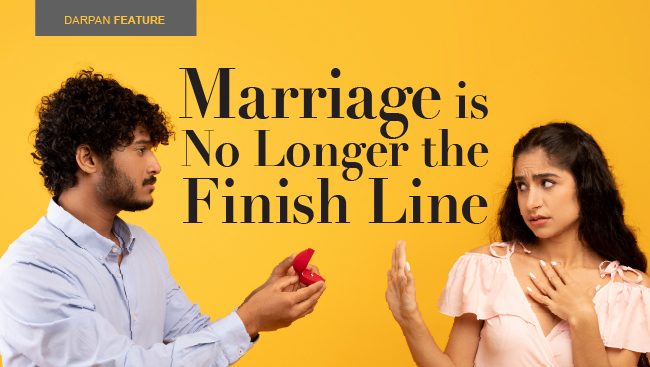
Marriage has long been framed as the ultimate milestone, a finish line that signals arrival into adulthood, stability, and success. However, today, for many, that narrative is being questioned, reshaped, and, in some cases, completely rewritten. Across conversations, a common thread emerges: marriage is no longer the end goal, but one of many possible paths in a much broader, more personal journey.
Simrit Gill, registered clinical counsellor, underscores the internal conflict many people quietly navigate, “The South Asian community often runs on two conflicting clocks: the internal clock that says ‘I’ll get there when I’m ready,’ and the cultural clock that insists ‘you should already be there.’ When these two forces collide within a person, the result is self-doubt, a shaken sense of self-worth, and a diminished ability to make decisions rooted in what is truly best for oneself.”
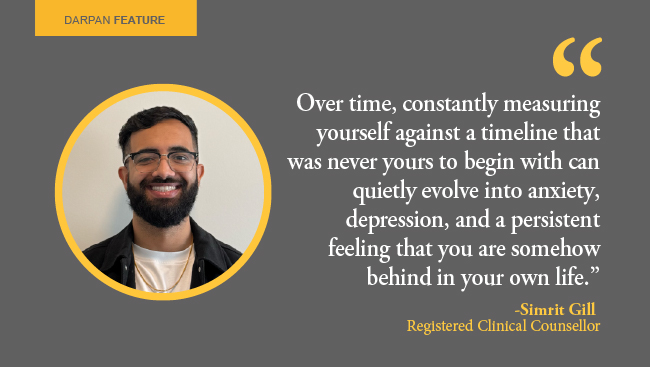
Gill outlines that families don’t always apply pressure loudly or directly; instead, expectations settle in silently over time, leaving individuals to wonder whether the voice guiding their choices is truly their own or a reflection of everyone around them. Gill highlights, “Over time, constantly measuring yourself against a timeline that was never yours to begin with can quietly evolve into anxiety, depression, and a persistent feeling that you are somehow behind in your own life.”
Dr. Vishal Sharma, husband, twin dad, orthodontist, and speaker, sees this shift as part of a larger evolution in identity, “Traditionally, timelines around marriage and family in South Asian communities have been quite structured. There was a sequence: study, career, marriage, children, and a sense that deviating from that path meant something was ‘off.’ What’s evolving now is that individuals are starting to separate identity from timeline.” That separation is significant. “People are asking, ‘who am I outside of these milestones?’ not just, ‘when do I get married?’ but ‘why, and with whom, and from what place within myself?’”
Dr. Sharma emphasizes, “For far too long, the longevity of a marriage has been the barometer of success, with little consideration for the happiness of the people within it. The responsibility for true happiness is a manageable endeavor. The real magic lies in blending the beauty of our cultures and religions with a deep respect for the individuality each of us carries.”
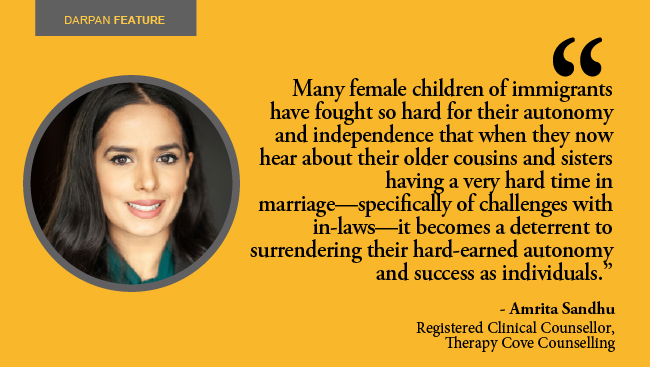
Amrita Sandhu, registered clinical counsellor at Therapy Cove Counselling, contextualizes how these evolving expectations are shaped by both gender and generational shifts. For many women, especially, independence has changed how marriage is perceived. “I think many female children of immigrants have fought so hard for their autonomy and independence that when they now hear about their older cousins and sisters having a very hard time in marriage—specifically of challenges with in-laws—it becomes a deterrent to surrendering their hard-earned autonomy and success as individuals.”
For men, she points out that the delay in marriage often reflects a different pressure. “For males, the median age for marriage has now pushed into the mid to late 30s as they prioritize becoming financially successful. And the bar for what’s deemed ‘financially successful’ is much higher than it was even 10 years ago.”
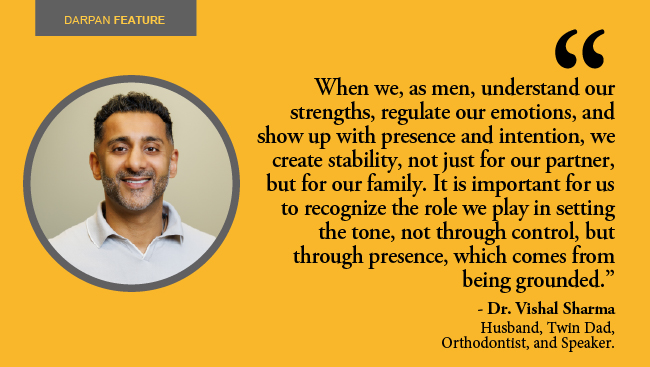
Besides financial readiness, there is a deeper, more internal expectation taking shape as well, around what it means to be a partner. Dr. Sharma explains, “When we, as men, understand our strengths, regulate our emotions, and show up with presence and intention, we create stability, not just for our partner, but for our family. It is important for us to recognize the role we play in setting the tone, not through control, but through presence, which comes from being grounded.”
Sandhu notes that both genders now value adventure, travel, and friendship over solely making their parents happy. Yet, guilt often lingers. She describes, “There can be a real feeling of inner conflict.” That dissonance reflects a deeper cultural negotiation between collectivist values and individual desires.
Nav Cheema, artist, finance professional, and co-host of Two/oo Opinionated, shares how letting go of rigid timelines has reshaped her perspective. “As I grew up, I realized that life isn’t limited to traditional expectations. For many South Asians, including myself, motherhood isn’t something they want, and being married is not a priority, which reduces pressure and anxiety about the future.”
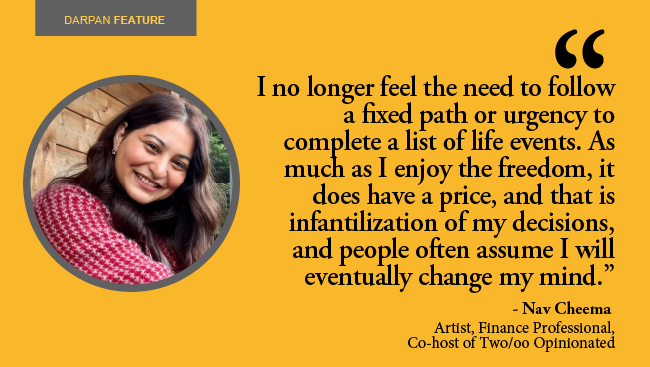
She adds, “For me, I no longer feel the need to follow a fixed path or urgency to complete a list of life events.” Still, that freedom comes with its own challenges. “As much as I enjoy the freedom, it does have a price, and that is infantilization of my decisions, and people often assume I will eventually change my mind,” Cheema admits.
Bhumika Laller, founder of Letters By B and co-host of Two/oo Opinionated, echoes, “When it came to marriage and kids, for a long time, the concept of a timeline was instilled in the brown community, especially women. Getting married was always the end goal; otherwise, I would be a failure.”
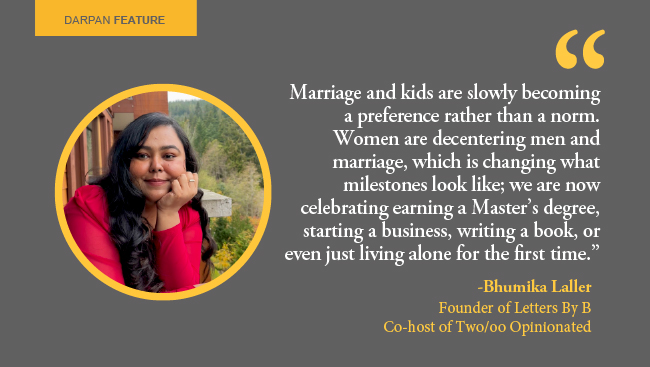
That mindset, however, is changing. Laller details, “Marriage and kids are slowly becoming a preference rather than a norm. Women are decentering men and marriage, which is changing what milestones look like; we are now celebrating earning a Master’s degree, starting a business, writing a book, or even just living alone for the first time.”
Ultimately, the societal shift regarding marriage isn’t about rejecting relationships, but redefining them. Marriage is no longer the central goal, but one meaningful choice among many. While navigating family expectations and cultural identity can create friction, it also opens up space for more intentional, authentic lives.