Thursday, January 15, 2026
ADVT 
Health

Are we gulping down plastic with sea food?

Darpan News Desk Darpan, 19 Jul, 2014 06:18 AM
    The next time you ask for a plate of crabs you may have unknowingly ordered plastic as a side dish in it!
     
    According to an alarming study by University of Exeter, tiny plastic particles polluting our seas are entering the bodies of marine creatures through their gills.
     
    These microplastics take over six times longer to leave the body compared to standard digestion.
     
    "About one 10th of the plastic we throw away ends up in the marine environment. In 2013, 11 million tonnes of plastic entered the seas. Wave action, heat and ultra-violet (UV) damage then break it up into microplastic," explained lead researcher Andrew Watts.
     
    The research showed how these microplastics get into the body of the common shore crab, after sticking to hair-like 'setae' structures in the crabs.
     
    "Many studies on microplastics only consider ingestion as a route of uptake into animals. The results we have just published stress other routes such as ventilation," Watts added.
     
    The same could apply for other crustaceans, molluscs and fish - simply any animal which draws water into a gill-like structure to carry out gas exchange, researchers noted.
     
    The longer these plastics are retained within the animal the more the chances are of being passed up the food chain.
     
    "This is a human issue. We have put this plastic there, mostly accidently but it is our problem to solve. The best way to do this is to reduce our dependency on plastic. It comes back to the old phrase: reduce, reuse and recycle," Watts concluded.
     
    The study was published in the journal Environmental Science and Technology.

    MORE Health ARTICLES

    Health Alert- WHO report reveals worldwide threat to public health

    Health Alert- WHO report reveals worldwide threat to public health
    A new report by the World Health Organisation (WHO) - its first to globally look at antimicrobial resistance, including antibiotic resistance - reveals that this serious threat is no longer a prediction for the future but is happening right now in every region of the world and has the potential to affect anyone, of any age, in any country.

    Health Alert- WHO report reveals worldwide threat to public health

    TV shows can transmit stress too: Study

    TV shows can transmit stress too: Study
    Just like cold, stress can also be contagious and it matters only a little whether we have any relation with the stressed person that we may come in contact with or not, says a study.

    TV shows can transmit stress too: Study

    Vitamin D deficiency may lead to prostate cancer: Study

    Vitamin D deficiency may lead to prostate cancer: Study
    Get under the morning sun sooner rather than later as vitamin D deficiency has now been linked to aggressive prostate cancer, an alarming study indicated.

    Vitamin D deficiency may lead to prostate cancer: Study

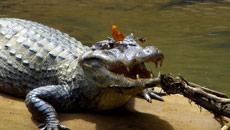
    Where butterflies, bees feed on crocodile tears!

    Where butterflies, bees feed on crocodile tears!
    Look at those crocodile tears in your kid's eyes more carefully. These are an abundant source of salt and other rare minerals and proteins for some!

    Where butterflies, bees feed on crocodile tears!

    Babies learn to recognise pictures before first birthday!

    Babies learn to recognise pictures before first birthday!
    If a mother shows her nine month-old baby a picture of her husband fighting a war in a distant land, she may find to her surprise that if he comes back soon after, the baby may well recognise the person in the picture.

    Babies learn to recognise pictures before first birthday!

    Men! Women prefer courtship over competitiveness

    Men! Women prefer courtship over competitiveness
    What do women prefer, lovers or fighters? The truth is out. Females prefer courtship over competitiveness.

    Men! Women prefer courtship over competitiveness