Friday, January 16, 2026
ADVT 
Health

Are we gulping down plastic with sea food?

Darpan News Desk Darpan, 19 Jul, 2014 06:18 AM
    The next time you ask for a plate of crabs you may have unknowingly ordered plastic as a side dish in it!
     
    According to an alarming study by University of Exeter, tiny plastic particles polluting our seas are entering the bodies of marine creatures through their gills.
     
    These microplastics take over six times longer to leave the body compared to standard digestion.
     
    "About one 10th of the plastic we throw away ends up in the marine environment. In 2013, 11 million tonnes of plastic entered the seas. Wave action, heat and ultra-violet (UV) damage then break it up into microplastic," explained lead researcher Andrew Watts.
     
    The research showed how these microplastics get into the body of the common shore crab, after sticking to hair-like 'setae' structures in the crabs.
     
    "Many studies on microplastics only consider ingestion as a route of uptake into animals. The results we have just published stress other routes such as ventilation," Watts added.
     
    The same could apply for other crustaceans, molluscs and fish - simply any animal which draws water into a gill-like structure to carry out gas exchange, researchers noted.
     
    The longer these plastics are retained within the animal the more the chances are of being passed up the food chain.
     
    "This is a human issue. We have put this plastic there, mostly accidently but it is our problem to solve. The best way to do this is to reduce our dependency on plastic. It comes back to the old phrase: reduce, reuse and recycle," Watts concluded.
     
    The study was published in the journal Environmental Science and Technology.
    MORE Health ARTICLES

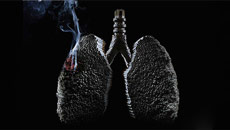
    Anti-smoking TV ads with anger more effective

    Anti-smoking TV ads with anger more effective
    Anger works better than sadness in anti-smoking television advertisements that appeal to viewers emotions.  

    Anti-smoking TV ads with anger more effective

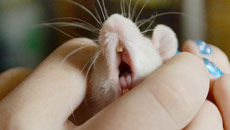
    What! Even a man's odour can make rats stressed!

    What! Even a man's odour can make rats stressed!
    Know why, to the delight of your spouse, that stubborn mouse runs the moment he sees you entering the house from office? Because even the smell of a man could elicit fear in mice and rats, a fascinating research has revealed.

    What! Even a man's odour can make rats stressed!

    Royal children were mummified next to pharaohs: Study

    Royal children were mummified next to pharaohs: Study
    The pharaohs, or rulers of ancient Egypt, even got their children and infants mummified close to them, revealed a new excavation in the Valley of the Kings close to the city of Luxor.

    Royal children were mummified next to pharaohs: Study

    Those living in affluent nations more stressed out: Study

    Those living in affluent nations more stressed out: Study
    “Life in an affluent country is more fast-paced, and there are just so many things that you have to do - leading to stress,” Louis Tay, an assistant professor of psychology at Indiana-based Purdue University, was quoted as saying.

    Those living in affluent nations more stressed out: Study

    Sexual conflict over mating affects women more: Study

    Sexual conflict over mating affects women more: Study
    In experiments on beetles, British researchers at University of Exeter used artificial selection and mating crosses among selection lines to determine if and how mating behaviours co-evolve with parental care behaviours.

    Sexual conflict over mating affects women more: Study

    Mind vs body: What is a better lie detector?

    Mind vs body: What is a better lie detector?
    To know if the person in front of you is lying, you may rely a lot on your instincts as more than the conscious mind, the body may act as a better lie detector, suggests a study.

    Mind vs body: What is a better lie detector?