Saturday, December 27, 2025
ADVT 
Health

Blame This Gene Loss For Your Obsession With Size Zero

Darpan News Desk IANS, 10 Apr, 2015 12:21 PM
    While social factors, particularly the western ideal of thinness, is largely blamed for increasing rate of eating disorders over the past several decades, loss of a gene also contributes to your obsession with having a thin figure, suggests a study.
     
    The researchers identified that lack of the estrogen-related receptor alpha (ESRRA) gene is linked to anorexia nervosa, an eating disorder characterised by food restriction and an irrational fear of gaining weight.
     
    "This work identifies estrogen-related receptor alpha as one of the genes that is likely to contribute to the risk of getting anorexia nervosa or bulimia nervosa," said lead researcher Michael Lutter, assistant professor of psychiatry at the University of Iowa.
     
    "Decreased calorie intake usually motivates animals, including humans, to seek out high-calorie food. These findings suggest that loss of ESRRA activity may disrupt that response," Lutter explained.
     
    Loss of this gene in mice leads to several behavioural abnormalities that resemble behaviours seen in people with anorexia nervosa, the researchers noted.
     
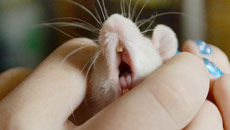
    For the study, the researchers manipulated ESRRA in mice to investigate the gene's role in behaviour.
     
    Through a series of experiments with genetically engineered mice, Lutter and his team showed that mice without the ESRRA gene have behavioural abnormalities related to eating and social behaviour.
     
    In particular, mice without ESRRA showed reduced effort to work for high-fat food when they are hungry.
     
    The mice also exhibited impaired social interaction and female mice without the gene showed increased compulsive grooming, which may mimic obsessive-compulsive-type behaviour in humans, the researchers noted.
     
    However, according to Lutter, the increasing rate of eating disorders over the past several decades is likely due to social factors, not genetics.
     
    "Clearly social factors, particularly the western ideal of thinness, contribute the remaining 'non-genetic' risk," Lutter noted.
     
    The study appeared in the journal Cell Reports.

    MORE Health ARTICLES

    Anti-smoking TV ads with anger more effective

    Anti-smoking TV ads with anger more effective
    Anger works better than sadness in anti-smoking television advertisements that appeal to viewers emotions.  

    Anti-smoking TV ads with anger more effective

    What! Even a man's odour can make rats stressed!

    What! Even a man's odour can make rats stressed!
    Know why, to the delight of your spouse, that stubborn mouse runs the moment he sees you entering the house from office? Because even the smell of a man could elicit fear in mice and rats, a fascinating research has revealed.

    What! Even a man's odour can make rats stressed!

    Royal children were mummified next to pharaohs: Study

    Royal children were mummified next to pharaohs: Study
    The pharaohs, or rulers of ancient Egypt, even got their children and infants mummified close to them, revealed a new excavation in the Valley of the Kings close to the city of Luxor.

    Royal children were mummified next to pharaohs: Study

    Those living in affluent nations more stressed out: Study

    Those living in affluent nations more stressed out: Study
    “Life in an affluent country is more fast-paced, and there are just so many things that you have to do - leading to stress,” Louis Tay, an assistant professor of psychology at Indiana-based Purdue University, was quoted as saying.

    Those living in affluent nations more stressed out: Study

    Sexual conflict over mating affects women more: Study

    Sexual conflict over mating affects women more: Study
    In experiments on beetles, British researchers at University of Exeter used artificial selection and mating crosses among selection lines to determine if and how mating behaviours co-evolve with parental care behaviours.

    Sexual conflict over mating affects women more: Study

    Mind vs body: What is a better lie detector?

    Mind vs body: What is a better lie detector?
    To know if the person in front of you is lying, you may rely a lot on your instincts as more than the conscious mind, the body may act as a better lie detector, suggests a study.

    Mind vs body: What is a better lie detector?