Saturday, December 27, 2025
ADVT 
Health

Blame This Gene Loss For Your Obsession With Size Zero

Darpan News Desk IANS, 10 Apr, 2015 12:21 PM
    While social factors, particularly the western ideal of thinness, is largely blamed for increasing rate of eating disorders over the past several decades, loss of a gene also contributes to your obsession with having a thin figure, suggests a study.
     
    The researchers identified that lack of the estrogen-related receptor alpha (ESRRA) gene is linked to anorexia nervosa, an eating disorder characterised by food restriction and an irrational fear of gaining weight.
     
    "This work identifies estrogen-related receptor alpha as one of the genes that is likely to contribute to the risk of getting anorexia nervosa or bulimia nervosa," said lead researcher Michael Lutter, assistant professor of psychiatry at the University of Iowa.
     
    "Decreased calorie intake usually motivates animals, including humans, to seek out high-calorie food. These findings suggest that loss of ESRRA activity may disrupt that response," Lutter explained.
     
    Loss of this gene in mice leads to several behavioural abnormalities that resemble behaviours seen in people with anorexia nervosa, the researchers noted.
     
    For the study, the researchers manipulated ESRRA in mice to investigate the gene's role in behaviour.
     
    Through a series of experiments with genetically engineered mice, Lutter and his team showed that mice without the ESRRA gene have behavioural abnormalities related to eating and social behaviour.
     
    In particular, mice without ESRRA showed reduced effort to work for high-fat food when they are hungry.
     
    The mice also exhibited impaired social interaction and female mice without the gene showed increased compulsive grooming, which may mimic obsessive-compulsive-type behaviour in humans, the researchers noted.
     
    However, according to Lutter, the increasing rate of eating disorders over the past several decades is likely due to social factors, not genetics.
     
    "Clearly social factors, particularly the western ideal of thinness, contribute the remaining 'non-genetic' risk," Lutter noted.
     
    The study appeared in the journal Cell Reports.

    MORE Health ARTICLES

    Technology to catch dozing drivers on the go

    Technology to catch dozing drivers on the go
    Long rides at night can now become a lot more pleasant and safe if you listen to researchers who have developed an inexpensive and easier way to find out when the person behind the wheel is about to nod off.

    Technology to catch dozing drivers on the go

    Astronauts may face attention deficit risks

    Astronauts may face attention deficit risks
    Astronauts who are radiation-sensitive need to take extra care to protect their brains as they may face risks of attention deficit and slower reaction times, a study suggests.

    Astronauts may face attention deficit risks

    Befriend a cyber buddy to stay motivated

    Befriend a cyber buddy to stay motivated
    Although a human partner is a better motivator during exercise, a software-generated cyber partner can also be effective in making you work a little extra, research reveals.

    Befriend a cyber buddy to stay motivated

    New method to treat cocaine addiction effectively

    New method to treat cocaine addiction effectively
    There is hardly any effective medications for cocaine addiction, but researchers have now discovered a new compound that can halt cocaine addiction, raising hope for new treatment for drug addicts.

    New method to treat cocaine addiction effectively

    How bariatric surgery can help control diabetes

    How bariatric surgery can help control diabetes
    That bariatric surgery, or obesity surgery, leads to weight loss is well known, but researchers have now identified the mechanism why obesity surgery also leave positive effects on diabetes and heart diseases.

    How bariatric surgery can help control diabetes

    Now, 3D-printed plaster cast to heal wound faster

    Now, 3D-printed plaster cast to heal wound faster
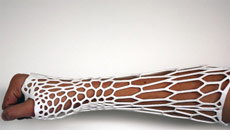
    In what could revolutionise plaster cast technology, a Turkish design student has unveiled a slick 3D-printed cast with ventilation holes that reduces healing time by around 40 percent than currently used plaster casts.

    Now, 3D-printed plaster cast to heal wound faster