Sunday, December 21, 2025
ADVT 
Health

Google scientists to find 'hidden' cancer via nanoparticles

Darpan News Desk IANS, 29 Oct, 2014 07:29 AM
    In a pioneering research, a Google life sciences team - which has two senior Indian-origin researchers - is set to find signs of deadly diseases like cancer by sending 'nanoparticles' in the bloodstream of a person and then get the results via a wearable device.
     
    The aim is to provide an early warning system for life-threatening diseases which can lead to an effective treatment, Wall Street Journal reported.
     
    “Every test you ever go to the doctor for will be done through this system,” Andrew Conrad, head of the Life Sciences team at the Google X research lab, was quoted as saying at a WSJ conference.
     
    The tiny “nanoparticles” will be delivered via a pill.
     
    They would attach themselves to cells, proteins or other molecules inside the body to find out of something is wrong.
     
    Researchers are currently looking for coatings that will help “nanoparticles” bind to specific cells, the report added.
     
    According to Conrad, the firm will not collect or store medical data itself but will license the technology to others.
     
    Google has hired more than 100 experts for the project from disciplines including astrophysicists, immunology, biology, oncology, cardiology and chemistry.
     
    Vikram (Vik) Bajaj, scientific lead for Google X's nanotechnology programme, is one of the members of the Google life sciences team.
     
    Bajaj is an expert in areas like molecular imaging, magnetic resonance imaging (MRI) for diagnostics, the structural biology of neurodegenerative disease, millimeter wave devices and clinical bioinformatics.
     
    The other Indian-origin researcher is Sanjeev Mariathasan, scientific lead for systems immunology on the nanotechnology project.
     
    Mariathasan's research interests include mechanisms of inflammation, malignant blood disorders and infectious disease.

    MORE Health ARTICLES

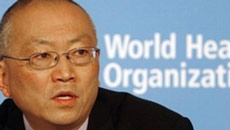
    Health Alert- WHO report reveals worldwide threat to public health

    Health Alert- WHO report reveals worldwide threat to public health
    A new report by the World Health Organisation (WHO) - its first to globally look at antimicrobial resistance, including antibiotic resistance - reveals that this serious threat is no longer a prediction for the future but is happening right now in every region of the world and has the potential to affect anyone, of any age, in any country.

    Health Alert- WHO report reveals worldwide threat to public health

    TV shows can transmit stress too: Study

    TV shows can transmit stress too: Study
    Just like cold, stress can also be contagious and it matters only a little whether we have any relation with the stressed person that we may come in contact with or not, says a study.

    TV shows can transmit stress too: Study

    Vitamin D deficiency may lead to prostate cancer: Study

    Vitamin D deficiency may lead to prostate cancer: Study
    Get under the morning sun sooner rather than later as vitamin D deficiency has now been linked to aggressive prostate cancer, an alarming study indicated.

    Vitamin D deficiency may lead to prostate cancer: Study

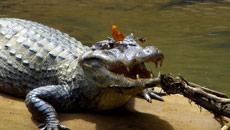
    Where butterflies, bees feed on crocodile tears!

    Where butterflies, bees feed on crocodile tears!
    Look at those crocodile tears in your kid's eyes more carefully. These are an abundant source of salt and other rare minerals and proteins for some!

    Where butterflies, bees feed on crocodile tears!

    Babies learn to recognise pictures before first birthday!

    Babies learn to recognise pictures before first birthday!
    If a mother shows her nine month-old baby a picture of her husband fighting a war in a distant land, she may find to her surprise that if he comes back soon after, the baby may well recognise the person in the picture.

    Babies learn to recognise pictures before first birthday!

    Men! Women prefer courtship over competitiveness

    Men! Women prefer courtship over competitiveness
    What do women prefer, lovers or fighters? The truth is out. Females prefer courtship over competitiveness.

    Men! Women prefer courtship over competitiveness