Sunday, December 21, 2025
ADVT 
Health

Google scientists to find 'hidden' cancer via nanoparticles

Darpan News Desk IANS, 29 Oct, 2014 07:29 AM
    In a pioneering research, a Google life sciences team - which has two senior Indian-origin researchers - is set to find signs of deadly diseases like cancer by sending 'nanoparticles' in the bloodstream of a person and then get the results via a wearable device.
     
    The aim is to provide an early warning system for life-threatening diseases which can lead to an effective treatment, Wall Street Journal reported.
     
    “Every test you ever go to the doctor for will be done through this system,” Andrew Conrad, head of the Life Sciences team at the Google X research lab, was quoted as saying at a WSJ conference.
     
    The tiny “nanoparticles” will be delivered via a pill.
     
    They would attach themselves to cells, proteins or other molecules inside the body to find out of something is wrong.
     
    Researchers are currently looking for coatings that will help “nanoparticles” bind to specific cells, the report added.
     
    According to Conrad, the firm will not collect or store medical data itself but will license the technology to others.
     
    Google has hired more than 100 experts for the project from disciplines including astrophysicists, immunology, biology, oncology, cardiology and chemistry.
     
    Vikram (Vik) Bajaj, scientific lead for Google X's nanotechnology programme, is one of the members of the Google life sciences team.
     
    Bajaj is an expert in areas like molecular imaging, magnetic resonance imaging (MRI) for diagnostics, the structural biology of neurodegenerative disease, millimeter wave devices and clinical bioinformatics.
     
    The other Indian-origin researcher is Sanjeev Mariathasan, scientific lead for systems immunology on the nanotechnology project.
     
    Mariathasan's research interests include mechanisms of inflammation, malignant blood disorders and infectious disease.
    MORE Health ARTICLES

    Technology to catch dozing drivers on the go

    Technology to catch dozing drivers on the go
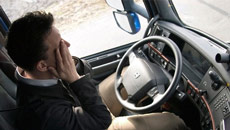
    Long rides at night can now become a lot more pleasant and safe if you listen to researchers who have developed an inexpensive and easier way to find out when the person behind the wheel is about to nod off.

    Technology to catch dozing drivers on the go

    Astronauts may face attention deficit risks

    Astronauts may face attention deficit risks
    Astronauts who are radiation-sensitive need to take extra care to protect their brains as they may face risks of attention deficit and slower reaction times, a study suggests.

    Astronauts may face attention deficit risks

    Befriend a cyber buddy to stay motivated

    Befriend a cyber buddy to stay motivated
    Although a human partner is a better motivator during exercise, a software-generated cyber partner can also be effective in making you work a little extra, research reveals.

    Befriend a cyber buddy to stay motivated

    New method to treat cocaine addiction effectively

    New method to treat cocaine addiction effectively
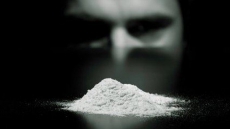
    There is hardly any effective medications for cocaine addiction, but researchers have now discovered a new compound that can halt cocaine addiction, raising hope for new treatment for drug addicts.

    New method to treat cocaine addiction effectively

    How bariatric surgery can help control diabetes

    How bariatric surgery can help control diabetes
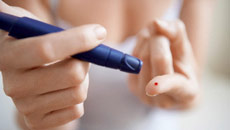
    That bariatric surgery, or obesity surgery, leads to weight loss is well known, but researchers have now identified the mechanism why obesity surgery also leave positive effects on diabetes and heart diseases.

    How bariatric surgery can help control diabetes

    Now, 3D-printed plaster cast to heal wound faster

    Now, 3D-printed plaster cast to heal wound faster
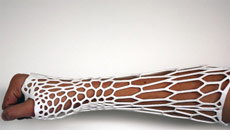
    In what could revolutionise plaster cast technology, a Turkish design student has unveiled a slick 3D-printed cast with ventilation holes that reduces healing time by around 40 percent than currently used plaster casts.

    Now, 3D-printed plaster cast to heal wound faster