Saturday, December 27, 2025
ADVT 
Health

Hepatitis C may become rare by 2036: Study

Darpan News Desk IANS, 05 Aug, 2014 07:15 AM
    The deadly hepatitis C could become a rare disease by the year 2036 owing to new effective drugs and widespread screening, says a study.
     
    "If we can improve access to treatment and incorporate more aggressive screening guidelines, we can reduce the number of chronic HCV (hepatitis C) cases, prevent more cases of liver cancer and reduce liver-related deaths," said Jagpreet Chhatwal, an assistant professor at the University of Texas of the MD Anderson Cancer Center in the US.
     
    In the study, Chhatwal and his collaborators used a mathematical model with information from several sources including more than 30 clinical trials to predict the impact of new therapies called "direct-acting antivirals" and the use of screening for chronic HCV cases.
     
    Researchers developed a computer model to analyse and predict disease trends from 2001-50.
     
    With new screening guidelines and therapies, HCV will affect only one in 1,500 people in the US by 2036, researchers predicted.
     
    HCV - a virus transmitted through the blood - is spread by sharing needles, the use of contaminated medical equipment and by tattoo and piercing equipment that has not been fully sterilised.
     
    Those at the highest risk of exposure are baby boomers - people born between 1945-65.
     
    The model predicts one-time HCV screening of baby boomers would help identify 487,000 cases over the next 10 years.
     
    The study appeared in the journal Annals of Internal Medicine.

    MORE Health ARTICLES

    Men in 'healthy' countries have eyes for beauty!

    Men in 'healthy' countries have eyes for beauty!
    All the pretty women out there, if wooing a man is what is in your mind, move on to a country where conditions are not that harsh as feminine charm sweeps men living in countries with 'healthy' conditions.

    Men in 'healthy' countries have eyes for beauty!

    Health Alert- WHO report reveals worldwide threat to public health

    Health Alert- WHO report reveals worldwide threat to public health
    A new report by the World Health Organisation (WHO) - its first to globally look at antimicrobial resistance, including antibiotic resistance - reveals that this serious threat is no longer a prediction for the future but is happening right now in every region of the world and has the potential to affect anyone, of any age, in any country.

    Health Alert- WHO report reveals worldwide threat to public health

    TV shows can transmit stress too: Study

    TV shows can transmit stress too: Study
    Just like cold, stress can also be contagious and it matters only a little whether we have any relation with the stressed person that we may come in contact with or not, says a study.

    TV shows can transmit stress too: Study

    Vitamin D deficiency may lead to prostate cancer: Study

    Vitamin D deficiency may lead to prostate cancer: Study
    Get under the morning sun sooner rather than later as vitamin D deficiency has now been linked to aggressive prostate cancer, an alarming study indicated.

    Vitamin D deficiency may lead to prostate cancer: Study

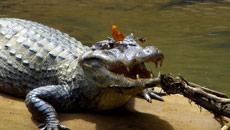
    Where butterflies, bees feed on crocodile tears!

    Where butterflies, bees feed on crocodile tears!
    Look at those crocodile tears in your kid's eyes more carefully. These are an abundant source of salt and other rare minerals and proteins for some!

    Where butterflies, bees feed on crocodile tears!

    Babies learn to recognise pictures before first birthday!

    Babies learn to recognise pictures before first birthday!
    If a mother shows her nine month-old baby a picture of her husband fighting a war in a distant land, she may find to her surprise that if he comes back soon after, the baby may well recognise the person in the picture.

    Babies learn to recognise pictures before first birthday!