Friday, December 19, 2025
ADVT 
Health

Mechanism linked to stroke damage identified

Darpan News Desk IANS, 28 Nov, 2014 12:45 PM
  • Mechanism linked to stroke damage identified
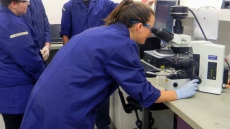
Researchers have discovered the mechanism linked to stroke damage and brain function, thus paving the way to develop a new drug target to block brain damage.
 
Strokes happen when the blood supply to a part of the brain is cut off, but much of the harm to survivors' memory and other cognitive function is often actually caused by "oxidative stress" in the hours and days after the blood supply resumes.
 
The researchers studied the second phase of damage in laboratory mice and found a mechanism in neurons that, if removed, reduced the damage to brain function.
 
"This study has pinpointed a very promising drug target," said study co-author Lin-Hua Jiang from University of Leeds in Britain.
 
The study looked at the damage caused by the excessive production of chemicals called "reactive oxygen species" in brain tissues immediately after blood supply is re-established.
 
In a healthy brain, there are very low levels of reactive oxygen species, but the quantity dramatically increases after a stroke to levels that are harmful to neurons.
 
"We identified an 'ion channel' in the membranes of neurons, called TRPM2, which is switched on in the presence of the reactive oxygen species," Jiang added.
 
"We are now screening a large chemical library to find ways of effectively inhibiting this channel," Jiang said.
 
The study was published in the journal Cell Death and Disease.

MORE Health ARTICLES

Hepatitis C may become rare by 2036: Study

Hepatitis C may become rare by 2036: Study
The deadly hepatitis C could become a rare disease by the year 2036 owing to new effective drugs and widespread screening, says a study....

Hepatitis C may become rare by 2036: Study

Hypoventilation patients at risk during air travel

Hypoventilation patients at risk during air travel
Obese people who suffer from hypoventilation should be cautious while travelling via air....

Hypoventilation patients at risk during air travel

Immigrant kids in US at higher obesity risk

Immigrant kids in US at higher obesity risk
Immigrant kids in the US are more likely to grow obese than US-born Caucasian children, a study says....

Immigrant kids in US at higher obesity risk

Artificial anti-cancer molecules created in a jiffy

Artificial anti-cancer molecules created in a jiffy
In what could lead to new anti-cancer drugs, researchers have developed a new method to produce molecules that have a similar structure to peptides...

Artificial anti-cancer molecules created in a jiffy

Neuronal 'sweet spot' can curb obesity

Neuronal 'sweet spot' can curb obesity
Preventing weight gain, obesity and diabetes could be as simple as keeping a nuclear receptor from being activated in a small part of the brain, says a new study....

Neuronal 'sweet spot' can curb obesity

First molecular map to detect vision loss created

First molecular map to detect vision loss created
An Indian-origin researcher-led team has created the most detailed map to date of a region of the human eye, long associated with blinding diseases...

First molecular map to detect vision loss created