Wednesday, December 31, 2025
ADVT 
Health

Nervous system plays bigger role in infections

Darpan News Desk IANS, 28 Nov, 2014 12:47 PM
    The nervous system may play a bigger role in infections and auto-immune diseases than previously known, says a study.
     
    Learning more about that role could lead to early diagnosis and treatment of people affected by pandemics or outbreaks of contagious or deadly diseases, such as flu or Ebola, the study added.
     
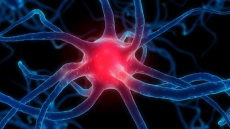
    The researchers noted that neurons of the peripheral nervous system - specialised nerve cells that transmit information throughout the body - are known to send information about local infections or inflammation to the central nervous system (CNS - the brain and spinal cord) so the CNS can co-ordinate the whole body response.
     
    "The neurons may be sending the CNS not just a general 'danger warning' but specific information about whether the infection is caused by a virus or bacteria, the type of bacteria present or the nature of the auto-immune reaction," said Benjamin Steinberg from St. Michael's Hospital in Canada.
     
    "The blue sky idea is that if we know the language and can read the code, in theory we can engineer or write our own," Steinberg said.
     
    Since those messages are being sent from neurons to the CNS in real time, knowing what they are saying could speed diagnoses or prognostication of everything from the stomach flu to rheumatoid arthritis.
     
    The current method for confirming infections is to test body fluids or tissues, sometimes using invasive techniques, a process that can take hours, days or even longer.
     
    "Timely diagnosis and intervention are essential to minimize deaths and complications," Steinberg stressed.
     
    The study appeared in the New England Journal of Medicine.
    MORE Health ARTICLES

    Parkinson's disease progression may be reversed

    Parkinson's disease progression may be reversed
    The substances called deacetylase inhibitors could fully restore movement problems observed in fruit flies carrying the LRRK2 mutation....

    Parkinson's disease progression may be reversed

    Brain surgery through cheek bone for epilepsy patients

    Brain surgery through cheek bone for epilepsy patients
    Researchers have developed a robotic device for people suffering from epilepsy that would enter through the cheek bone, thereby avoiding having to drill ...

    Brain surgery through cheek bone for epilepsy patients

    University of Minnesota officials knock down tweet saying Ebola is airborne

    University of Minnesota officials knock down tweet saying Ebola is airborne
    University spokeswoman Caroline Marin told the Star Tribune in Minneapolis that the university never made such a claim.

    University of Minnesota officials knock down tweet saying Ebola is airborne

    Understanding parents have healthy kids

    Understanding parents have healthy kids
    How well parents understand the daily experiences of their teenagers is linked to the latter's physical and mental well-being, new research suggests....

    Understanding parents have healthy kids

    Stress ups Alzheimer's risk in shy women

    Stress ups Alzheimer's risk in shy women
    Women who worry, cope poorly with stress and experience mood swings in middle age run a higher risk of developing Alzheimer's disease later in life, it showed....

    Stress ups Alzheimer's risk in shy women

    Fish oil supplements don't reduce irregular heartbeat

    Fish oil supplements don't reduce irregular heartbeat
    Although rich in Omega-3 fatty acids, high doses of fish oil supplements do not reduce atrial fibrillation, a common type of irregular heartbeat, found...

    Fish oil supplements don't reduce irregular heartbeat