Monday, December 29, 2025
ADVT 
Health

New test for early cancer detection

Darpan News Desk IANS, 01 Oct, 2014 10:08 AM
    Early detection of cancer could now be as easy as a simple blood test.
     
    Researchers have found that this test may also eliminate the need for some types of biopsies and identify those more likely to develop cancer in the future.
     
    The test, called the "lymphocyte genome sensitivity" (LGS) test, could detect some cancers earlier than ever before, the study noted.
     
    "The test could allow earlier cancer detection, helping to save people's lives," said co-researcher Diana Anderson from University of Bradford in West Yorkshire, UK.
     
    To develop this test, the researchers took blood samples from a group of people that included healthy individuals, cancer patients and people believed to be at a higher risk than normal to develop cancer. 
     
    White blood cells (lymphocytes) in these samples were examined in a "comet test," by embedding the cells in a jelly-like substance, called agar, on a microscope slide. 
     
    In this test, damage to the genetic material (DNA) of the cells was caused by treatment with ultraviolet (UVA) light. 
     
    This damage was observed in the form of DNA pieces being pulled within the agar in an electric field toward the positive end of the field.
     
    This caused a comet-like tail, and the longer the tail the more DNA damage. 
     
    In cancer patients, DNA-damaged tail responses remained high and in those people who might develop pre-cancerous diseases, tail responses were in between. 
     
    This means that people with cancer have DNA which is more easily damaged by UVA than other people, so the test shows the sensitivity to damage of all the genome in a cell. 
     
    The study appeared in The FASEB Journal.
    MORE Health ARTICLES

    New diabetes, obesity drug: Indian-American's promising research

    New diabetes, obesity drug: Indian-American's promising research
    Two researchers at Indiana University, including an Indian-American, are leading the way towards developing a new potential non-insulin drug for diabetes and obesity, which needs to be taken only once a week.

    New diabetes, obesity drug: Indian-American's promising research

    Build super muscles with soy-dairy protein

    Build super muscles with soy-dairy protein
    Not happy with gym results on your muscles? Try a blend of soy and dairy proteins after resistance exercises as this has now been touted as the best way to build muscle mass.

    Build super muscles with soy-dairy protein

    'Love hormone' bonds animals like humans

    'Love hormone' bonds animals like humans
    And you thought you had a patent on 'love hormone' when it comes to showing affection! Dogs too have oxytocin and release it in a good quantity when in love or looking for bonding.

    'Love hormone' bonds animals like humans

    Can you believe it? Metabolism existed even before origin of life, reveales study

    Can you believe it? Metabolism existed even before origin of life, reveales study
    The mystery behind how the first organisms on earth could have become metabolically active has been unlocked.

    Can you believe it? Metabolism existed even before origin of life, reveales study

    Fly's genome study offers hope for sleeping sickness

    Fly's genome study offers hope for sleeping sickness
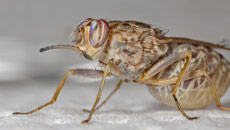
    With genome decoding of tsetse fly that causes the potentially fatal sleeping sickness disease, scientists have discovered new clues to the diet, vision and reproductive strategies of the insect.

    Fly's genome study offers hope for sleeping sickness

    Technology to catch dozing drivers on the go

    Technology to catch dozing drivers on the go
    Long rides at night can now become a lot more pleasant and safe if you listen to researchers who have developed an inexpensive and easier way to find out when the person behind the wheel is about to nod off.

    Technology to catch dozing drivers on the go