Monday, December 29, 2025
ADVT 
Health

New test for early cancer detection

Darpan News Desk IANS, 01 Oct, 2014 10:08 AM
    Early detection of cancer could now be as easy as a simple blood test.
     
    Researchers have found that this test may also eliminate the need for some types of biopsies and identify those more likely to develop cancer in the future.
     
    The test, called the "lymphocyte genome sensitivity" (LGS) test, could detect some cancers earlier than ever before, the study noted.
     
    "The test could allow earlier cancer detection, helping to save people's lives," said co-researcher Diana Anderson from University of Bradford in West Yorkshire, UK.
     
    To develop this test, the researchers took blood samples from a group of people that included healthy individuals, cancer patients and people believed to be at a higher risk than normal to develop cancer. 
     
    White blood cells (lymphocytes) in these samples were examined in a "comet test," by embedding the cells in a jelly-like substance, called agar, on a microscope slide. 
     
    In this test, damage to the genetic material (DNA) of the cells was caused by treatment with ultraviolet (UVA) light. 
     
    This damage was observed in the form of DNA pieces being pulled within the agar in an electric field toward the positive end of the field.
     
    This caused a comet-like tail, and the longer the tail the more DNA damage. 
     
    In cancer patients, DNA-damaged tail responses remained high and in those people who might develop pre-cancerous diseases, tail responses were in between. 
     
    This means that people with cancer have DNA which is more easily damaged by UVA than other people, so the test shows the sensitivity to damage of all the genome in a cell. 
     
    The study appeared in The FASEB Journal.

    MORE Health ARTICLES

    Astronauts may face attention deficit risks

    Astronauts may face attention deficit risks
    Astronauts who are radiation-sensitive need to take extra care to protect their brains as they may face risks of attention deficit and slower reaction times, a study suggests.

    Astronauts may face attention deficit risks

    Befriend a cyber buddy to stay motivated

    Befriend a cyber buddy to stay motivated
    Although a human partner is a better motivator during exercise, a software-generated cyber partner can also be effective in making you work a little extra, research reveals.

    Befriend a cyber buddy to stay motivated

    New method to treat cocaine addiction effectively

    New method to treat cocaine addiction effectively
    There is hardly any effective medications for cocaine addiction, but researchers have now discovered a new compound that can halt cocaine addiction, raising hope for new treatment for drug addicts.

    New method to treat cocaine addiction effectively

    How bariatric surgery can help control diabetes

    How bariatric surgery can help control diabetes
    That bariatric surgery, or obesity surgery, leads to weight loss is well known, but researchers have now identified the mechanism why obesity surgery also leave positive effects on diabetes and heart diseases.

    How bariatric surgery can help control diabetes

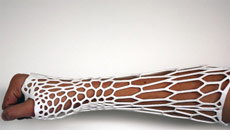
    Now, 3D-printed plaster cast to heal wound faster

    Now, 3D-printed plaster cast to heal wound faster
    In what could revolutionise plaster cast technology, a Turkish design student has unveiled a slick 3D-printed cast with ventilation holes that reduces healing time by around 40 percent than currently used plaster casts.

    Now, 3D-printed plaster cast to heal wound faster

    Smart cup that delivers coffee, news too!

    Smart cup that delivers coffee, news too!
    Reading the morning newspaper while sipping a cup of coffee is set to become an even smoother experience as a Finnish coffee roastery company has developed a smart coffee cup that could also display an e-paper.

    Smart cup that delivers coffee, news too!