Tuesday, April 7, 2026
ADVT 
Health

Pathway between brain and blood pressure identified

Darpan News Desk IANS, 04 Oct, 2014 09:16 AM
    In a finding that may lead to improved treatments for hypertension and heart failure, scientists have uncovered a new pathway through which the brain uses a little-known steroid to control blood pressure.
     
    "This research gives us an entirely new way of understanding how the brain and the cardio-vascular system work together," said co-principal author John Hamlyn, a professor of physiology at the University of Maryland' School of Medicine in the US.
     
    For decades, researchers have known that the brain controls the diameter of the arteries via the nervous system. The system is essential for daily life, but is often chronically over-active in patients with high blood pressure. In fact, many drugs that help with hypertension work by decreasing the activity of the nervous system.
     
    However, these drugs have serious side-effects, such as fatigue, dizziness, depression and erectile dysfunction. These drawbacks have led to the search for novel ways to inhibit the nervous system while causing fewer problems for patients.
     
    Working with an animal model of hyper-tension, a group of scientists found a new link between the brain and increased blood pressure, namely, a steroid called ouabain.
     
    This is the first such study to identify a particular pathway by which the brain regulates the diameter of the arteries via ouabain in the bloodstream and causes an increase in contractile proteins in the arteries.
     
    This new pathway works together with the nervous system pathway to control the function of arteries and thereby contributes to high blood pressure.
     
    So medications that block ouabain's effects might improve the lives of people with hyper-tension and heart failure.
     
    "Now that we understand the role of ouabain, we can begin working on how to modify this new pathway to help people with cardio-vascular problems," explained co-researcher Mordecai Blaustein, a professor of physiology and medicine at the University of Maryland' School of Medicine.
     
    The study appeared in the journal PLOS One.

    MORE Health ARTICLES

    Alcohol, drugs together put kids at higher driving risk

    Alcohol, drugs together put kids at higher driving risk
    Teenagers who drink alcohol and smoke marijuana together may be at increased risk for unsafe driving, a study shows.

    Alcohol, drugs together put kids at higher driving risk

    New diabetes, obesity drug: Indian-American's promising research

    New diabetes, obesity drug: Indian-American's promising research
    Two researchers at Indiana University, including an Indian-American, are leading the way towards developing a new potential non-insulin drug for diabetes and obesity, which needs to be taken only once a week.

    New diabetes, obesity drug: Indian-American's promising research

    Build super muscles with soy-dairy protein

    Build super muscles with soy-dairy protein
    Not happy with gym results on your muscles? Try a blend of soy and dairy proteins after resistance exercises as this has now been touted as the best way to build muscle mass.

    Build super muscles with soy-dairy protein

    'Love hormone' bonds animals like humans

    'Love hormone' bonds animals like humans
    And you thought you had a patent on 'love hormone' when it comes to showing affection! Dogs too have oxytocin and release it in a good quantity when in love or looking for bonding.

    'Love hormone' bonds animals like humans

    Can you believe it? Metabolism existed even before origin of life, reveales study

    Can you believe it? Metabolism existed even before origin of life, reveales study
    The mystery behind how the first organisms on earth could have become metabolically active has been unlocked.

    Can you believe it? Metabolism existed even before origin of life, reveales study

    Fly's genome study offers hope for sleeping sickness

    Fly's genome study offers hope for sleeping sickness
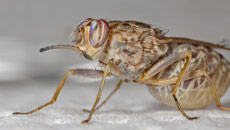
    With genome decoding of tsetse fly that causes the potentially fatal sleeping sickness disease, scientists have discovered new clues to the diet, vision and reproductive strategies of the insect.

    Fly's genome study offers hope for sleeping sickness