Tuesday, April 7, 2026
ADVT 
Health

Pathway between brain and blood pressure identified

Darpan News Desk IANS, 04 Oct, 2014 09:16 AM
    In a finding that may lead to improved treatments for hypertension and heart failure, scientists have uncovered a new pathway through which the brain uses a little-known steroid to control blood pressure.
     
    "This research gives us an entirely new way of understanding how the brain and the cardio-vascular system work together," said co-principal author John Hamlyn, a professor of physiology at the University of Maryland' School of Medicine in the US.
     
    For decades, researchers have known that the brain controls the diameter of the arteries via the nervous system. The system is essential for daily life, but is often chronically over-active in patients with high blood pressure. In fact, many drugs that help with hypertension work by decreasing the activity of the nervous system.
     
    However, these drugs have serious side-effects, such as fatigue, dizziness, depression and erectile dysfunction. These drawbacks have led to the search for novel ways to inhibit the nervous system while causing fewer problems for patients.
     
    Working with an animal model of hyper-tension, a group of scientists found a new link between the brain and increased blood pressure, namely, a steroid called ouabain.
     
    This is the first such study to identify a particular pathway by which the brain regulates the diameter of the arteries via ouabain in the bloodstream and causes an increase in contractile proteins in the arteries.
     
    This new pathway works together with the nervous system pathway to control the function of arteries and thereby contributes to high blood pressure.
     
    So medications that block ouabain's effects might improve the lives of people with hyper-tension and heart failure.
     
    "Now that we understand the role of ouabain, we can begin working on how to modify this new pathway to help people with cardio-vascular problems," explained co-researcher Mordecai Blaustein, a professor of physiology and medicine at the University of Maryland' School of Medicine.
     
    The study appeared in the journal PLOS One.

    MORE Health ARTICLES

    Technology to catch dozing drivers on the go

    Technology to catch dozing drivers on the go
    Long rides at night can now become a lot more pleasant and safe if you listen to researchers who have developed an inexpensive and easier way to find out when the person behind the wheel is about to nod off.

    Technology to catch dozing drivers on the go

    Astronauts may face attention deficit risks

    Astronauts may face attention deficit risks
    Astronauts who are radiation-sensitive need to take extra care to protect their brains as they may face risks of attention deficit and slower reaction times, a study suggests.

    Astronauts may face attention deficit risks

    Befriend a cyber buddy to stay motivated

    Befriend a cyber buddy to stay motivated
    Although a human partner is a better motivator during exercise, a software-generated cyber partner can also be effective in making you work a little extra, research reveals.

    Befriend a cyber buddy to stay motivated

    New method to treat cocaine addiction effectively

    New method to treat cocaine addiction effectively
    There is hardly any effective medications for cocaine addiction, but researchers have now discovered a new compound that can halt cocaine addiction, raising hope for new treatment for drug addicts.

    New method to treat cocaine addiction effectively

    How bariatric surgery can help control diabetes

    How bariatric surgery can help control diabetes
    That bariatric surgery, or obesity surgery, leads to weight loss is well known, but researchers have now identified the mechanism why obesity surgery also leave positive effects on diabetes and heart diseases.

    How bariatric surgery can help control diabetes

    Now, 3D-printed plaster cast to heal wound faster

    Now, 3D-printed plaster cast to heal wound faster
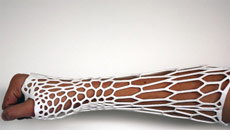
    In what could revolutionise plaster cast technology, a Turkish design student has unveiled a slick 3D-printed cast with ventilation holes that reduces healing time by around 40 percent than currently used plaster casts.

    Now, 3D-printed plaster cast to heal wound faster