Tuesday, December 30, 2025
ADVT 
Health

Red wine can protect human cells against damage

Darpan News Desk IANS, 23 Dec, 2014 11:14 AM
    A substance found in red wine may protect the body against age-related diseases by stimulating an ancient evolutionary defence mechanism that protects human cells against damage, a US study has suggested.
     
    Scientists at The Scripps Research Institute (TSRI) found that the substance -- resveratrol -- once touted as an elixir of youth -- powerfully activates an evolutionarily ancient stress response in human cells.
     
    "This stress response represents a layer of biology that has been largely overlooked. Resveratrol turns out to activate it at much lower concentrations than those used in prior studies," said senior investigator Paul Schimmel, a professor and member of the Skaggs Institute for Chemical Biology at TSRI, US.
     
    Based on these results, "it is conceivable that moderate consumption of a couple of glasses of red wine would give a person enough resveratrol to evoke a protective effect via this pathway," said lead author Mathew Sajish, a senior research associate in the Schimmel laboratory.
     
    Resveratrol is a compound produced in grapes, cacao beans, Japanese knotweed and some other plants in response to stresses including infection, drought and ultraviolet radiation.
     
    Why would resveratrol, a protein produced in plants, be so potent and specific in activating a major stress response pathway in human cells?
     
    Probably because it does much the same in plant cells, and probably again via TyrRS -- a protein so fundamental to life, due to its linkage to an amino acid, that it hasn't changed much in the hundreds of millions of years since plants and animals went their separate evolutionary ways.
     
    "We believe that TyrRS has evolved to act as a top-level switch or activator of a fundamental cell-protecting mechanism that works in virtually all forms of life," Sajish added.

    MORE Health ARTICLES

    Build super muscles with soy-dairy protein

    Build super muscles with soy-dairy protein
    Not happy with gym results on your muscles? Try a blend of soy and dairy proteins after resistance exercises as this has now been touted as the best way to build muscle mass.

    Build super muscles with soy-dairy protein

    'Love hormone' bonds animals like humans

    'Love hormone' bonds animals like humans
    And you thought you had a patent on 'love hormone' when it comes to showing affection! Dogs too have oxytocin and release it in a good quantity when in love or looking for bonding.

    'Love hormone' bonds animals like humans

    Can you believe it? Metabolism existed even before origin of life, reveales study

    Can you believe it? Metabolism existed even before origin of life, reveales study
    The mystery behind how the first organisms on earth could have become metabolically active has been unlocked.

    Can you believe it? Metabolism existed even before origin of life, reveales study

    Fly's genome study offers hope for sleeping sickness

    Fly's genome study offers hope for sleeping sickness
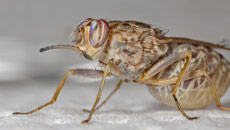
    With genome decoding of tsetse fly that causes the potentially fatal sleeping sickness disease, scientists have discovered new clues to the diet, vision and reproductive strategies of the insect.

    Fly's genome study offers hope for sleeping sickness

    Technology to catch dozing drivers on the go

    Technology to catch dozing drivers on the go
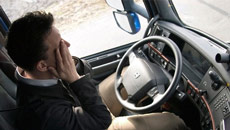
    Long rides at night can now become a lot more pleasant and safe if you listen to researchers who have developed an inexpensive and easier way to find out when the person behind the wheel is about to nod off.

    Technology to catch dozing drivers on the go

    Astronauts may face attention deficit risks

    Astronauts may face attention deficit risks
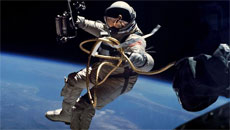
    Astronauts who are radiation-sensitive need to take extra care to protect their brains as they may face risks of attention deficit and slower reaction times, a study suggests.

    Astronauts may face attention deficit risks