Tuesday, December 30, 2025
ADVT 
Health

Red wine can protect human cells against damage

Darpan News Desk IANS, 23 Dec, 2014 11:14 AM
    A substance found in red wine may protect the body against age-related diseases by stimulating an ancient evolutionary defence mechanism that protects human cells against damage, a US study has suggested.
     
    Scientists at The Scripps Research Institute (TSRI) found that the substance -- resveratrol -- once touted as an elixir of youth -- powerfully activates an evolutionarily ancient stress response in human cells.
     
    "This stress response represents a layer of biology that has been largely overlooked. Resveratrol turns out to activate it at much lower concentrations than those used in prior studies," said senior investigator Paul Schimmel, a professor and member of the Skaggs Institute for Chemical Biology at TSRI, US.
     
    Based on these results, "it is conceivable that moderate consumption of a couple of glasses of red wine would give a person enough resveratrol to evoke a protective effect via this pathway," said lead author Mathew Sajish, a senior research associate in the Schimmel laboratory.
     
    Resveratrol is a compound produced in grapes, cacao beans, Japanese knotweed and some other plants in response to stresses including infection, drought and ultraviolet radiation.
     
    Why would resveratrol, a protein produced in plants, be so potent and specific in activating a major stress response pathway in human cells?
     
    Probably because it does much the same in plant cells, and probably again via TyrRS -- a protein so fundamental to life, due to its linkage to an amino acid, that it hasn't changed much in the hundreds of millions of years since plants and animals went their separate evolutionary ways.
     
    "We believe that TyrRS has evolved to act as a top-level switch or activator of a fundamental cell-protecting mechanism that works in virtually all forms of life," Sajish added.


    MORE Health ARTICLES

    Befriend a cyber buddy to stay motivated

    Befriend a cyber buddy to stay motivated
    Although a human partner is a better motivator during exercise, a software-generated cyber partner can also be effective in making you work a little extra, research reveals.

    Befriend a cyber buddy to stay motivated

    New method to treat cocaine addiction effectively

    New method to treat cocaine addiction effectively
    There is hardly any effective medications for cocaine addiction, but researchers have now discovered a new compound that can halt cocaine addiction, raising hope for new treatment for drug addicts.

    New method to treat cocaine addiction effectively

    How bariatric surgery can help control diabetes

    How bariatric surgery can help control diabetes
    That bariatric surgery, or obesity surgery, leads to weight loss is well known, but researchers have now identified the mechanism why obesity surgery also leave positive effects on diabetes and heart diseases.

    How bariatric surgery can help control diabetes

    Now, 3D-printed plaster cast to heal wound faster

    Now, 3D-printed plaster cast to heal wound faster
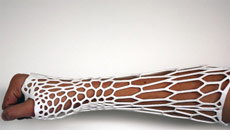
    In what could revolutionise plaster cast technology, a Turkish design student has unveiled a slick 3D-printed cast with ventilation holes that reduces healing time by around 40 percent than currently used plaster casts.

    Now, 3D-printed plaster cast to heal wound faster

    Smart cup that delivers coffee, news too!

    Smart cup that delivers coffee, news too!
    Reading the morning newspaper while sipping a cup of coffee is set to become an even smoother experience as a Finnish coffee roastery company has developed a smart coffee cup that could also display an e-paper.

    Smart cup that delivers coffee, news too!

    An 'upside-down planet' discovered

    An 'upside-down planet' discovered
    Like so many interesting discoveries, this one happened largely by accident. An astronomer has discovered an ‘upside-down planet’ that reveals new method for studying binary star systems.

    An 'upside-down planet' discovered