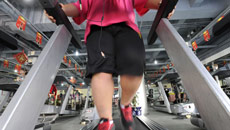
Exercise that puts greater strain on bones, like running, may help in improving bone health more effectively than non-weight bearing activities like cycling, finds a new study.
"Normal human beings need to exercise moderately to maintain health. However, those at risk of weaker bones need to take up running rather than swimming or cycling," said lead author Giovanni Lombardi from Istituto Ortopedico Galeazzi in Italy.
The researchers measured glucagon, leptin and insulin -- hormones involved in regulating metabolism -- as well as levels of osteocalcin and P1NP (proteins associated with bone formation) in 17 trained runners before and after a 65-km mountain ultramarathon run.
They compared it to the hormones and bone constituents of twelve adults of the same age who did not run the race but did low to moderate physical exercise.
Increasing glucagon levels indicate an energy demand, whilst increasing insulin and leptin levels indicate adequate or excessive energy levels, the researchers stated.
The findings showed that the ultramarathon runners had higher levels of glucagon and lower levels of leptin and insulin when finishing the race as compared to the control group.
The falling levels of insulin ultramarathon runners lead to similarly falling levels of both osteocalcin and P1NP -- suggesting that athletes may be diverting energy from bone formation to power the high-energy demands of their metabolism.
However, the runners also had higher P1NP levels at rest compared to controls, suggesting that they may divert energy from bones during racing but also have a net gain in bone health in the long-term.
Running exerts a higher physical load on bone than swimming or cycling, it could be that these forces stimulate bone tissue to signal to the pancreas to help meet its energy needs in the long-term, the researchers explained.
"Our work has shown that bones aren't just lying idle, but are actively communicating with other organs and tissues to drive the body's energy needs," Lombardi said.
The results of the study were presented at the 2016 European Congress of Endocrinology in Munich, Germany.