Saturday, June 6, 2026
ADVT 
Health

Running Better Than Cycling For Long-term Bone Health

Darpan News Desk IANS, 31 May, 2016 11:11 AM
    Exercise that puts greater strain on bones, like running, may help in improving bone health more effectively than non-weight bearing activities like cycling, finds a new study.
     
    "Normal human beings need to exercise moderately to maintain health. However, those at risk of weaker bones need to take up running rather than swimming or cycling," said lead author Giovanni Lombardi from Istituto Ortopedico Galeazzi in Italy.
     
    The researchers measured glucagon, leptin and insulin -- hormones involved in regulating metabolism -- as well as levels of osteocalcin and P1NP (proteins associated with bone formation) in 17 trained runners before and after a 65-km mountain ultramarathon run.
     
    They compared it to the hormones and bone constituents of twelve adults of the same age who did not run the race but did low to moderate physical exercise.
     
    Increasing glucagon levels indicate an energy demand, whilst increasing insulin and leptin levels indicate adequate or excessive energy levels, the researchers stated. 
     
    The findings showed that the ultramarathon runners had higher levels of glucagon and lower levels of leptin and insulin when finishing the race as compared to the control group. 
     
    The falling levels of insulin ultramarathon runners lead to similarly falling levels of both osteocalcin and P1NP -- suggesting that athletes may be diverting energy from bone formation to power the high-energy demands of their metabolism. 
     
    However, the runners also had higher P1NP levels at rest compared to controls, suggesting that they may divert energy from bones during racing but also have a net gain in bone health in the long-term.
     
    Running exerts a higher physical load on bone than swimming or cycling, it could be that these forces stimulate bone tissue to signal to the pancreas to help meet its energy needs in the long-term, the researchers explained.
     
    "Our work has shown that bones aren't just lying idle, but are actively communicating with other organs and tissues to drive the body's energy needs," Lombardi said. 
     
    The results of the study were presented at the 2016 European Congress of Endocrinology in Munich, Germany.


    MORE Health ARTICLES

    Prostate cancer linked with sex: Study

    Prostate cancer linked with sex: Study
    A study in the US has found that prostate cancer could be caused by a common infection passed on during intercourse, a leading English daily reported Tuesday.

    Prostate cancer linked with sex: Study

    Don't drink and swim: Drunk zebrafish shows why humans go nuts after booze

    Don't drink and swim: Drunk zebrafish shows why humans go nuts after booze
    High on booze, a zebrafish nearly doubled her speed in an experiment, leaving scientists with results that may help them find why some people on a high behave like weirdos in a party.

    Don't drink and swim: Drunk zebrafish shows why humans go nuts after booze

    E-cigarettes boost drug-resistant bacteria

    E-cigarettes boost drug-resistant bacteria
    Despite being labeled as a healthy alternative to cigarettes, e-cigarettes may increase the virulence of drug-resistant and potentially life-threatening bacteria, a study has warned.

    E-cigarettes boost drug-resistant bacteria

    Chip that precisely detects cancer early created

    Chip that precisely detects cancer early created
    What if we could diagnose cancer while it was still only affecting a few localised cells? Here comes an ultra-sensitive nano-chip that is capable of detecting cancer early.

    Chip that precisely detects cancer early created

    Yoga gets a new home in Finland

    Yoga gets a new home in Finland
    Yoga is set to get a new home in Finland when a studio is opened at the airport of this capital of the Nordic country.

    Yoga gets a new home in Finland

    Prehistoric skeleton confirms first American origins

    Prehistoric skeleton confirms first American origins
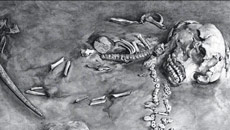
    Researchers said Thursday that they have identified a nearly complete skeleton in an underwater Mexican cave, a discovery that could help resolve a longstanding debate about the origins of the first people to inhabit the Americas.

    Prehistoric skeleton confirms first American origins