Sunday, July 5, 2026
ADVT 
Health

Sleep protein protects from cancer

Darpan News Desk IANS, 04 Dec, 2014 11:04 AM
    A new protein responsible for regulating the body's sleep cycle, or circadian rhythm, also protects the body from developing sporadic forms of cancers, new research has found.
     
    Thus, people who work round-the-clock, could in fact be setting themselves back.
     
    "The protein, known as human period 2, has impaired function in the cell when environmental factors, including sleep cycle disruption, are altered," said Carla Finkielstein from College of Science, Virginia Tech.
     
    The new human period 2 protein if unaltered directly interacts with tumour suppressor proteins in cells to control cell division.
     
    "When (human period 2 protein) is non-functional because it is either mutated or somehow modified, then, it is unable to do its job and prevent the cells from dividing at certain times of the day," said Tetsuya Gotoh, research scientist, College of Science, Virginia Tech.
     
    "This is particularly a problem in cases where tumour suppressor genes are mutated as it happens in over 80 percent of all cancer cases," said Gotoh.
     
    By studying human and animal tumour cells, the team found that repressing the human period 2 gene led to both abnormal circadian rhythmicity and a malignant transformation.
     
    Now, researchers are trying to find out if the malfunctioning of the protein and the gene that produces it leads to cancer.
     
    The results of these studies will help develop new, more effective prevention strategies for people at risk due to circadian disruption, such as women working in night shifts.
     
    "These findings highlight the complexity of the circadian-controlled network and emphasize its physiological relevance for human health and for new therapeutic interventions," said Finkielstein.
     
    The study appeared in the journal Molecular Biology of the Cell.
    MORE Health ARTICLES

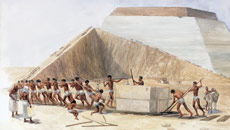
    Know how Egyptians moved giant rocks to build pyramids

    Know how Egyptians moved giant rocks to build pyramids
    It is time to rewrite history books. The mystery of how Egyptians moved huge stones to build pyramids has been unlocked, finally.

    Know how Egyptians moved giant rocks to build pyramids

    Sick wives face high divorce risk: Study

    Sick wives face high divorce risk: Study
    The vows of togetherness often fall apart among couple when the wife - but not the husband - becomes seriously ill, a significant study has revealed.

    Sick wives face high divorce risk: Study

    This font would let your kid learn faster

    This font would let your kid learn faster
    This dyslexic-friendly font - derived from Comic Sans font - is shaped similarly to the way kids naturally write. 

    This font would let your kid learn faster

    Facebook's healthy 'move,' acquires fitness app

    Facebook's healthy 'move,' acquires fitness app
    Social networking site Facebook has acquired Helsinki-based fitness tracking app Moves in an undisclosed deal.

    Facebook's healthy 'move,' acquires fitness app

    Detailed suicide coverage driving teenagers to end life: Study

    Detailed suicide coverage driving teenagers to end life: Study
    The sensationalisation of suicide coverage in media may trigger vulnerable readers, especially teenagers, to commit suicide themselves, a study has indicated.

    Detailed suicide coverage driving teenagers to end life: Study

    Why westerners can't pronounce Sanskrit word 'Sri'

    Why westerners can't pronounce Sanskrit word 'Sri'
    Ever wondered why most Britishers could not pronounce the Sanskrit word 'sri' - a common Indian honorific for males - and instead settled for 'shri', a combination of sounds found in English words like shriek and shred?

    Why westerners can't pronounce Sanskrit word 'Sri'