Sunday, July 5, 2026
ADVT 
Health

Sleep protein protects from cancer

Darpan News Desk IANS, 04 Dec, 2014 11:04 AM
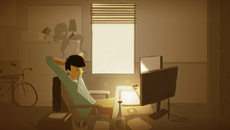
    A new protein responsible for regulating the body's sleep cycle, or circadian rhythm, also protects the body from developing sporadic forms of cancers, new research has found.
     
    Thus, people who work round-the-clock, could in fact be setting themselves back.
     
    "The protein, known as human period 2, has impaired function in the cell when environmental factors, including sleep cycle disruption, are altered," said Carla Finkielstein from College of Science, Virginia Tech.
     
    The new human period 2 protein if unaltered directly interacts with tumour suppressor proteins in cells to control cell division.
     
    "When (human period 2 protein) is non-functional because it is either mutated or somehow modified, then, it is unable to do its job and prevent the cells from dividing at certain times of the day," said Tetsuya Gotoh, research scientist, College of Science, Virginia Tech.
     
    "This is particularly a problem in cases where tumour suppressor genes are mutated as it happens in over 80 percent of all cancer cases," said Gotoh.
     
    By studying human and animal tumour cells, the team found that repressing the human period 2 gene led to both abnormal circadian rhythmicity and a malignant transformation.
     
    Now, researchers are trying to find out if the malfunctioning of the protein and the gene that produces it leads to cancer.
     
    The results of these studies will help develop new, more effective prevention strategies for people at risk due to circadian disruption, such as women working in night shifts.
     
    "These findings highlight the complexity of the circadian-controlled network and emphasize its physiological relevance for human health and for new therapeutic interventions," said Finkielstein.
     
    The study appeared in the journal Molecular Biology of the Cell.

    MORE Health ARTICLES

    Men in 'healthy' countries have eyes for beauty!

    Men in 'healthy' countries have eyes for beauty!
    All the pretty women out there, if wooing a man is what is in your mind, move on to a country where conditions are not that harsh as feminine charm sweeps men living in countries with 'healthy' conditions.

    Men in 'healthy' countries have eyes for beauty!

    Health Alert- WHO report reveals worldwide threat to public health

    Health Alert- WHO report reveals worldwide threat to public health
    A new report by the World Health Organisation (WHO) - its first to globally look at antimicrobial resistance, including antibiotic resistance - reveals that this serious threat is no longer a prediction for the future but is happening right now in every region of the world and has the potential to affect anyone, of any age, in any country.

    Health Alert- WHO report reveals worldwide threat to public health

    TV shows can transmit stress too: Study

    TV shows can transmit stress too: Study
    Just like cold, stress can also be contagious and it matters only a little whether we have any relation with the stressed person that we may come in contact with or not, says a study.

    TV shows can transmit stress too: Study

    Vitamin D deficiency may lead to prostate cancer: Study

    Vitamin D deficiency may lead to prostate cancer: Study
    Get under the morning sun sooner rather than later as vitamin D deficiency has now been linked to aggressive prostate cancer, an alarming study indicated.

    Vitamin D deficiency may lead to prostate cancer: Study

    Where butterflies, bees feed on crocodile tears!

    Where butterflies, bees feed on crocodile tears!
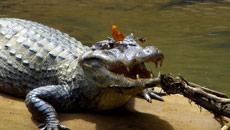
    Look at those crocodile tears in your kid's eyes more carefully. These are an abundant source of salt and other rare minerals and proteins for some!

    Where butterflies, bees feed on crocodile tears!

    Babies learn to recognise pictures before first birthday!

    Babies learn to recognise pictures before first birthday!
    If a mother shows her nine month-old baby a picture of her husband fighting a war in a distant land, she may find to her surprise that if he comes back soon after, the baby may well recognise the person in the picture.

    Babies learn to recognise pictures before first birthday!